The Curator's Veneer
An independent investigator is summoned to the Ashworth Museum to examine a discrepancy in artifact labeling. The case involves a mix of misfiled paperwork, staff anxiety, and institutional procedures. The investigation will scrutinize the daily routines, personal pressures, and archival records within the museum's genteel walls.
 Initial Crime Scene
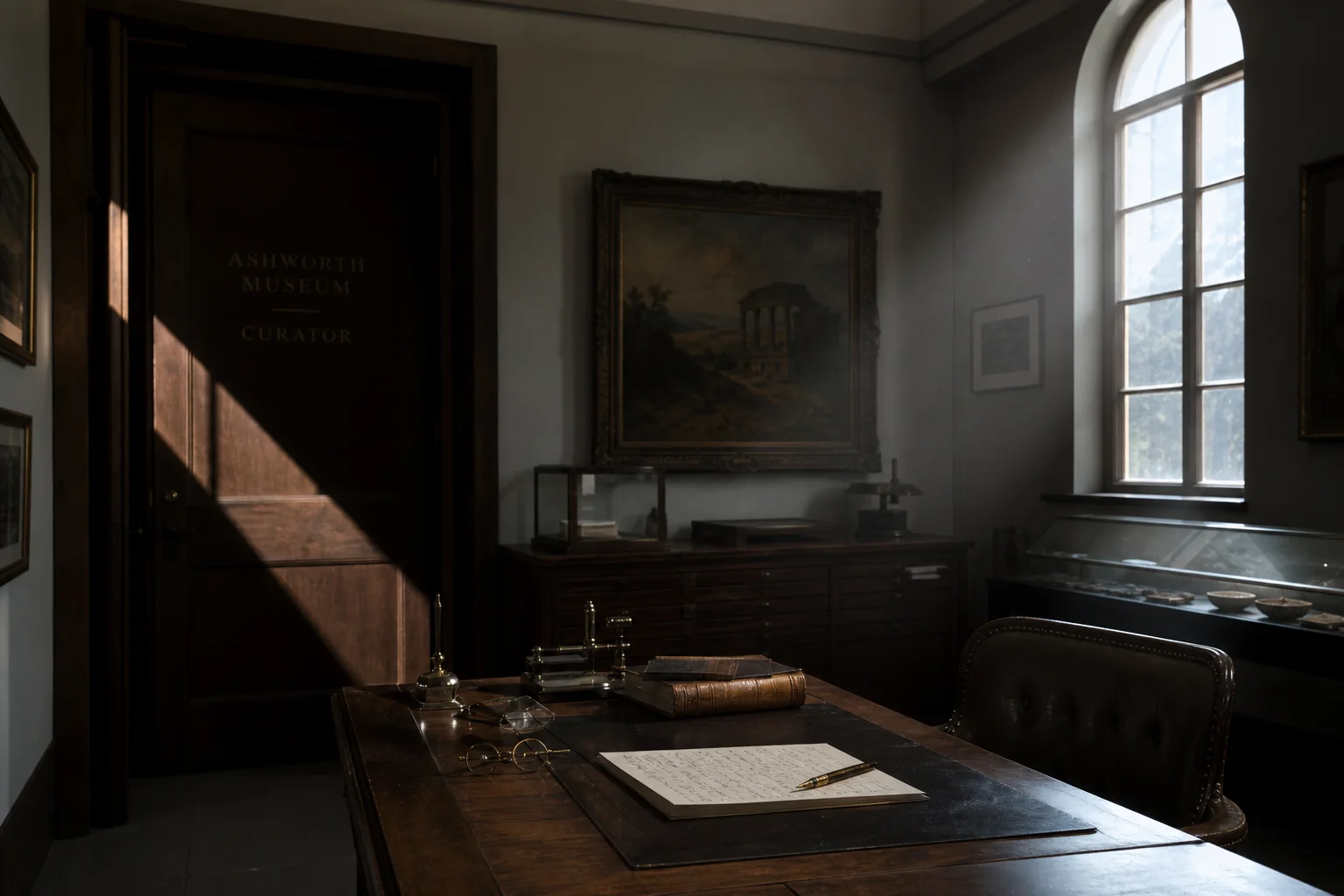
A sharp, angular shadow cuts across the threshold of the curator's office. The air carries the layered scent of beeswax polish and aging vellum. A fountain pen nib makes a soft, repetitive scratch on paper. On the large mahogany desk, a pair of spectacles rests beside a leather-bound ledger. Dust motes drift persistently in the single, slanted shaft of window light.
 Crime Scene Environment
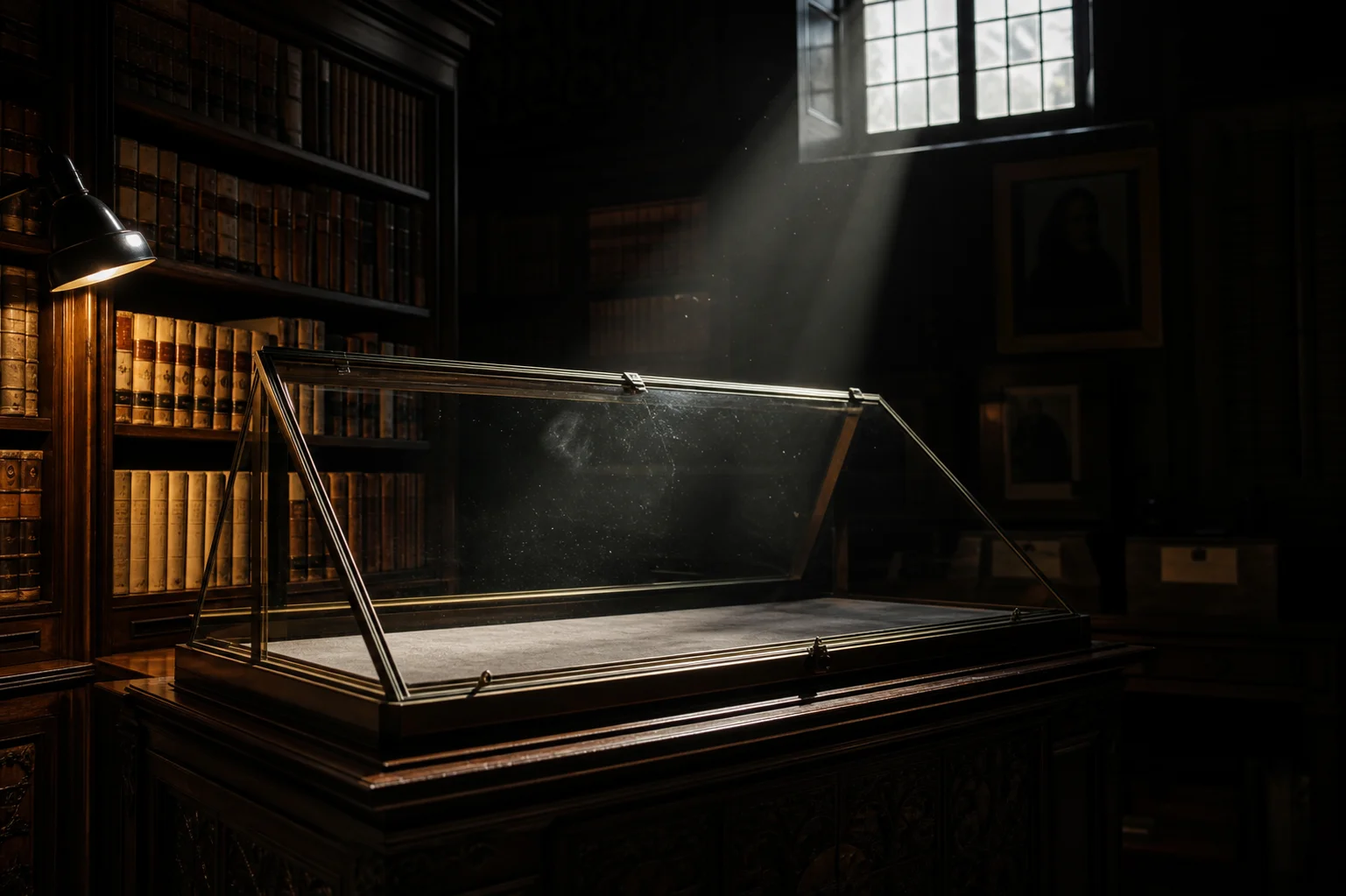
The lighting is dim and concentrated, filtering through tall, arching windows, creating pools of shadow between the displays. The air is cool and heavy with a faint, lingering humidity, carrying the dry, papery scent of archives and the chemical bite of cleaning solvents. Acoustic density is low, dominated by muffled sounds: the distant hiss of pneumatic tubes, the occasional creak of floorboards, and the profound, oppressive quiet of a space built on meticulous order.
 Investigation Constraints
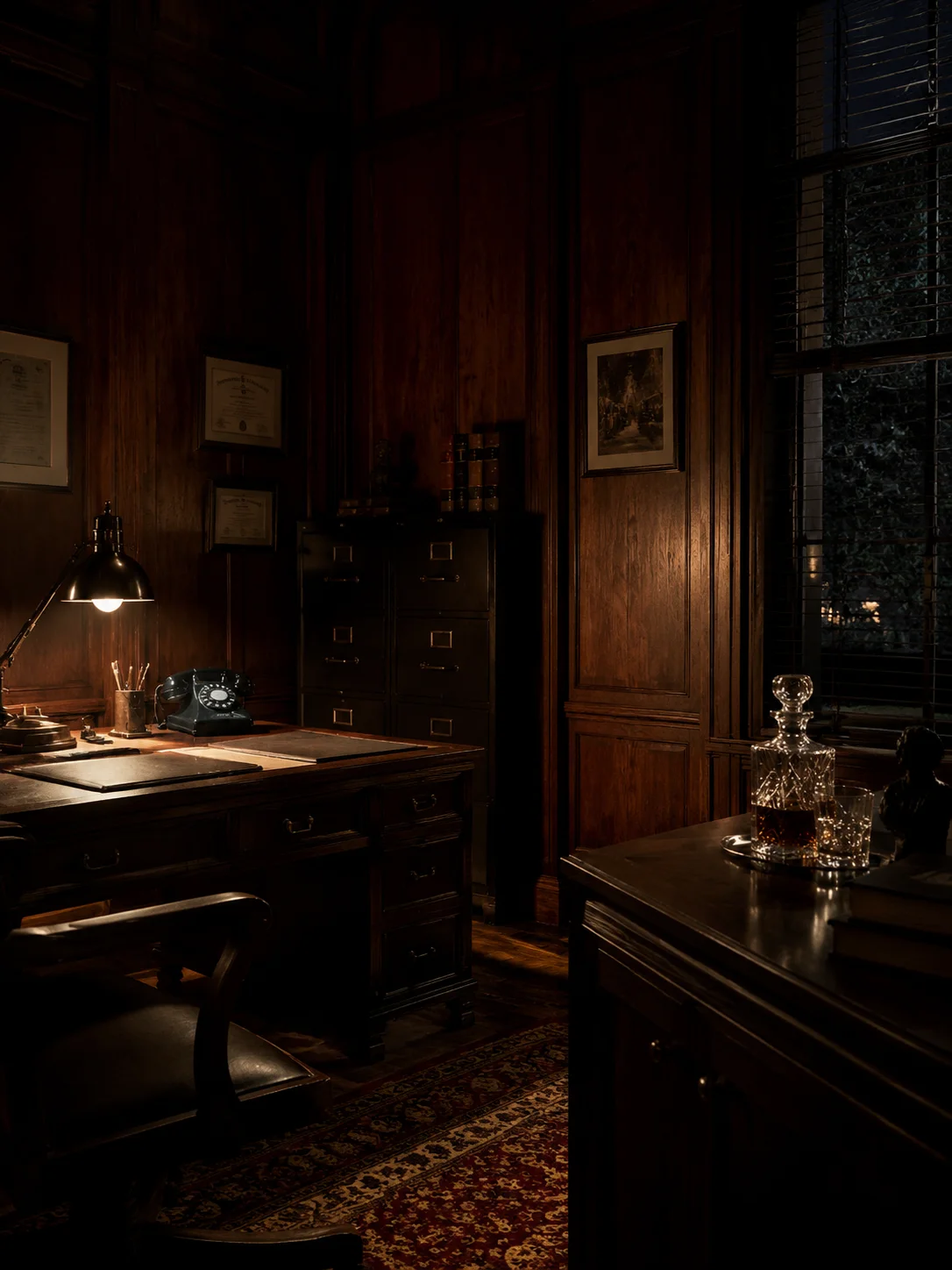
Early 20th-century academic setting. Tools include fountain pens, ledger books, carbon-copy correspondence, pneumatic tube messaging within the museum, wax seals for document authentication, analog telephones in offices, and manual card catalogues. Security relies on keyed locks, sign-in ledgers, and watchmen's rounds.
✦ Related Cases ✦