The Dovecote Protocol
A weekend gathering at an embassy residence. A diplomat is discovered deceased in his study. The investigation concerns the intersecting timelines and concealed professional vulnerabilities of multiple attendees within a specific Cold War-era diplomatic setting.
 Initial Crime Scene
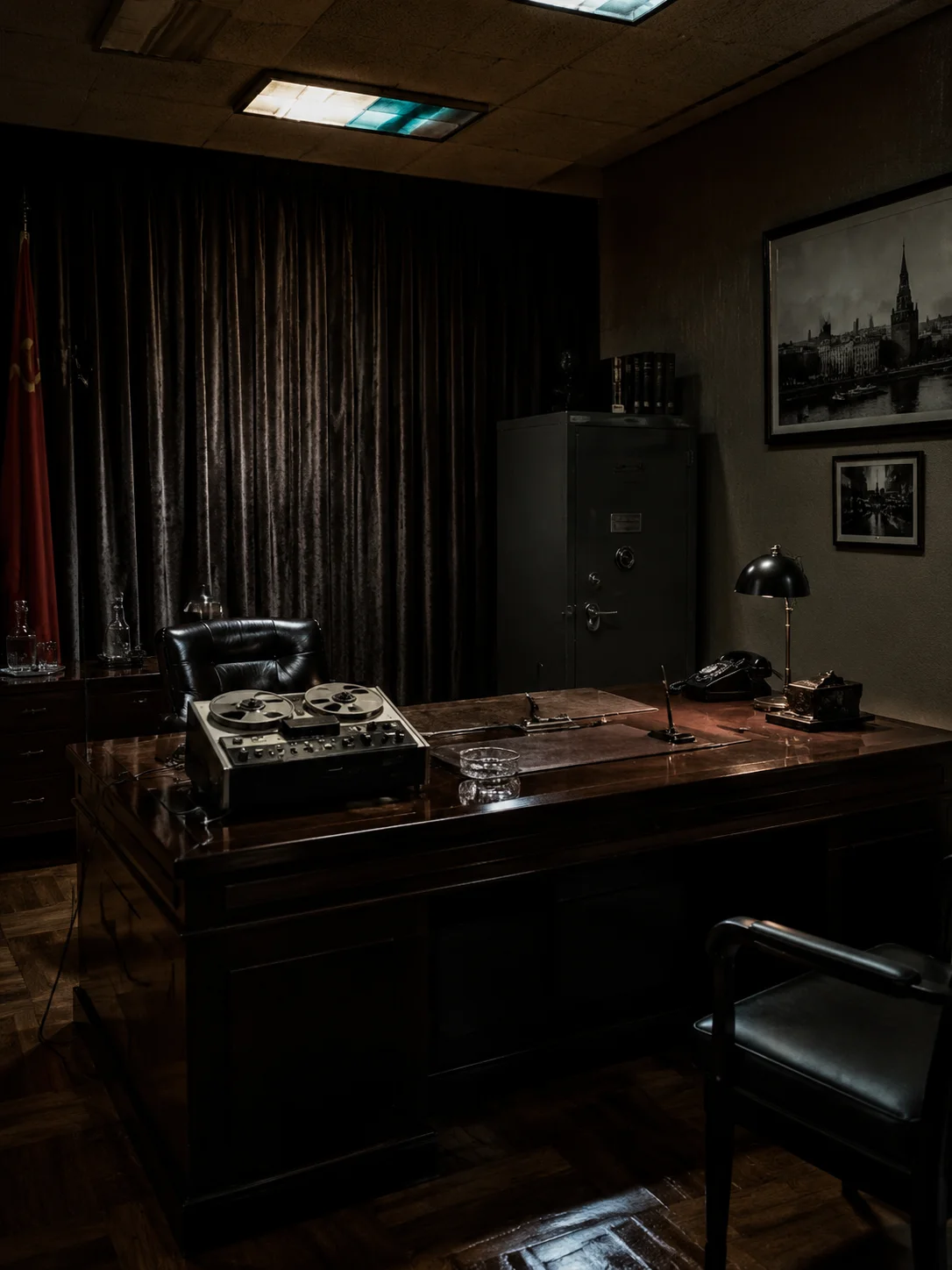
The scent of stale cigar smoke and old wood polish hangs heavy in the recycled air. A low, constant hum from the building's air system permeates the room, punctuated by the distant, tinny crackle of an intercom. Your first visual register is the deep, smoke-colored velvet of the heavy curtains, drawn against the outside light. Your gaze catches on the metallic glint of a reel-to-reel tape deck on a side table, its reels stationary and empty. The flickering fluorescent light from the corridor casts long, moving shadows across the polished wood of the floor.
 Crime Scene Environment
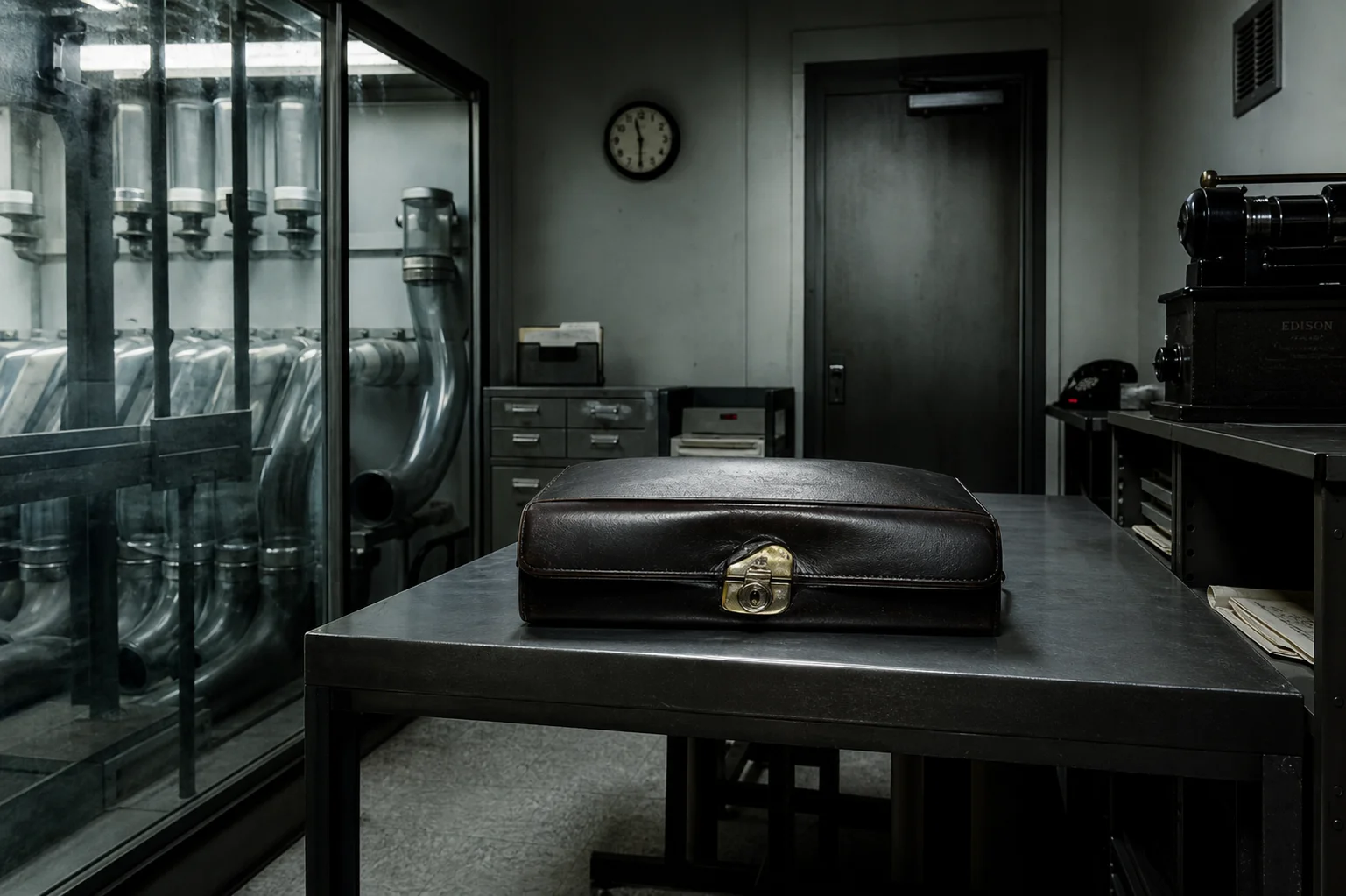
The environment is defined by a profile of harsh, overhead fluorescent lighting that flickers intermittently, casting sharp shadows. The air is chilled and dry, carrying a low acoustic density characterized by the droning hum of air conditioning, the distant hiss of pneumatic tube systems, and the mechanical tick of wall clocks. The structural reality includes formica surfaces, metal filing cabinets with combination locks, and windowless, clinical rooms.
 Investigation Constraints
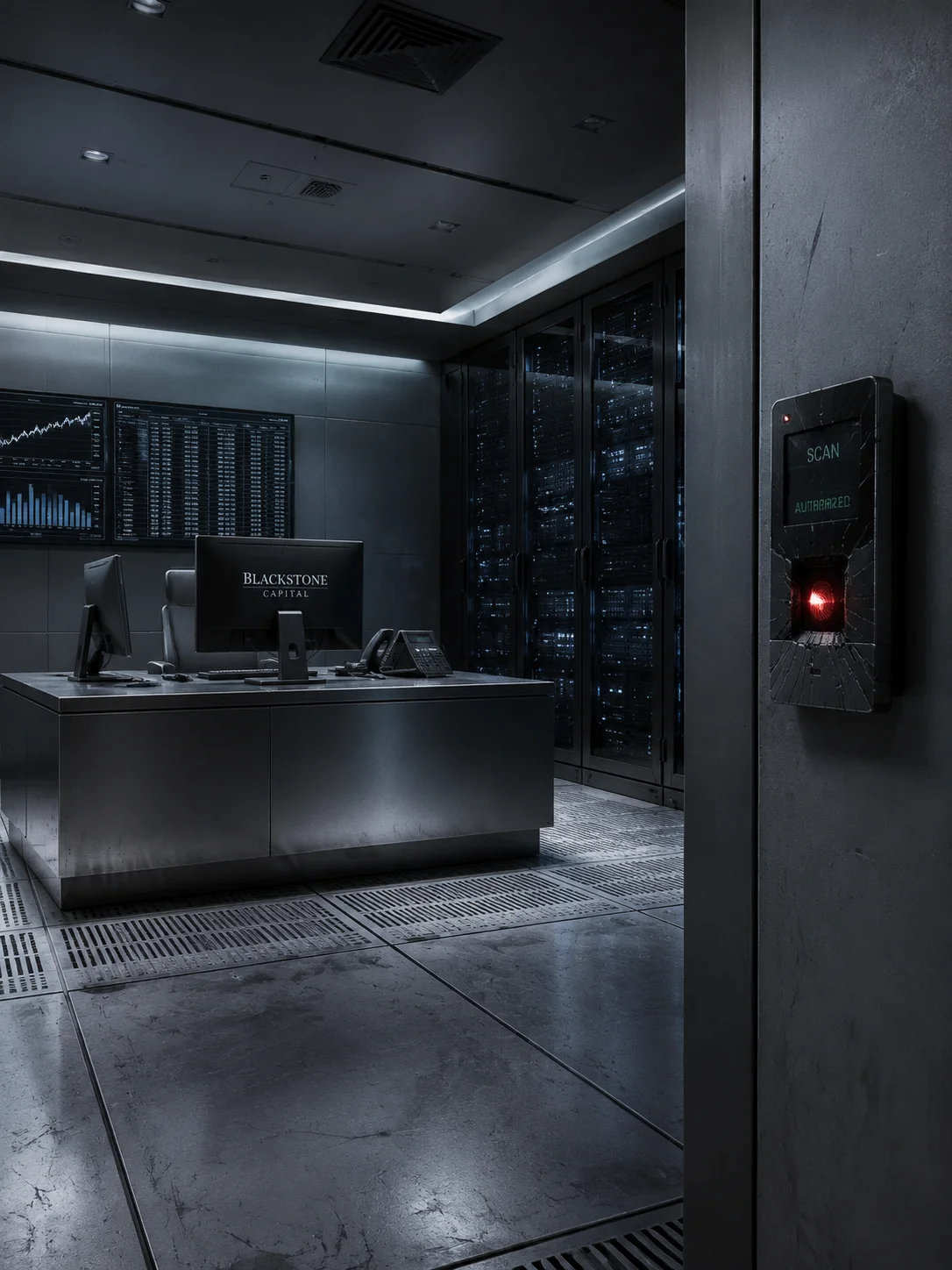
Late 1970s to early 1980s Cold War aesthetic. Technologies include: electromechanical telephone switchboards, reel-to-reel tape recorders, microfilm viewers, pneumatic tube message systems in large buildings, early mainframe computers with punch-card input, cipher machines (non-digital), carbon paper copies, rotary dial phones, telex machines. Security features include manual keycard swipe locks, guard sign-in logs with timestamps, and physical mail courier services.
✦ Related Cases ✦