The Estate Trust and the Locked Study
The death of an industrialist in his locked study prompts a review of archived testimonies from those present, each revealing personal discrepancies tied to social and financial obligations within a small, interconnected community.
 Initial Crime Scene
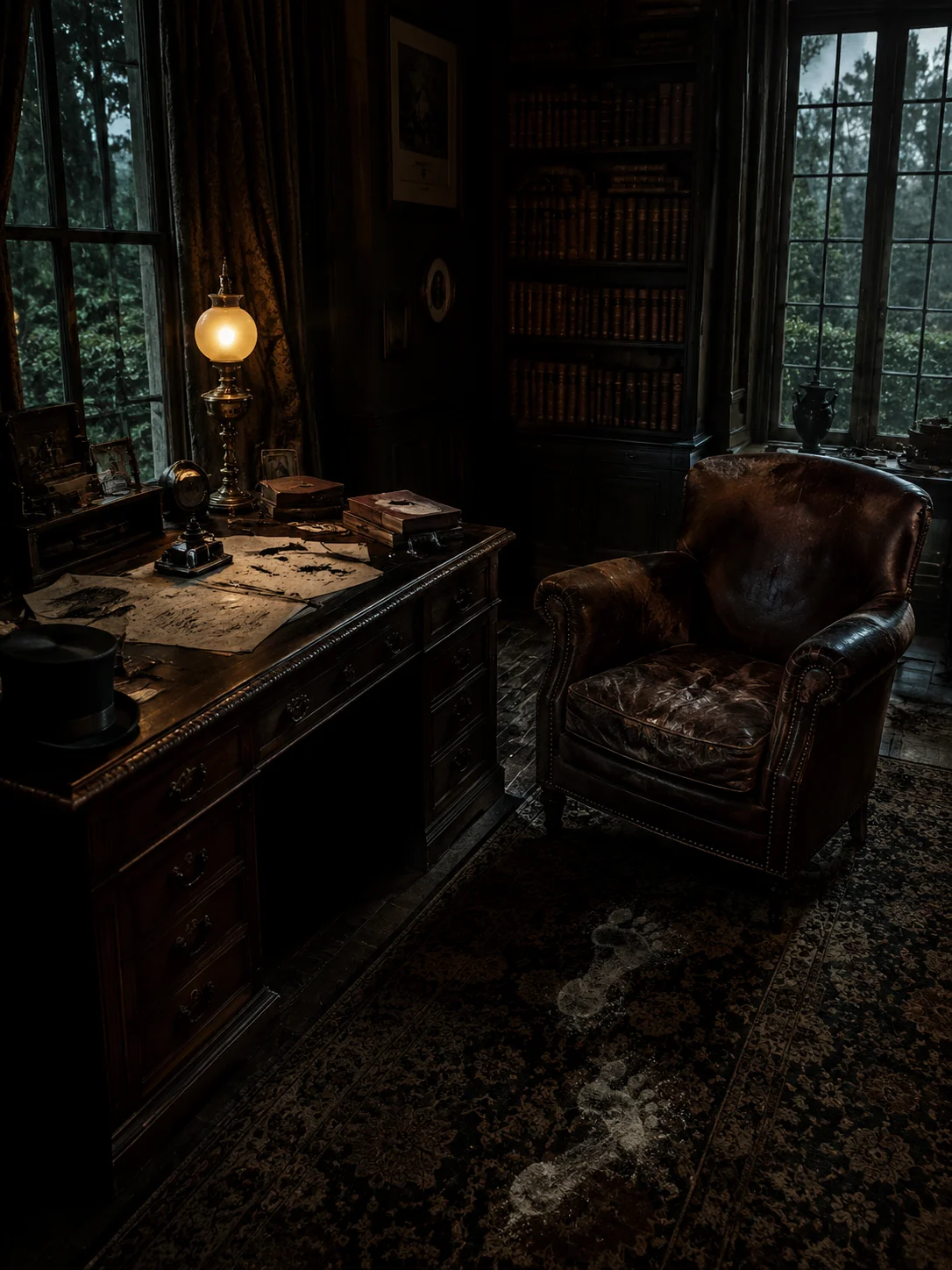
The heavy scent of beeswax polish and cold pipe ash hangs in the study air. A low, persistent tick from a mantel clock measures the silence. Ink blots mar the blotting paper on the mahogany desk, their impressions warped. On the floor, a chalky white footprint points toward the garden window. The leather chair holds the faint indentation of a recent, absent occupant.
 Crime Scene Environment
The lighting is dim, reliant on gas lamps and fading daylight through tall windows. The air is cool and dry, with low acoustic density—sounds are muffled by heavy curtains, thick carpets, and rows of bound books, creating a pressurized stillness.
 Investigation Constraints
Analog, late-Victorian/Edwardian era tools: handwritten ledgers, wax-sealed letters, pocket watches, mechanical locks, steam-powered printing presses, the telegraph, public telephone switchboards. No radios, no electrical recording devices, no forensic labs beyond basic toxicology. Evidence is captured via physical logs, written statements, and eyewitness testimony.
✦ Related Cases ✦