The Fading Light on the Final Mark
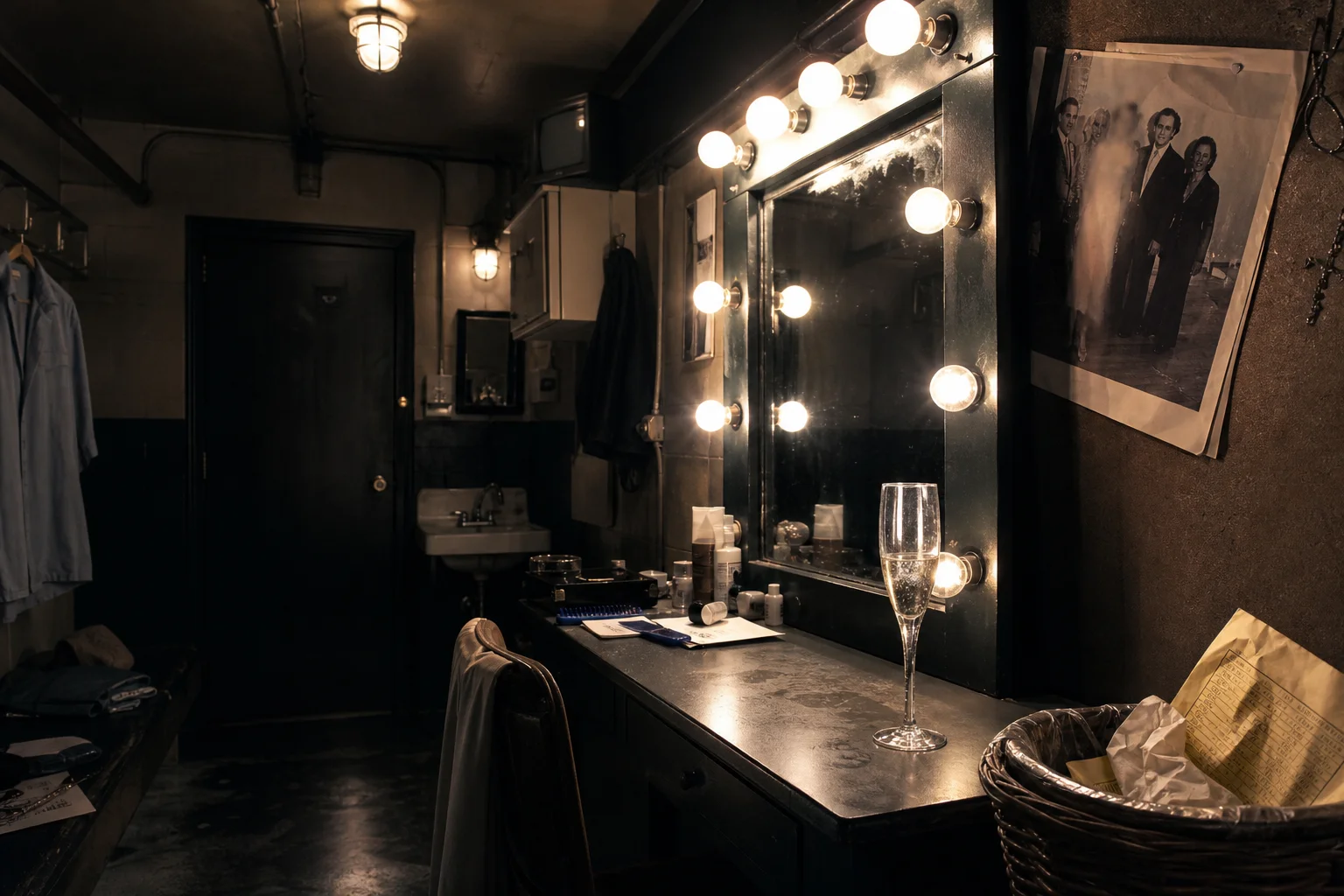
A celebrated director's fall from the orchestra pit stairs during a final dress rehearsal fractures a tightly-wound theatrical company. The investigation encounters a web of damaged reputations, financial pressures, and personal secrets contaminating the scene.
 Initial Crime Scene
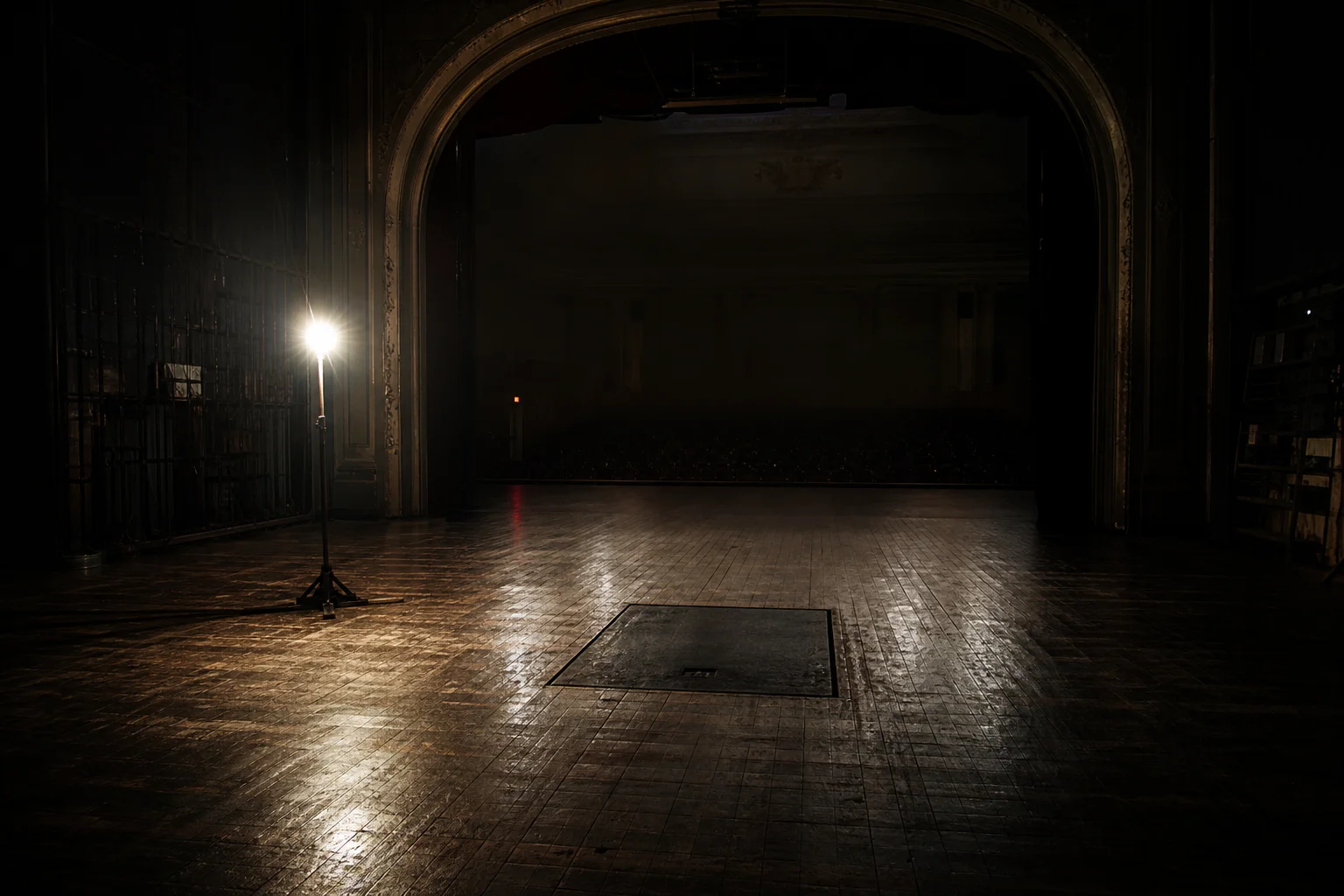
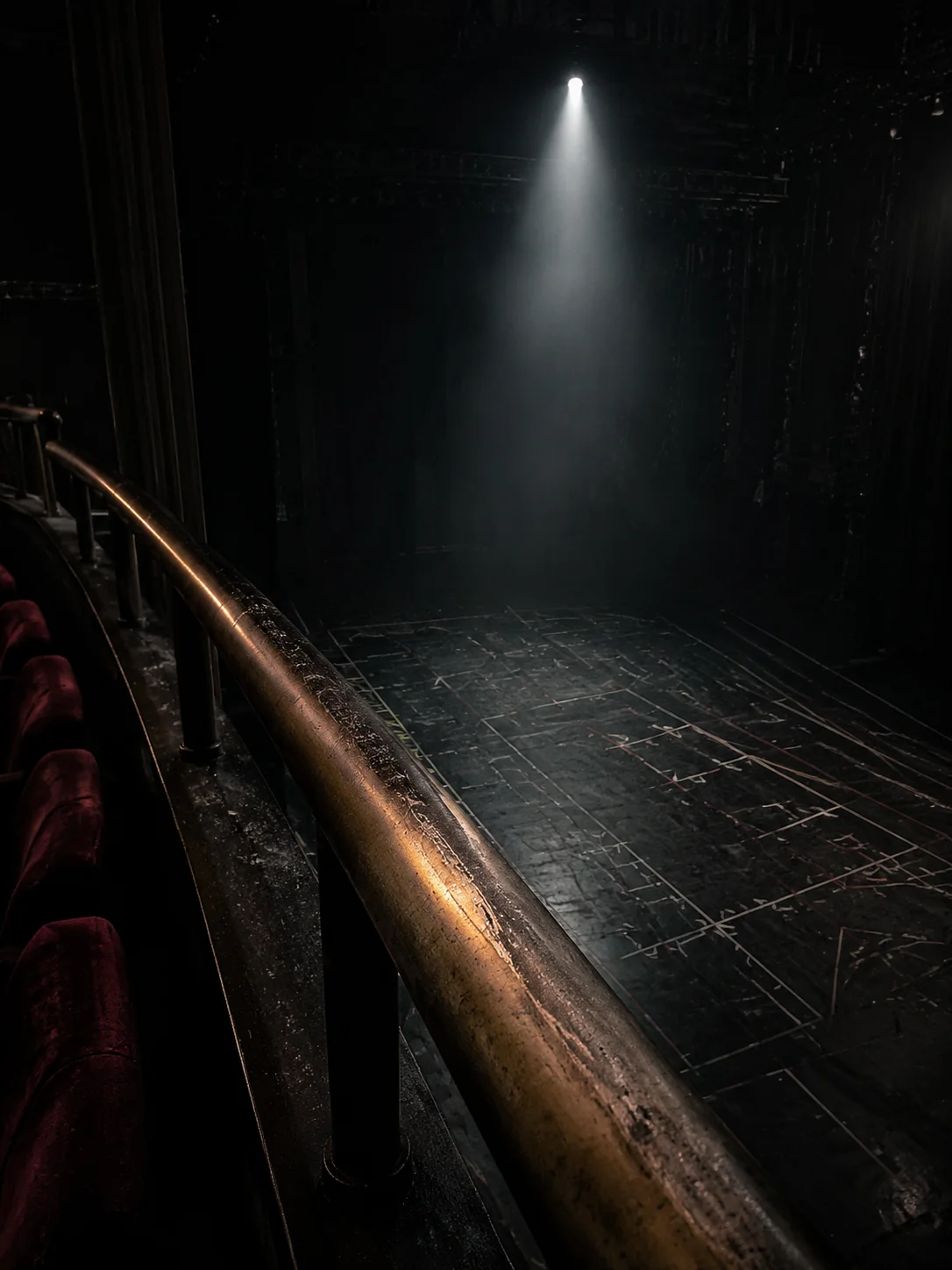
The ghost light cuts a single, hazy shaft through the darkness, catching the gritty, talc-like residue of stage makeup on the brass handrail. The chemical bite of spent flash paper hangs in the air, sharp and sterile. Overlapping, faded layers of spike tape mark the stage floor in a chaotic map of past blocking. The faint, gritty dust from scene-change ropes and sandbags accumulates in the orchestra pit, coating every surface. A deep, metallic scrape disrupts the polished rail's surface.
 Crime Scene Environment
The space is dominated by a single, stark ghost light, casting long, sharp shadows and leaving most corners in deep, oppressive gloom. The air is dry and cool, carrying a persistent, fine-grit texture that settles on skin and fabric. Acoustic density is low; sounds are muffled by the heavy curtains and velvet seats, punctuated only by the faint creak of old wood or the distant drip of a leaky pipe.
 Investigation Constraints
Early 1990s theatrical tech: landline telephones, paper ledgers, physical Rolodexes, analog lighting boards with manual cue sheets, VHS tapes for blocking reviews, Polaroid cameras for costume continuity, carbon-copy receipt books, paper-based medical records, and mechanical prop mechanisms. No digital cameras, no internet, no mobile phones.
✦ Related Cases ✦