The Final Approach
At a private airfield, a test pilot is found deceased in his aircraft's cockpit. The investigation focuses on financial records, maintenance logs, and interpersonal alibis among airfield personnel, where a single mechanical anomaly becomes a point of scrutiny.
 Initial Crime Scene
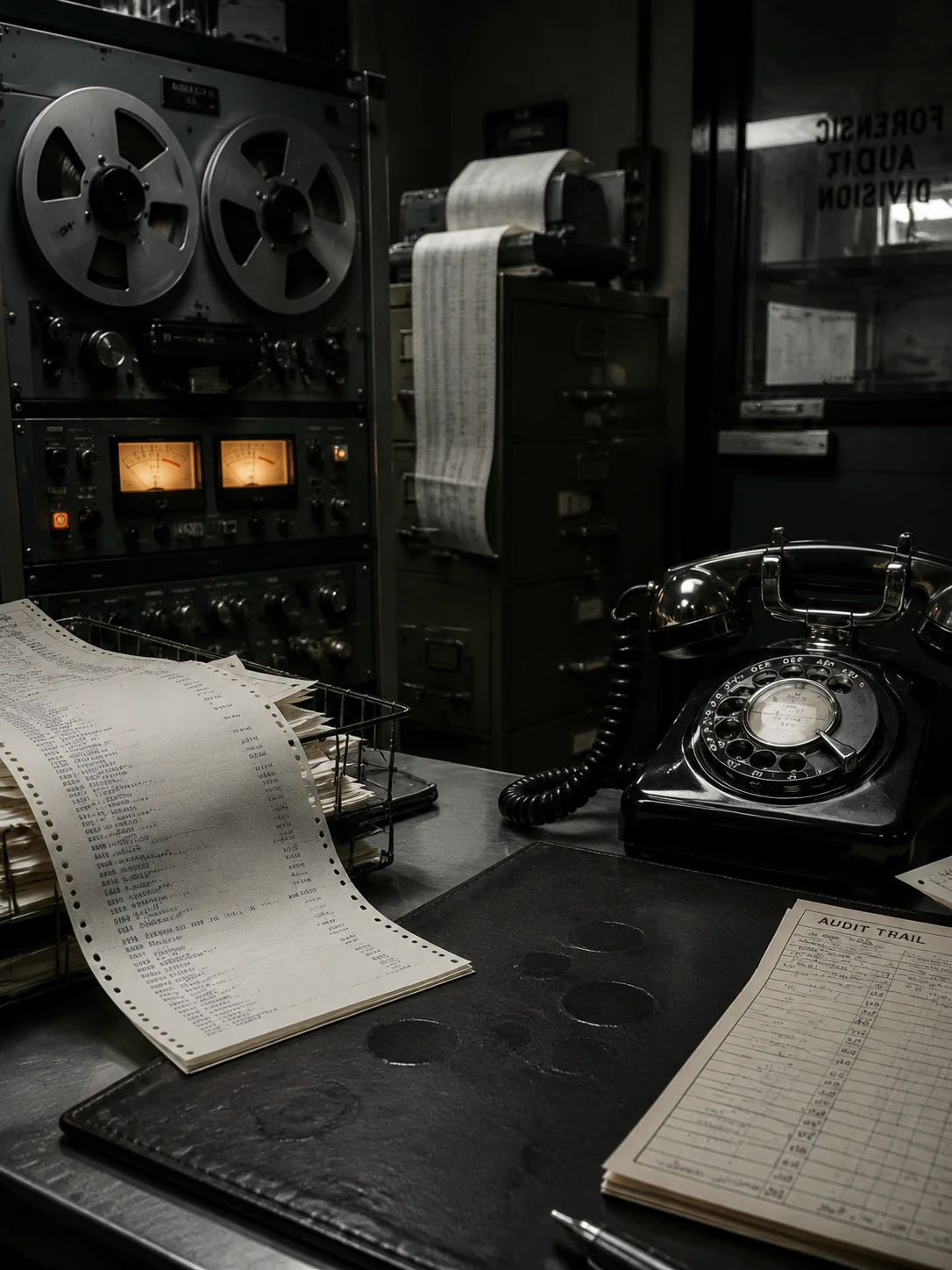
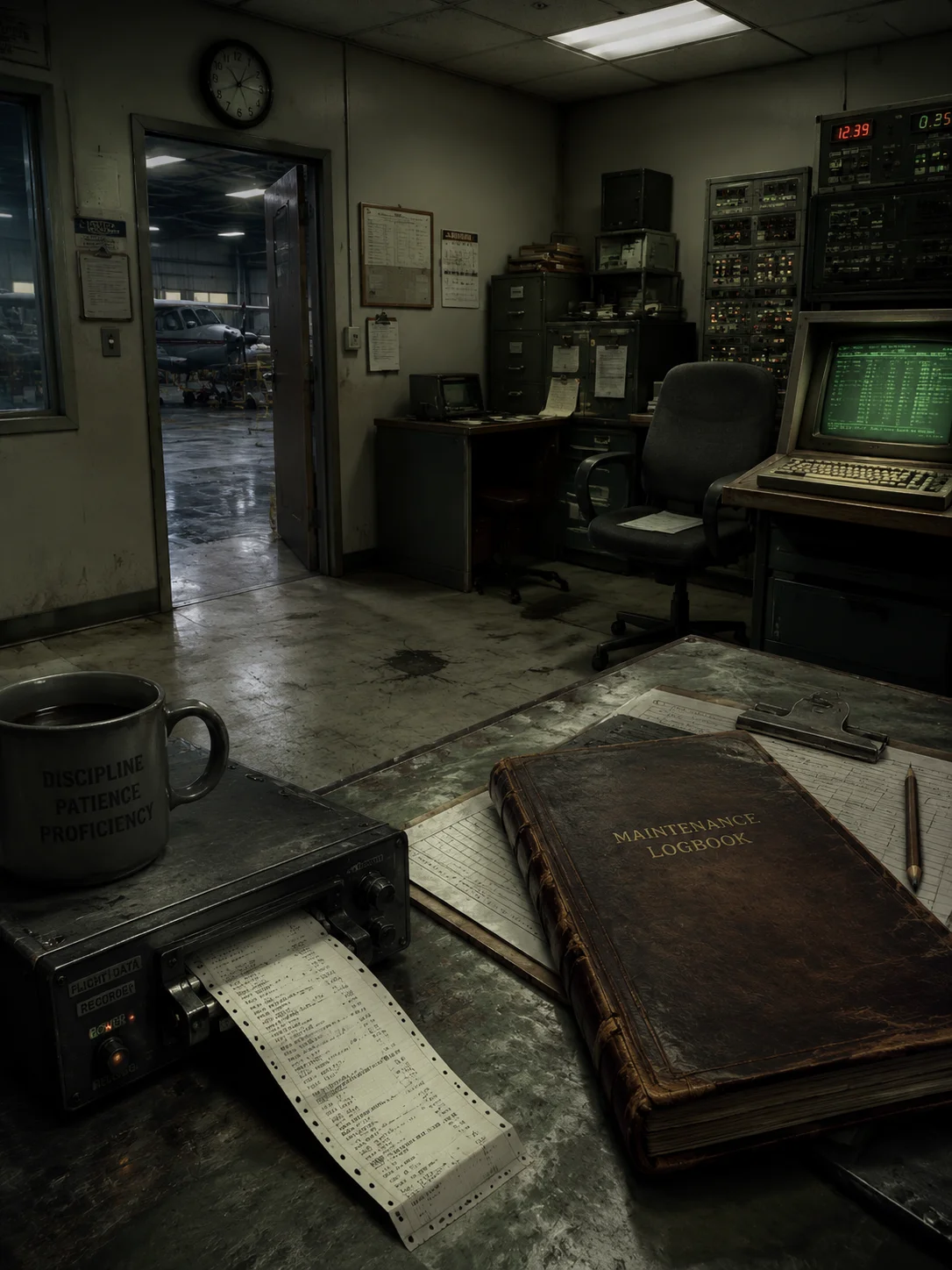
The air smells of stale coffee and hydraulic fluid. A crackling black-box flight recorder tape sits on the edge of a scarred steel desk. Through the thin wall, static-laced radio chatter from the control tower filters in. Your gaze catches the phosphor green glow of a local area network terminal, then the worn leather logbook pages with faint erasure marks, and finally the oil-stained linoleum floor with its single, anomalous scuff mark near the door.
 Crime Scene Environment
The lighting is a mix of harsh fluorescent overheads and the dim, green phosphor glow from control panels. The air is dry, cool, and carries the oppressive weight of stale smoke and toner ink. Acoustic density is high, filled with the hum of electronics, distant radio transmissions, and the muffled sounds of machinery.
 Investigation Constraints
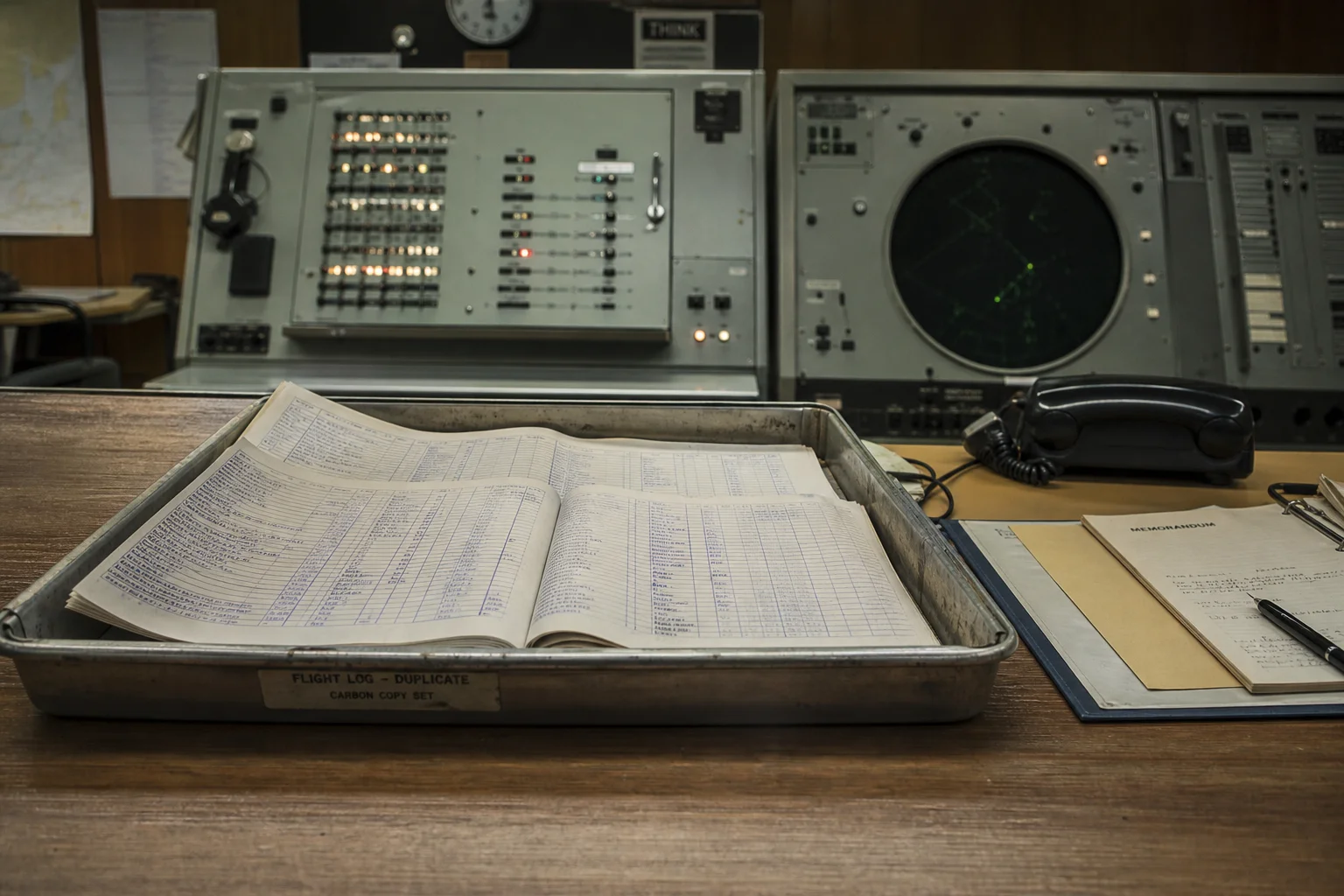
Late-1970s/early-1980s analog and early digital aerospace technology. Includes: paper flight logs, magnetic tape voice recorders, early electronic engine monitoring units with strip-chart printouts, pneumatic tube message systems, mechanical combination locks, landline telephones, telex machines, and local area network terminals in the control tower for basic flight-plan filing. No internet, mobile phones, or advanced digital forensics.
✦ Related Cases ✦