The Final Cue
A celebrated lead actor is found deceased in the wings after the final curtain call. An investigation begins into the sequence of events leading to the discovery within the Grand Majestic Theatre.
 Initial Crime Scene
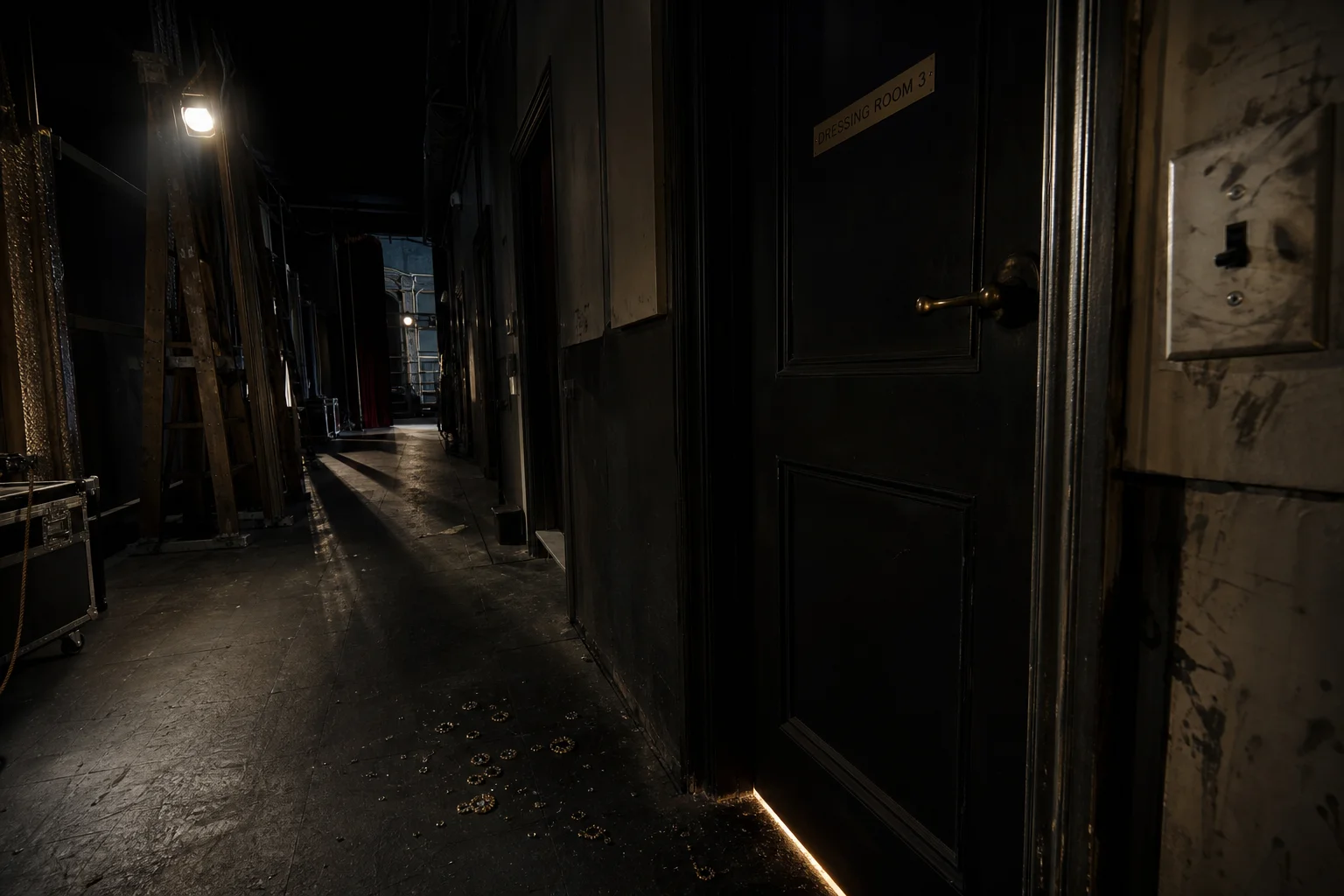
The smell of cold greasepaint and stale dust hangs in the still air. A faint, metallic tang, like the scent from rigged squibs, is detectable. Greasepaint smudges mark the light switch plates and doorframes. Crushed costume jewelry glints dimly on the corridor floor. Muffled, indistinct voices argue behind a thin dressing room wall.
 Crime Scene Environment
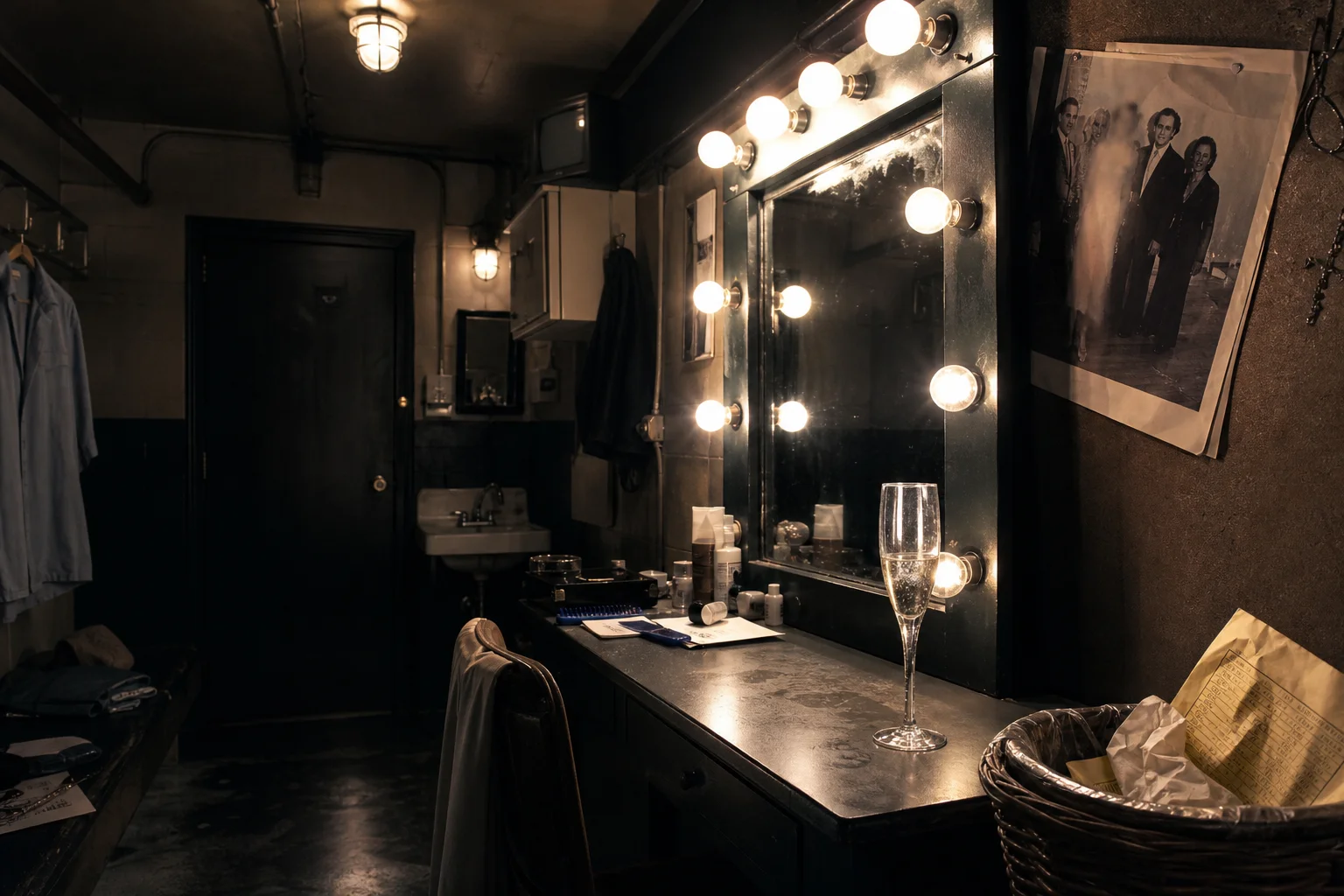
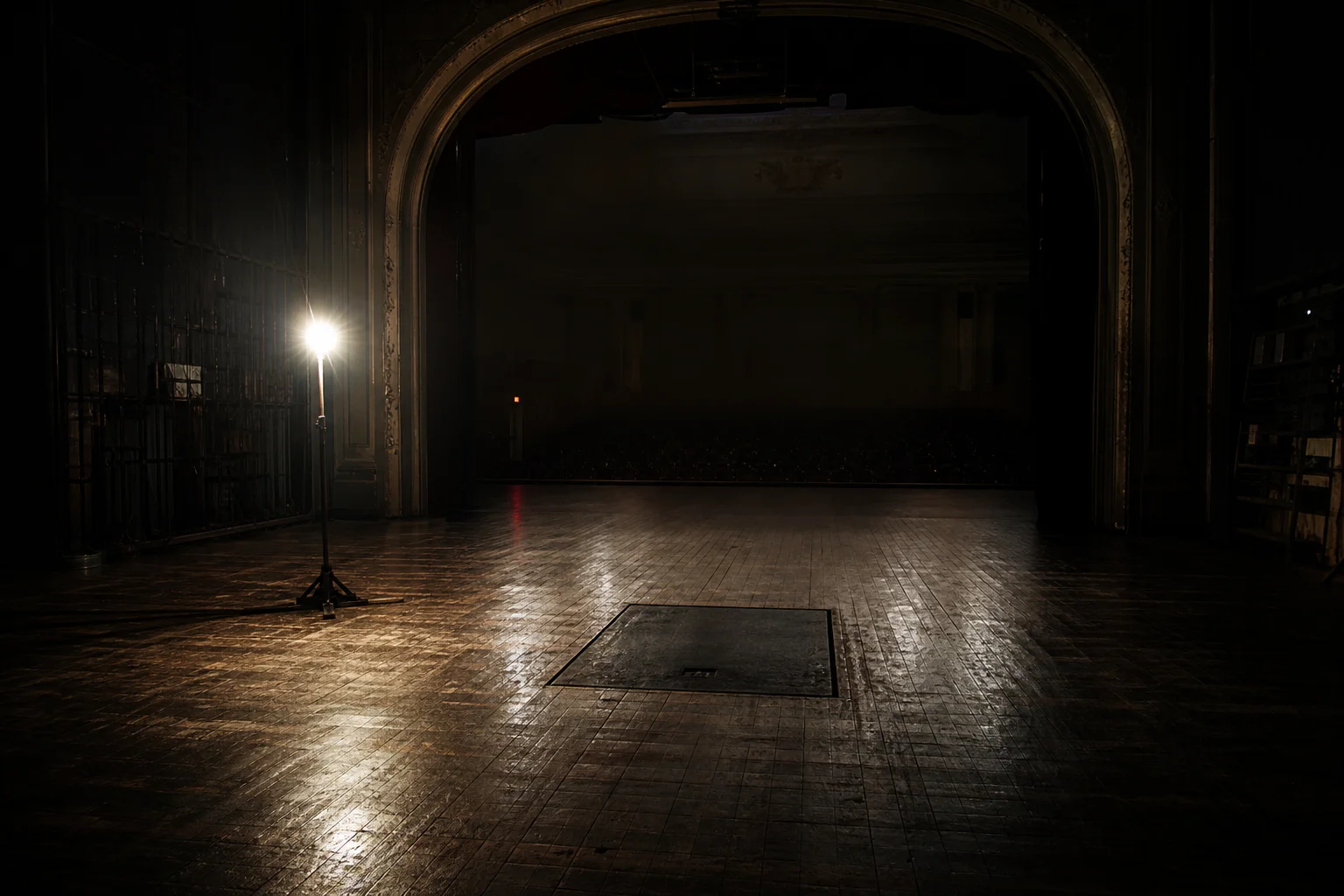
The lighting profile is defined by dim, localized work lights casting long, sharp shadows, supplemented by the harsh glare of wired vanity bulbs. The humidity and temperature profile is dry and cool, with a noticeable chill in the high catwalk air. Acoustic density is low, characterized by the deep, resonant quiet of an empty theatre, punctuated by distant, mechanical groans and the whisper of canvas.
 Investigation Constraints
The world operates on analog theatre technology: manual fly systems, hydraulic stage lifts, carbon arc spotlights, pneumatic tube messaging systems for backstage communication, paper-based ticket stubs and seating manifests, physical makeup mirrors with wired vanity lights, and analog reel-to-reel tape recorders used for archiving performances. Communication is via rotary dial telephones, handwritten notes, and pneumatic tubes. Locks are mechanical key-and-tumbler or simple sliding bolts.
✦ Related Cases ✦