The Final Cue
During a sold-out comeback concert, an incident on stage triggers an investigation into the complex network of professional rivalries, contractual pressures, and personal anxieties within the production team. The investigation focuses on reconstructing events from the available digital logs, witness statements, and physical evidence.
 Initial Crime Scene
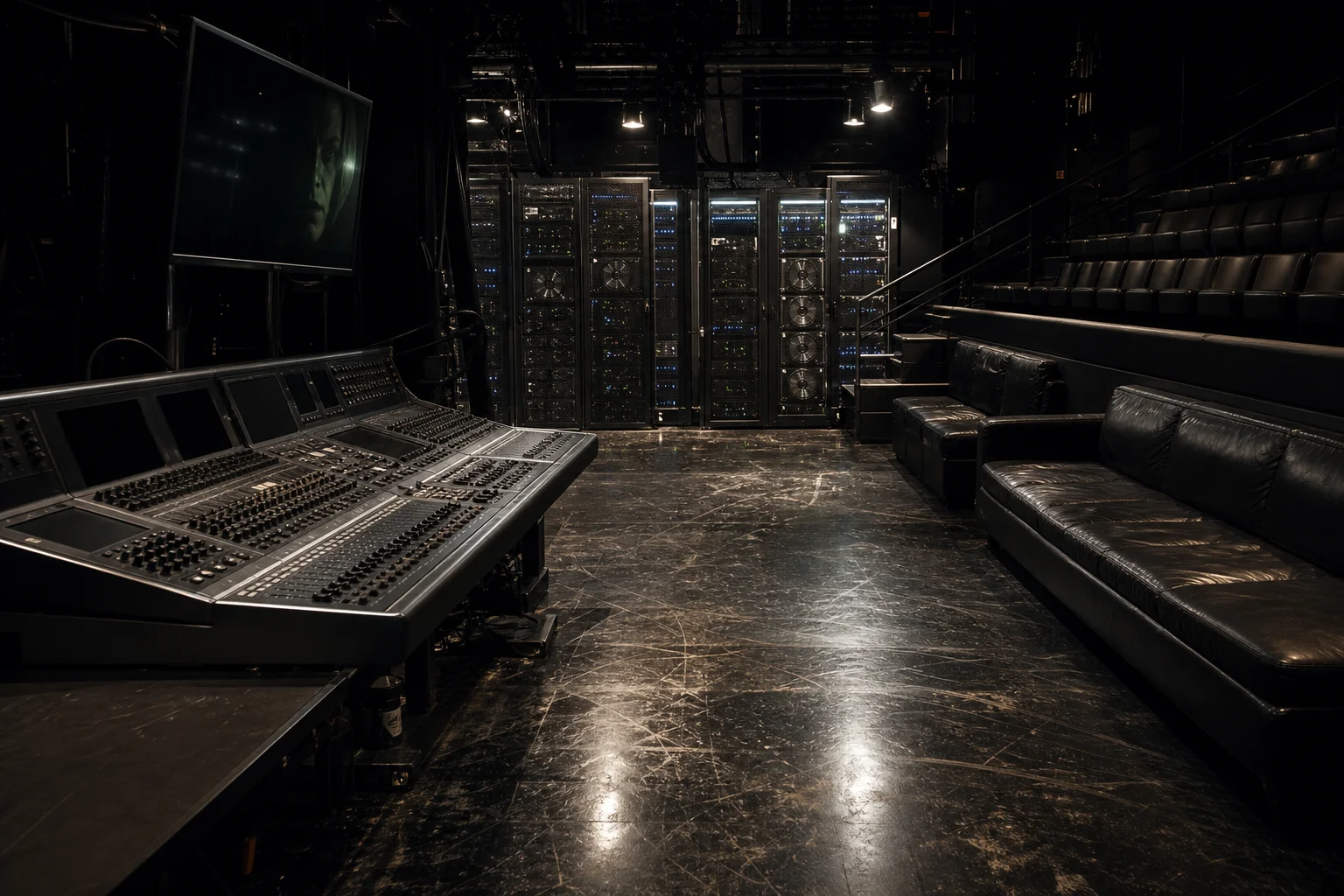
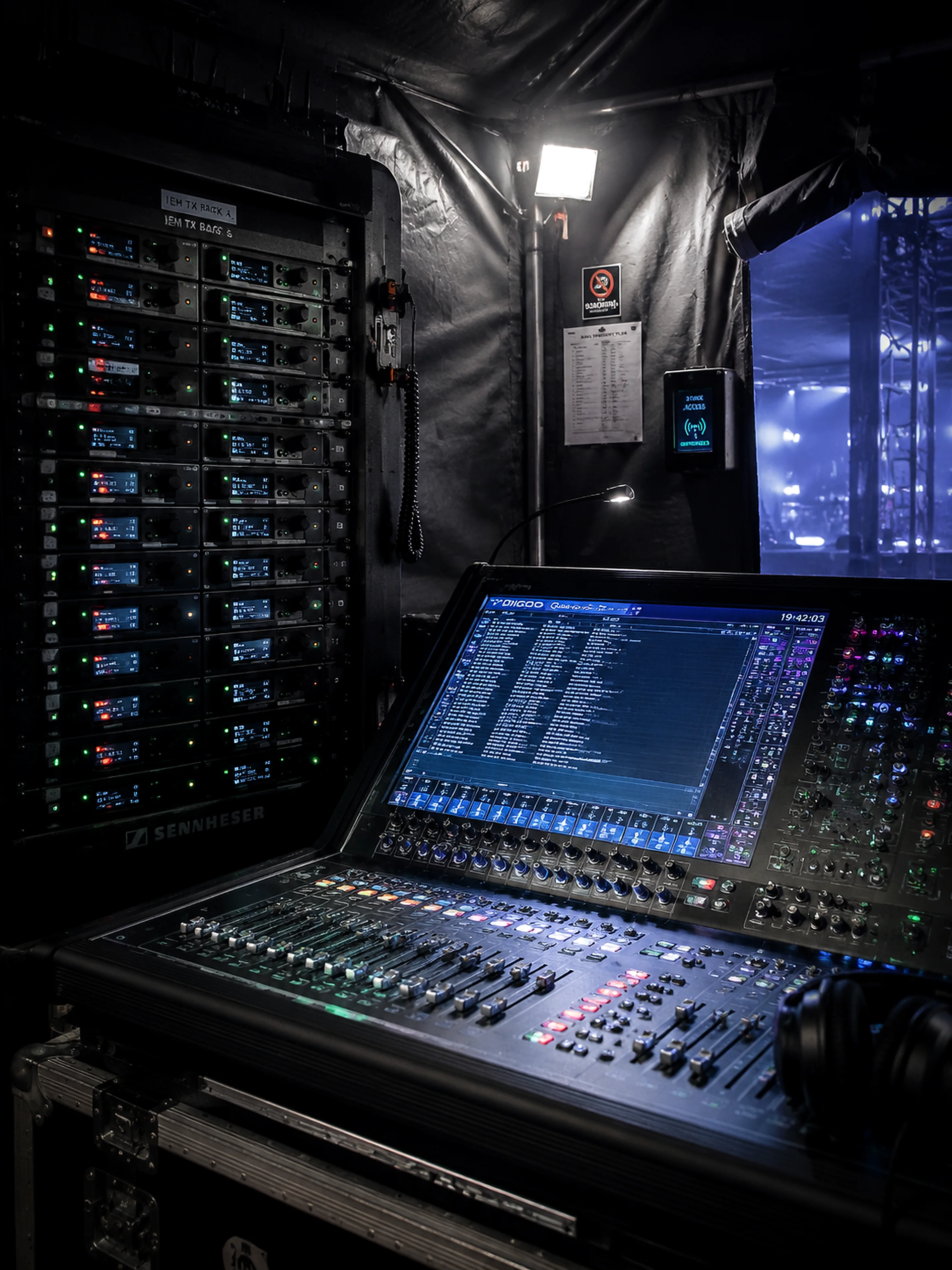
The scent of warm plastic and ozone from active electronics hangs in the air. The low, constant hum of server fans provides a backdrop to the scene. Your gaze falls upon a digital mixing console, its screen displaying scrolling log data. To your left, racks of wireless in-ear monitor transmitters blink with status LEDs. A keycard reader is mounted by the tent flap.
 Crime Scene Environment
Lighting: Harsh, focused LED work lights and the glow of console screens. Humidity/Temperature: Dry, climate-controlled air. Acoustic Density: Constant low hum of electronics, intermittent beeps from status indicators, and muffled sounds from the main venue.
 Investigation Constraints
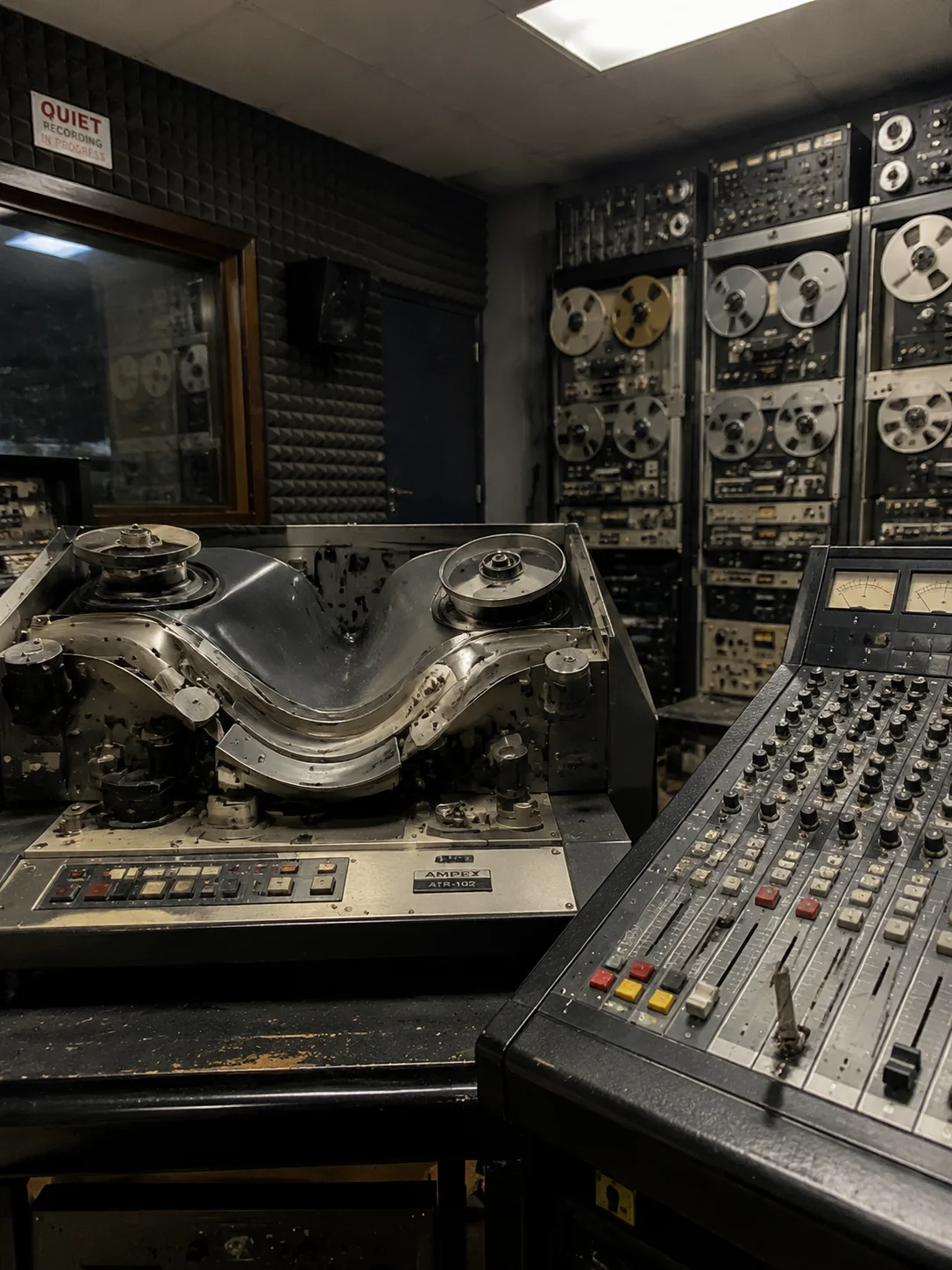
Modern digital stage equipment (mixing consoles, digital stage boxes, in-ear monitor systems), wireless communication (clear-com intercoms), personal smartphones with social media and encrypted messaging apps, digital audio workstations (DAWs) for song theft, keycard access to backstage areas, and basic CCTV at venue perimeters. No advanced AI or hacking tools.
✦ Related Cases ✦