The Final Score
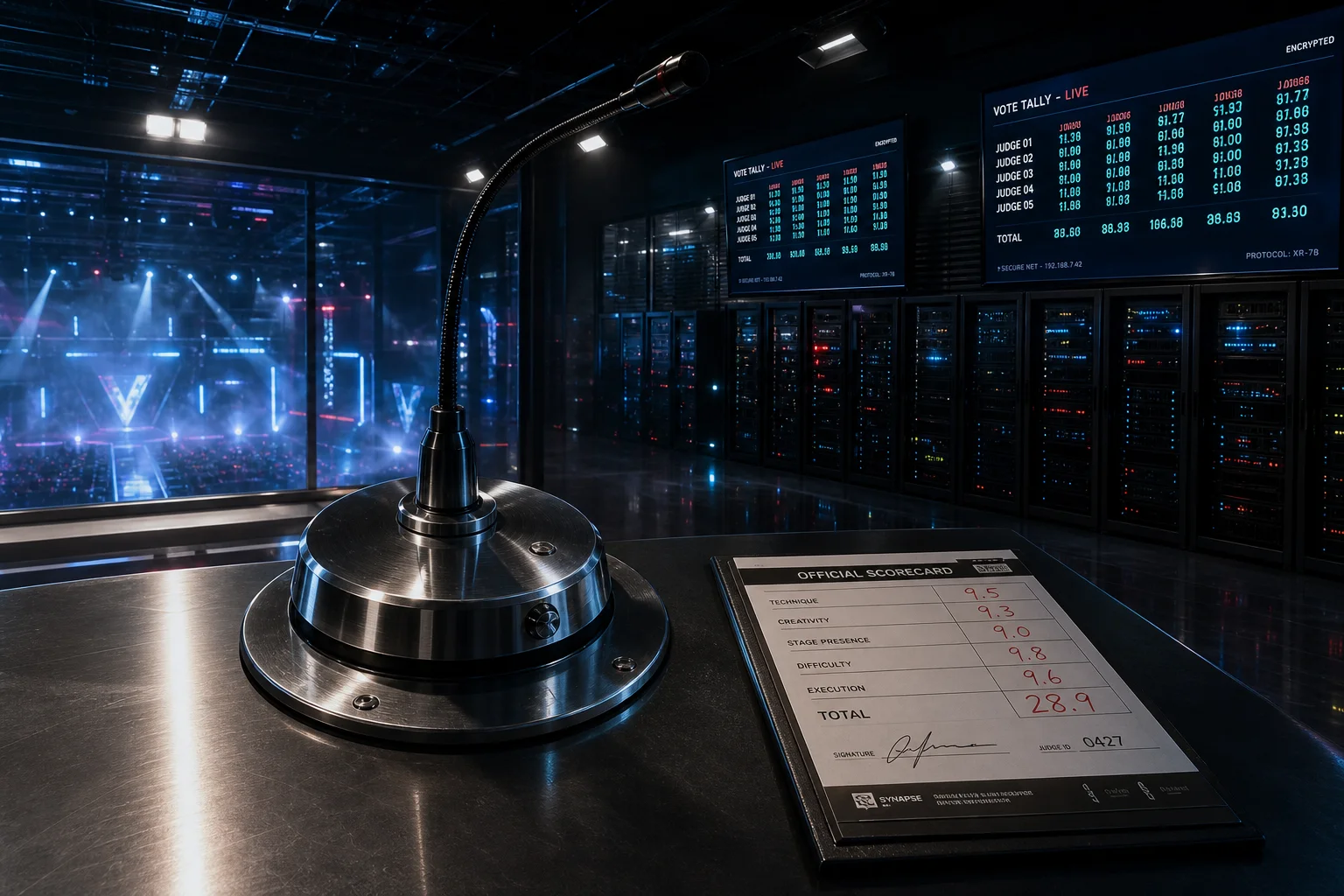
At the televised finale of a national talent show, the head judge is found deceased within her private scoring booth. Her meticulously prepared scorecard has been altered. The investigation reveals a stage contaminated by panicked, personal cover-ups, professional relationships, and a labyrinth of industry pressure.
 Initial Crime Scene
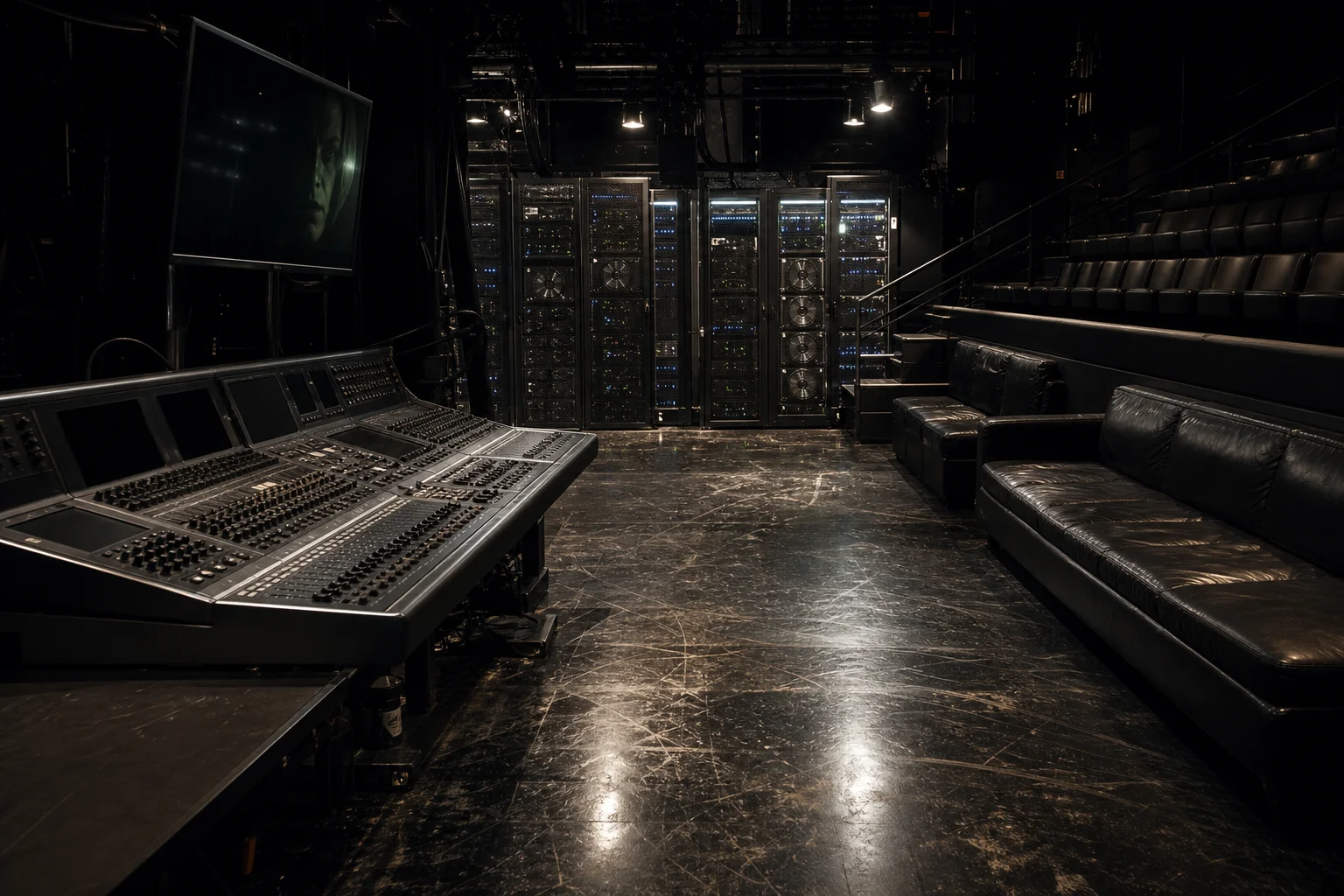
The polished studio floor reflects the harsh glare of overhead lights. A low, persistent hum vibrates from racks of encrypted production servers lining the far wall. The scent of warm electronics and stale coffee hangs in the recycled air. Digital vote tally logs flicker across primary monitors, their timestamps scrolling in a continuous, precise stream. The heavy, brushed-metal base of the judge's podium microphone stand anchors it to the floor.
 Crime Scene Environment
The lighting profile is clinical and high-contrast, casting sharp shadows from multiple angles. The air carries a cool, dry humidity with the faint, acrid scent of ozone from electrical equipment. The acoustic density is low, dominated by the constant, low-frequency drone of cooling fans and the distant, muffled roar of the audience, creating a oppressive, hyper-focused vacuum.
 Investigation Constraints
Modern broadcast studio equipment, digital voting tablets with proprietary software, encrypted production servers storing live feed logs, personal smartphones with cloud-synced messaging apps, biometric access panels to restricted backstage areas, wireless microphone packs, and social media management dashboards. No advanced cybernetics or AI forensics.
✦ Related Cases ✦