The Gilded Stage
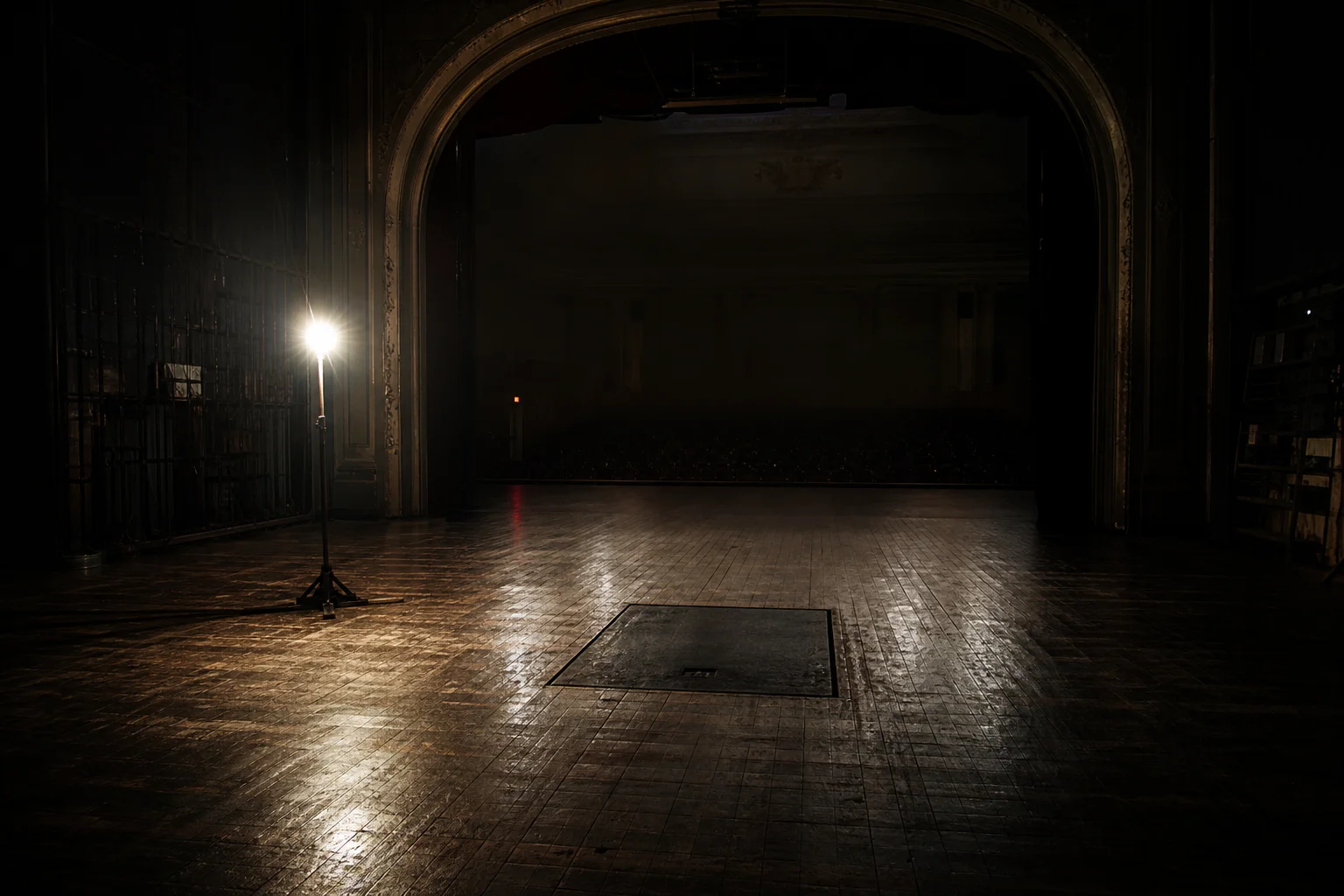
The curtain falls on opening night at the Grand Majestic Theatre. The lead actor is found in his private dressing room. An evening's playbill contains a typographical error. The investigation will navigate the theatre's backstage world of artistic ambition, financial arrangements, and personal histories.
 Initial Crime Scene
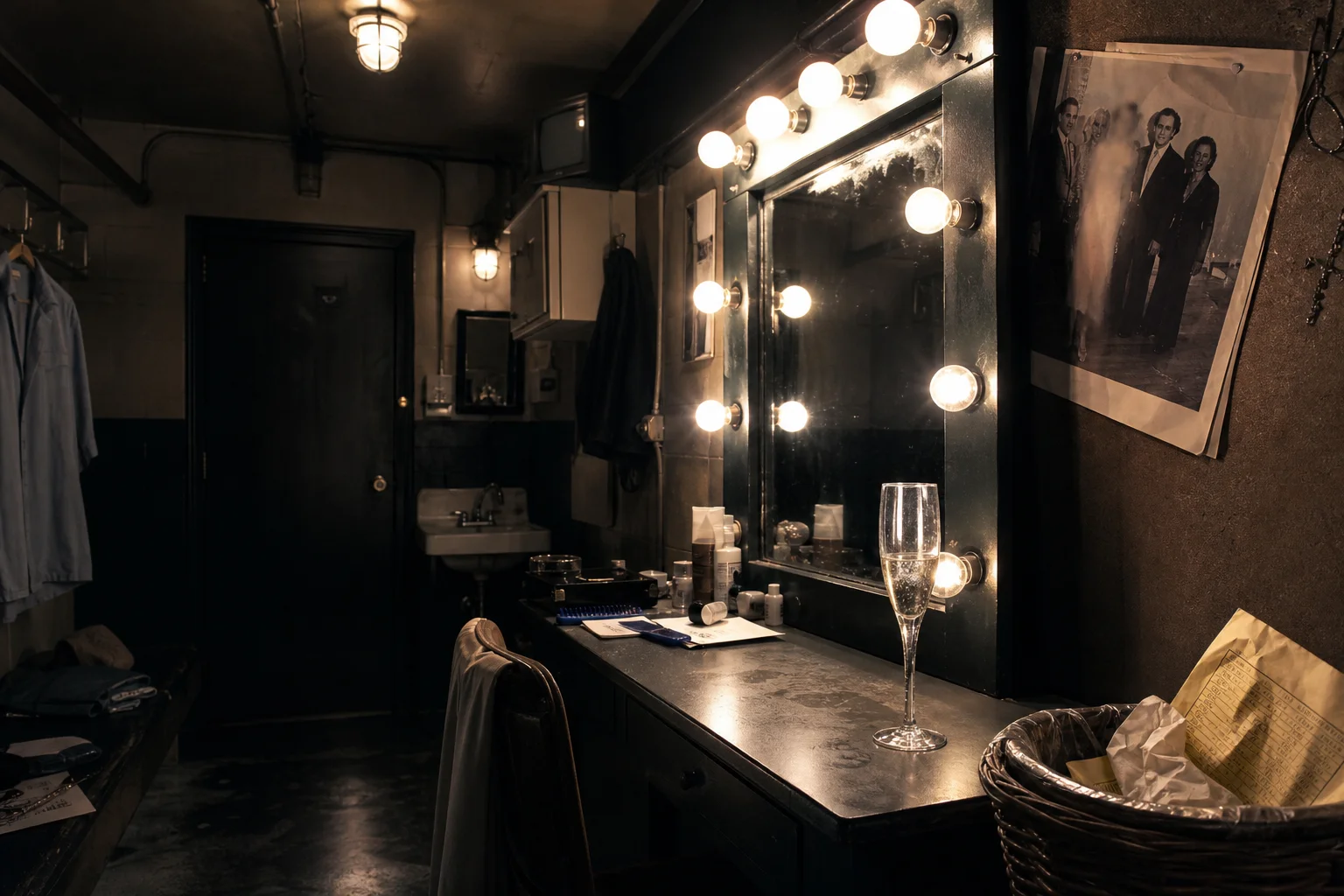
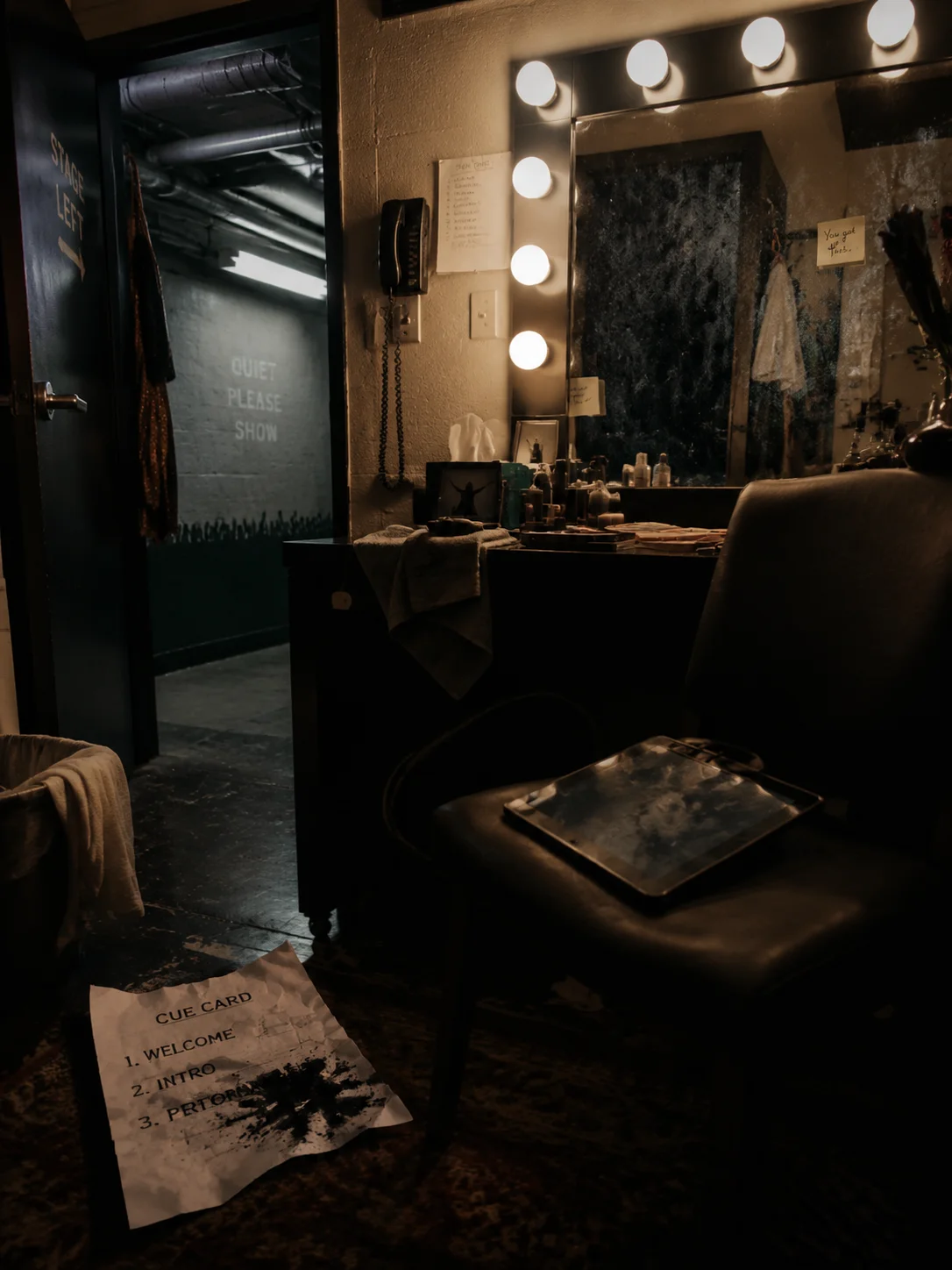
The first breath catches on the scent of spilled brandy and cold cream, thick in the still air. From the orchestra pit, a single, muffled cello note drones, a low hum against the silence. Your gaze adjusts to the bare bulb's glare, catching on three things: the moth-eaten velvet of the drapes, the clouded vanity mirror, and the deep, crude gouge in the brass mouthpiece of the rotary telephone.
 Crime Scene Environment
The scene is bathed in the flat, unflattering glare of bare, round vanity bulbs. The air hangs heavy and cool, carrying a dry dustiness. The acoustic density is low, dominated by the dull echo of your own movements and the distant, residual hum of the theatre's machinery.
 Investigation Constraints
The world operates with rotary dial telephones, analog ticketing systems, hand-operated stage machinery (pulleys, counterweights, sandbags), mechanical cash registers, handwritten ledger books, and manual photography with flashbulbs. Communication is via landline, physical notes, and face-to-face conversation. There is no internet, digital surveillance, or modern electronics.
✦ Related Cases ✦