The Gilded Stage
An independent investigator is summoned to a prestigious London theatre after a performer dies beneath the stage during a production. The investigation examines a night of conflicting schedules, missing tools, altered notes, and multiple individuals each harboring private crises.
 Initial Crime Scene
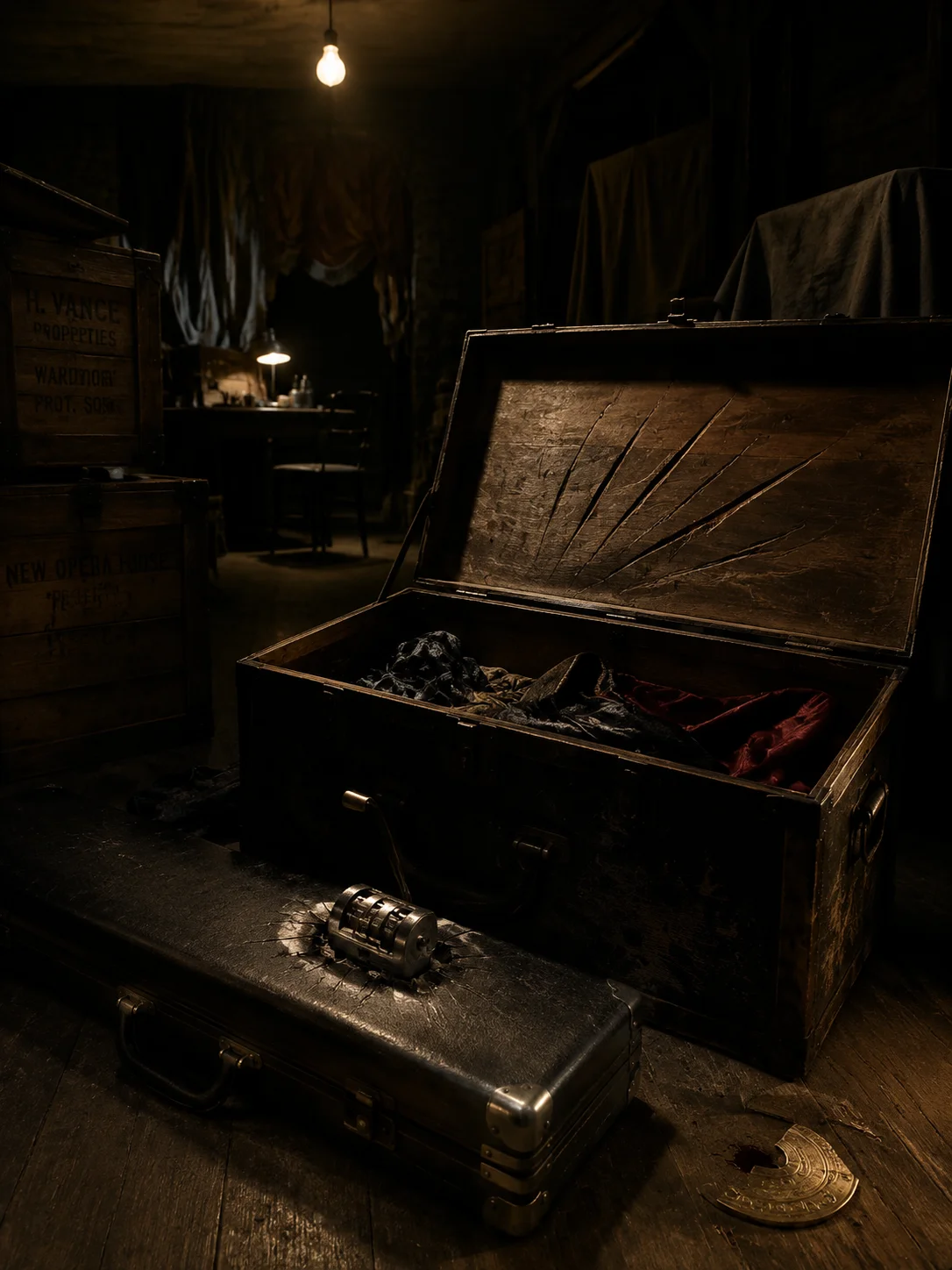
The scent of sawdust and mothballs hangs thick in the air. A single bare bulb swings overhead, casting long, jumping shadows across stacked wooden crates and draped furniture. Your first visual is the deep, parallel scratch marks gouged into the soft wood of a personal dressing room trunk lid, its lid propped open an inch. Beside it, the mechanical combination lock on a nearby prop sword case shows a cracked housing with concentrated impact indentations. A faint, dark, circular stain is visible on a fragment of polished brass on the floor.
 Crime Scene Environment
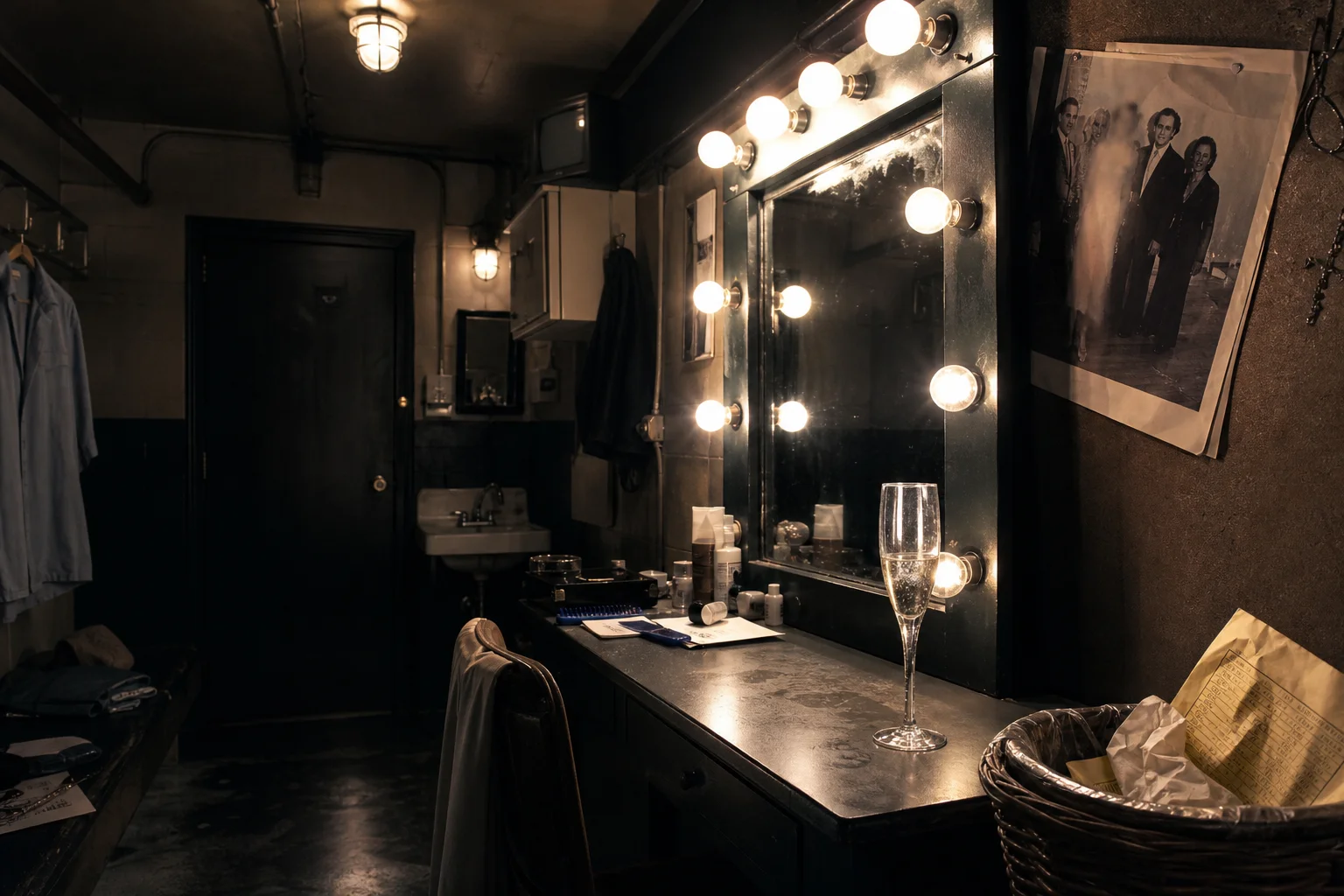
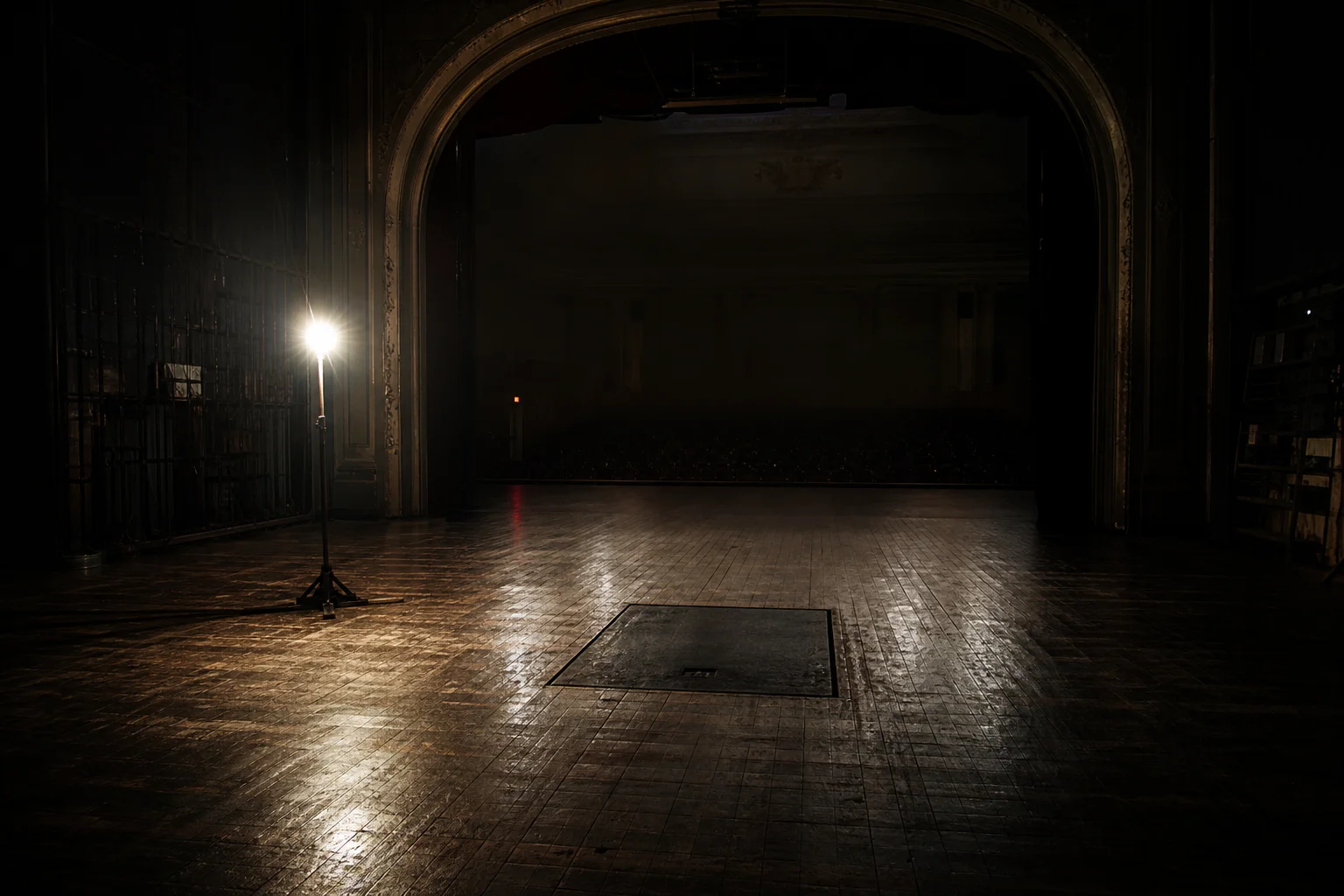
The sandbox is defined by dim, localized lighting from bare bulbs and desk lamps, creating pools of visibility amid pervasive shadow. The humidity is low, with a dry, dusty atmosphere that carries the smell of old paper, machine oil, and cedar. Acoustic density is high; sounds are muted by heavy curtains and wooden structures, but every creak, whisper, and distant thump carries with unnerving clarity.
 Investigation Constraints
Mid-20th century theatrical technology: manual trapdoor pulleys and winches, grease pencils for prop notes, carbon-copy contracts, printed playbills, physical mailing systems, telephone switchboards, film canisters for publicity reels, and mechanical combination locks on personal dressing room trunks.
✦ Related Cases ✦