The Gilt-Edged Secret
A proprietor's death in a village bookshop prompts an investigation into the physical remnants left within its hushed walls. Letters, ledgers, and the precise layering of cream and sugar in a used teacup become objects of study. The task is to parse the silent artifacts of polite society.
 Initial Crime Scene
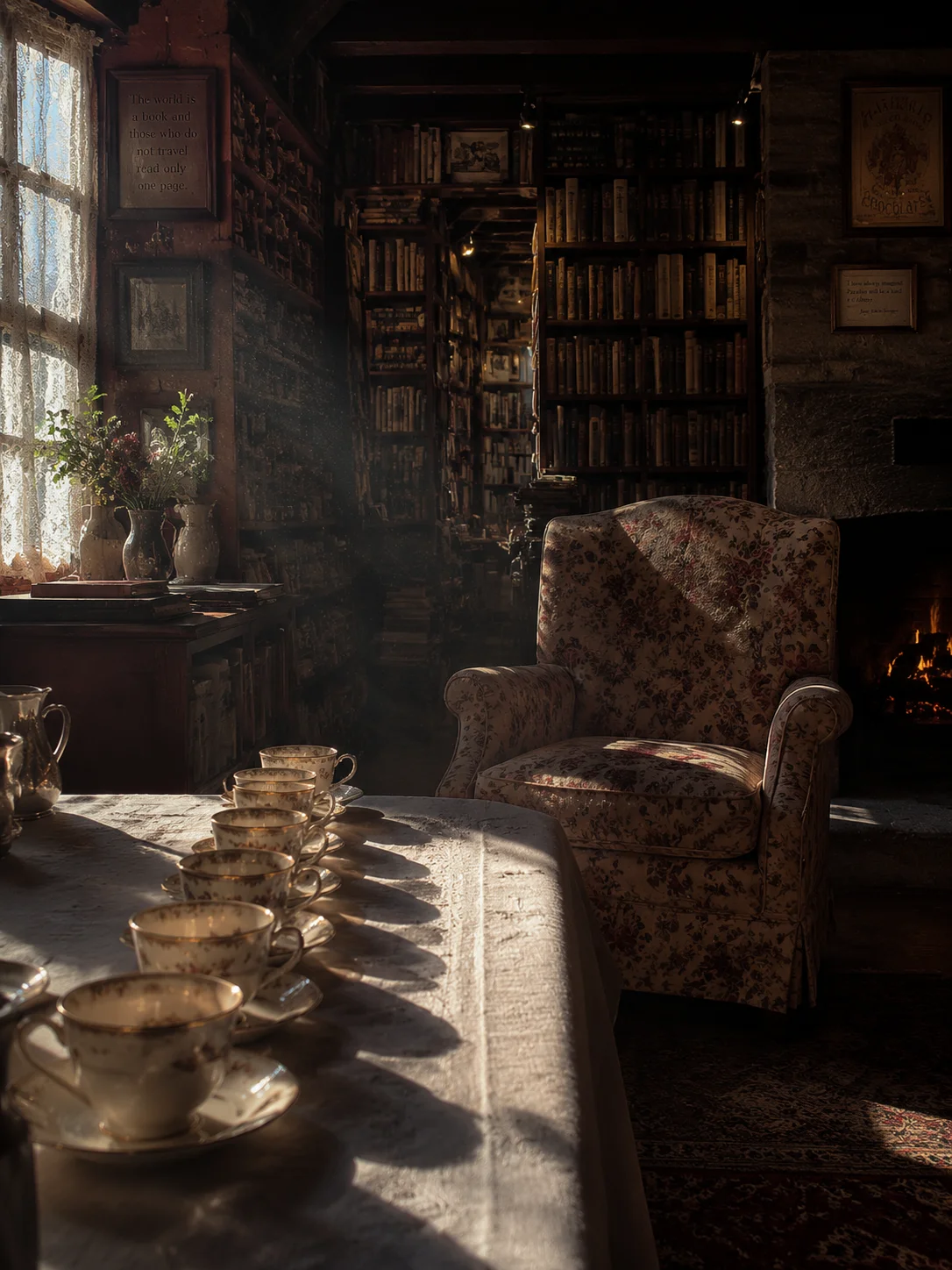
The scent of old paper and cold Darjeeling tea hangs in the air. A coal fire crackles faintly in the hearth. Afternoon light slants through lace curtains, illuminating dust motes that dance above a white linen tablecloth. Gilt-edged bone china cups sit in a precise row, and a chintz-patterned armchair shows a faint impression where someone recently sat.
 Crime Scene Environment
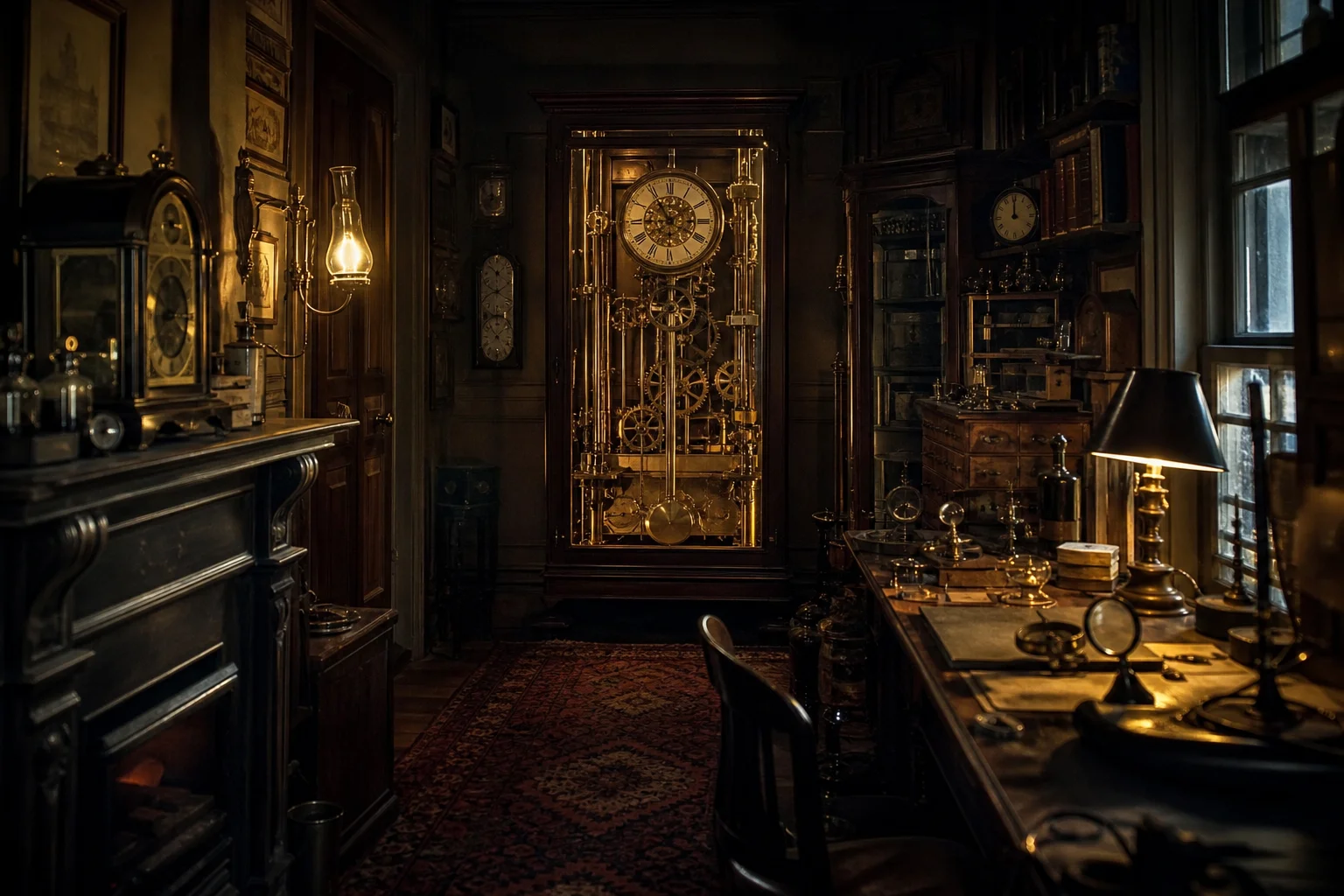
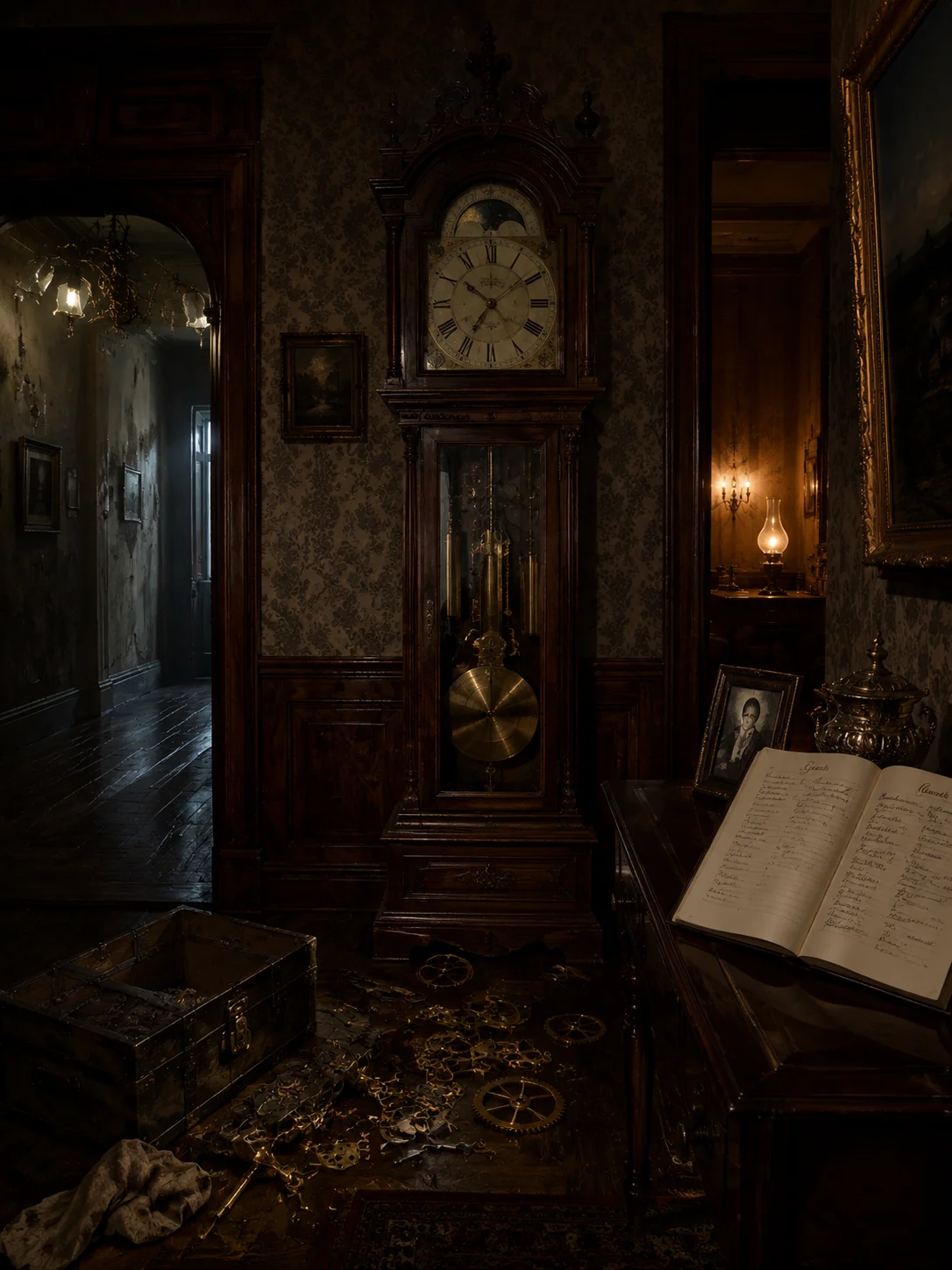
Lighting is dim, supplemented by coal fire glow and filtered afternoon sun, creating long shadows. The air carries a damp, mineral humidity from old stone walls and heated wool, with acoustic density muffled by thick carpets and book-lined walls, reducing sound to whispers and the occasional page turn.
 Investigation Constraints
Manual typewriters, rotary dial telephones, handwritten ledgers, brass locks with unique key patterns, fountain pens with distinct nib grinds, tea service sets, coal-fired hearths, handwritten wills and letters, local newspaper printing presses.
✦ Related Cases ✦