The Glare Behind the Glass
An access code to a private dressing space is discovered scrawled in an unexpected location. An independent investigator enters the production environment to parse fragmented data trails, contradictory alibis, and multiple, unconnected instances of personal panic. The objective is to isolate the origin of the code and determine the single, cold action that initiated the chain of events.
 Initial Crime Scene
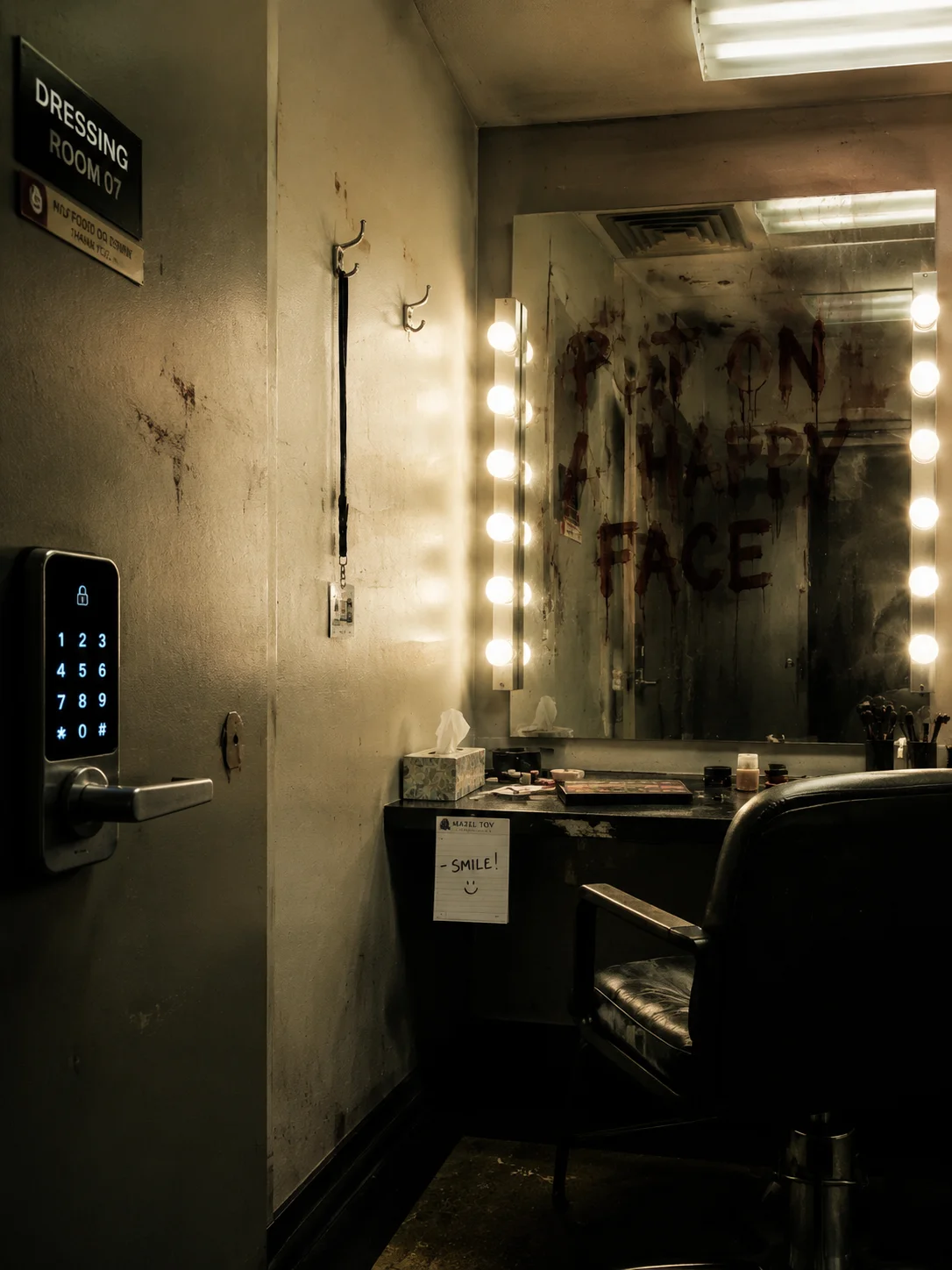
The heavy studio door swings inward, releasing a sharp, chemical scent of cleaning solutions mixed with cloying floral perfume. A low, electric hum emanates from a ring of vanity lights. Directly ahead, a large mirror reflects the cramped space, its surface marked by a dark, smeared scrawl. To the left, a digital keypad lock is set into the door, its buttons showing a dull, even wear. On the counter, a branded notepad is taped beside the mirror, its adhesive residue slightly raised.
 Crime Scene Environment
The sandbox operates under a harsh, artificial lighting profile with primary sources from vanity bulbs and overhead fluorescents. The humidity is low, controlled by studio HVAC, creating a dry, stagnant air. The acoustic density is defined by the constant, low-frequency hum of cooling fans and lighting rigs, punctuated by occasional distant studio chatter. The atmosphere is curated, superficial, and charged with the silent pressure of performance.
 Investigation Constraints
Modern consumer and professional social media tech: smartphones with encrypted messaging apps, cloud-based collaboration platforms, studio-issued keycard access logs, public Wi-Fi networks with user sign-in portals, basic smart home devices, professional lighting and camera equipment, and digital makeup palettes. No advanced forensic hacking or AI surveillance.
✦ Related Cases ✦