The Hourglass Fracture
A gathering at a remote estate is disrupted by the sudden death of its head. The central hourglass from his study is found shattered, its sand inexplicably damp. As rain isolates the grounds, an investigator must navigate the overlapping anxieties and meticulously maintained routines of the household to reconstruct the sequence of events.
 Initial Crime Scene
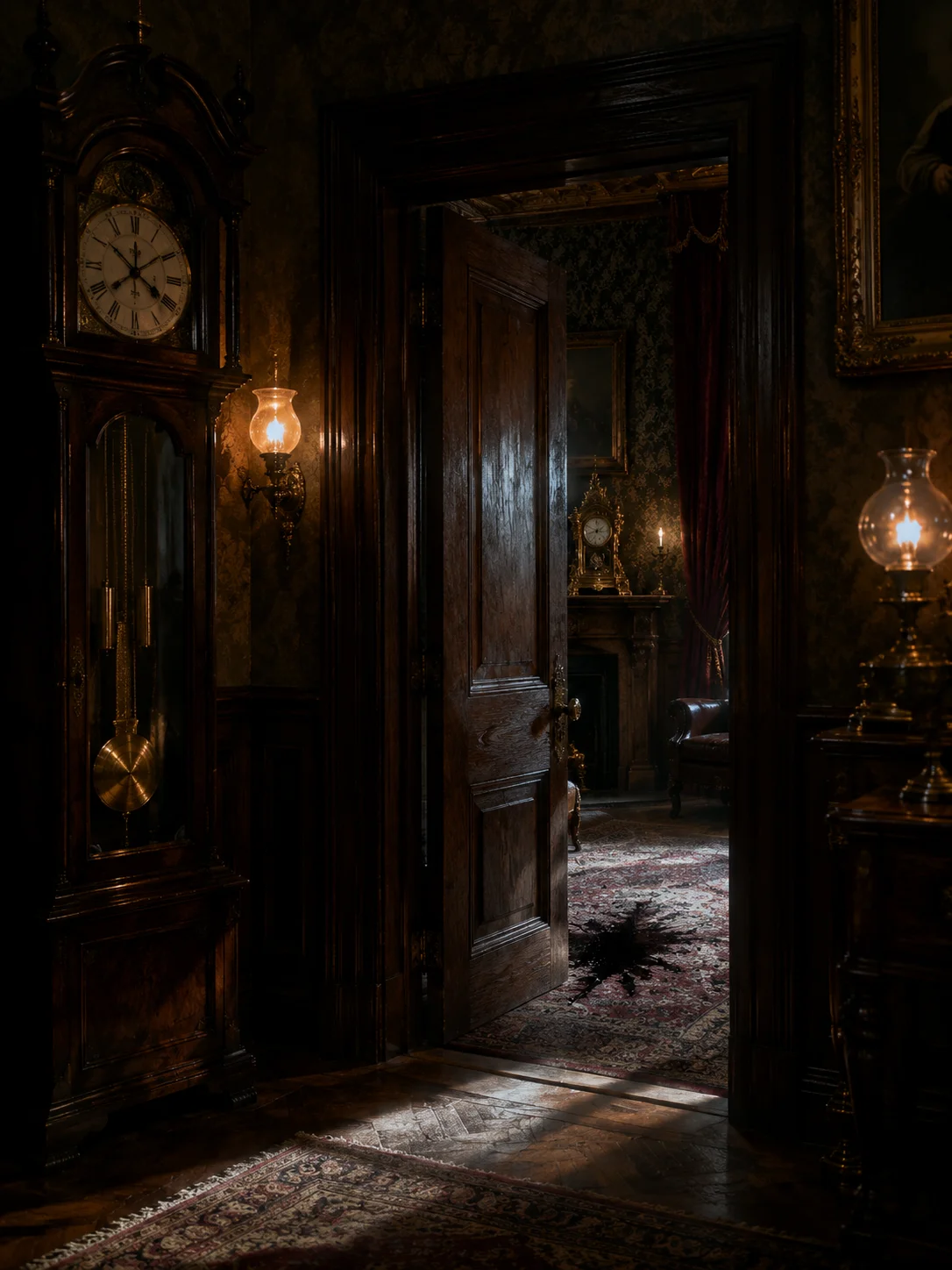
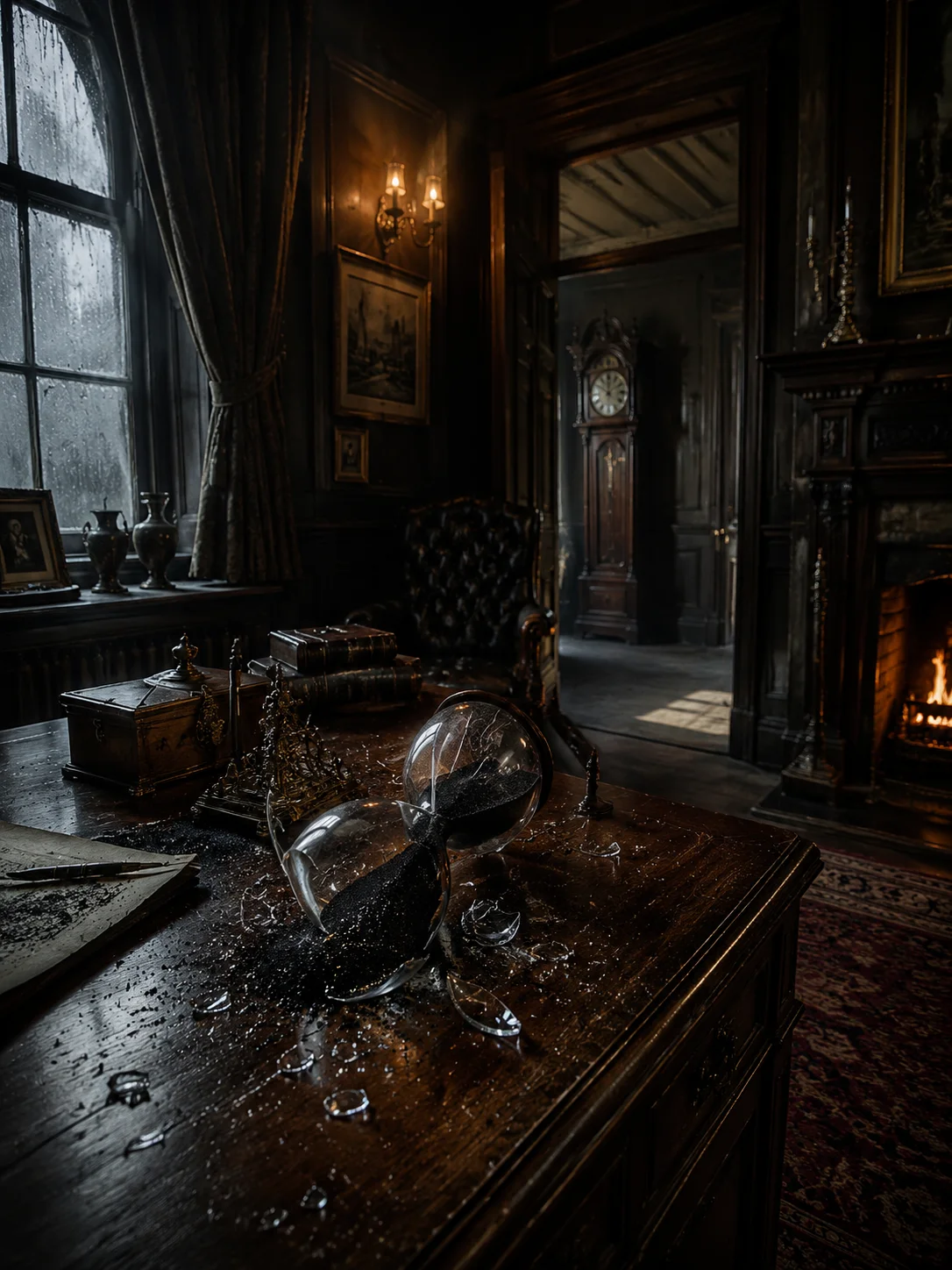
The scent of aging paper and coal soot is sharp in the still air. A steady tick emanates from a grandfather clock in the hall, its rhythm met only by the faint crackle from the coal fire. Condensation traces intricate, shifting patterns on the single-pane window glass. The grain of the dark oak paneling is worn smooth in patches near the door. The hourglass on the heavy desk lies in a scatter of curved glass shards and dark, damp sand.
 Crime Scene Environment
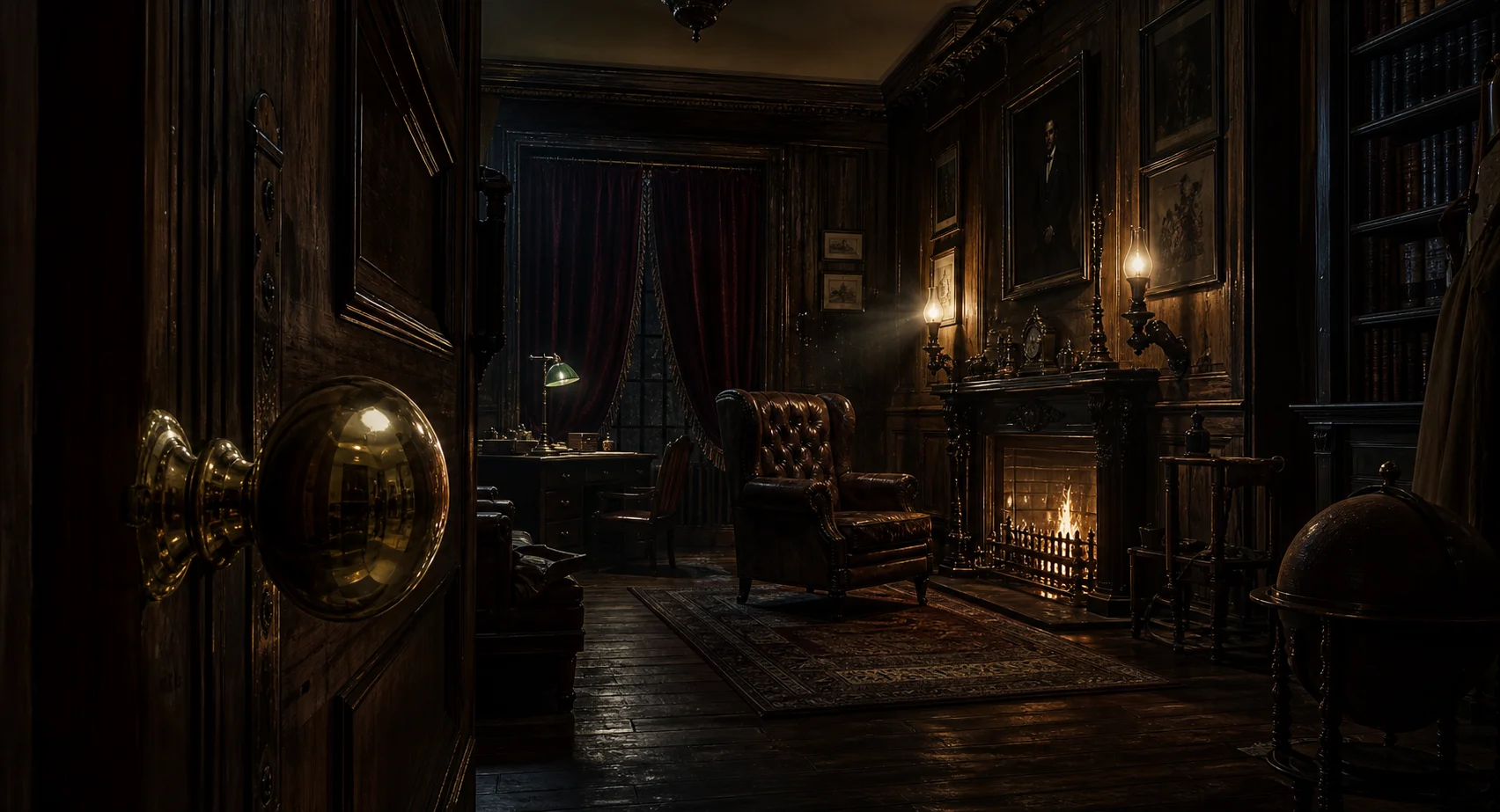
The manor's interior is suffused with a dim, amber glow from coal fires and low-burning lamps. The air is dry and crisp from the hearth's heat, yet carries a persistent, underlying dampness from the rain-soaked grounds. Acoustic density is low; sounds are muffled by thick carpets and wood paneling, leaving individual noises—the creak of a floorboard, the rustle of a skirt—isolated and distinct.
 Investigation Constraints
Handwritten letters, mechanical clocks, analog telephones (limited to a single line in the main hall), manual locks, photographic darkrooms, paper ledgers, hand-pumped well water, coal-fired heating systems, and personal diaries with wax seals.
✦ Related Cases ✦