The Household's Fractured Order
An independent investigator arrives at an isolated country manor following the sudden death of its patriarch. The weekend gathering's social order begins to unravel as the physical environment and guests' testimonies present a series of contradictory details.
 Initial Crime Scene
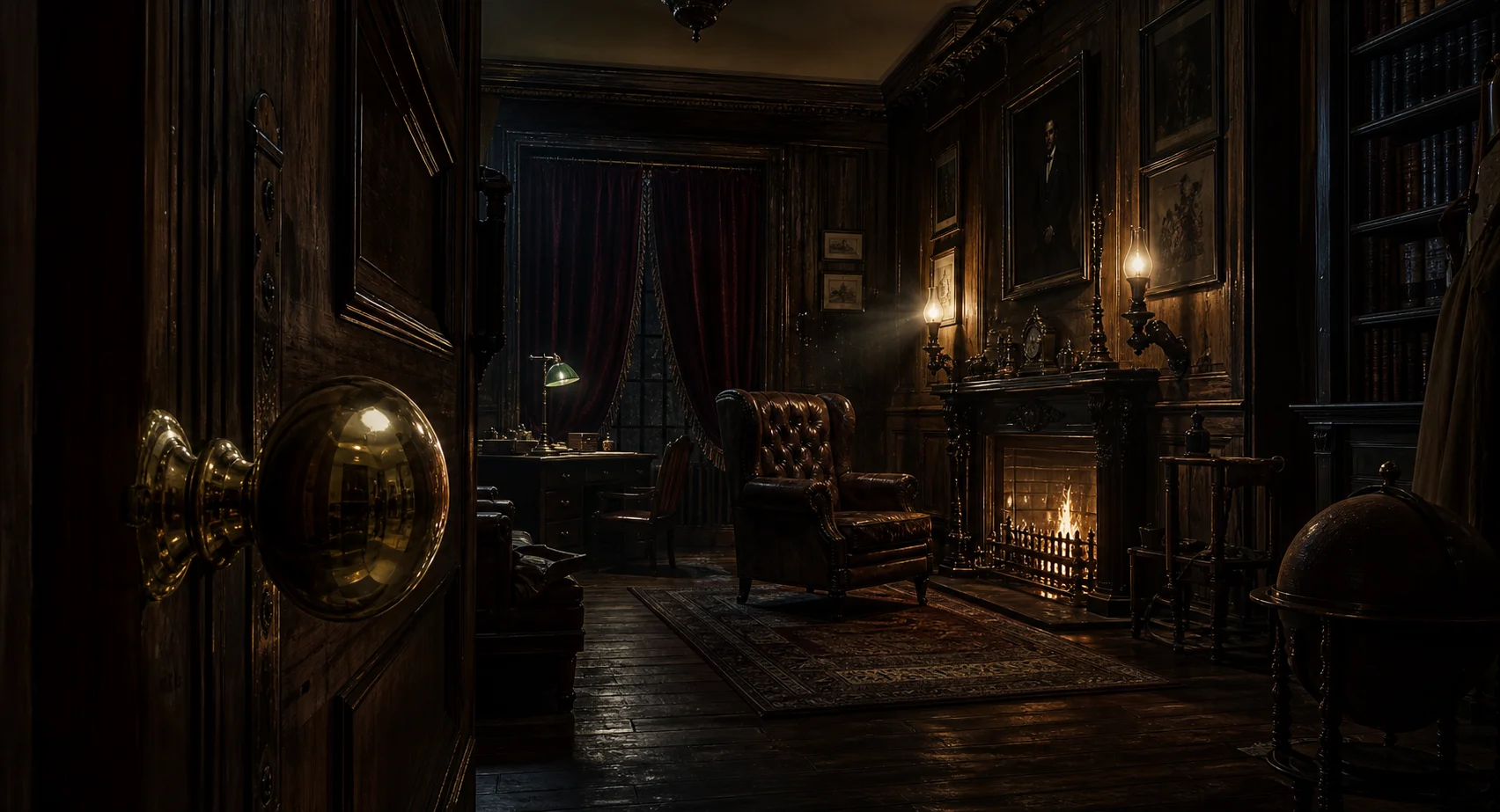
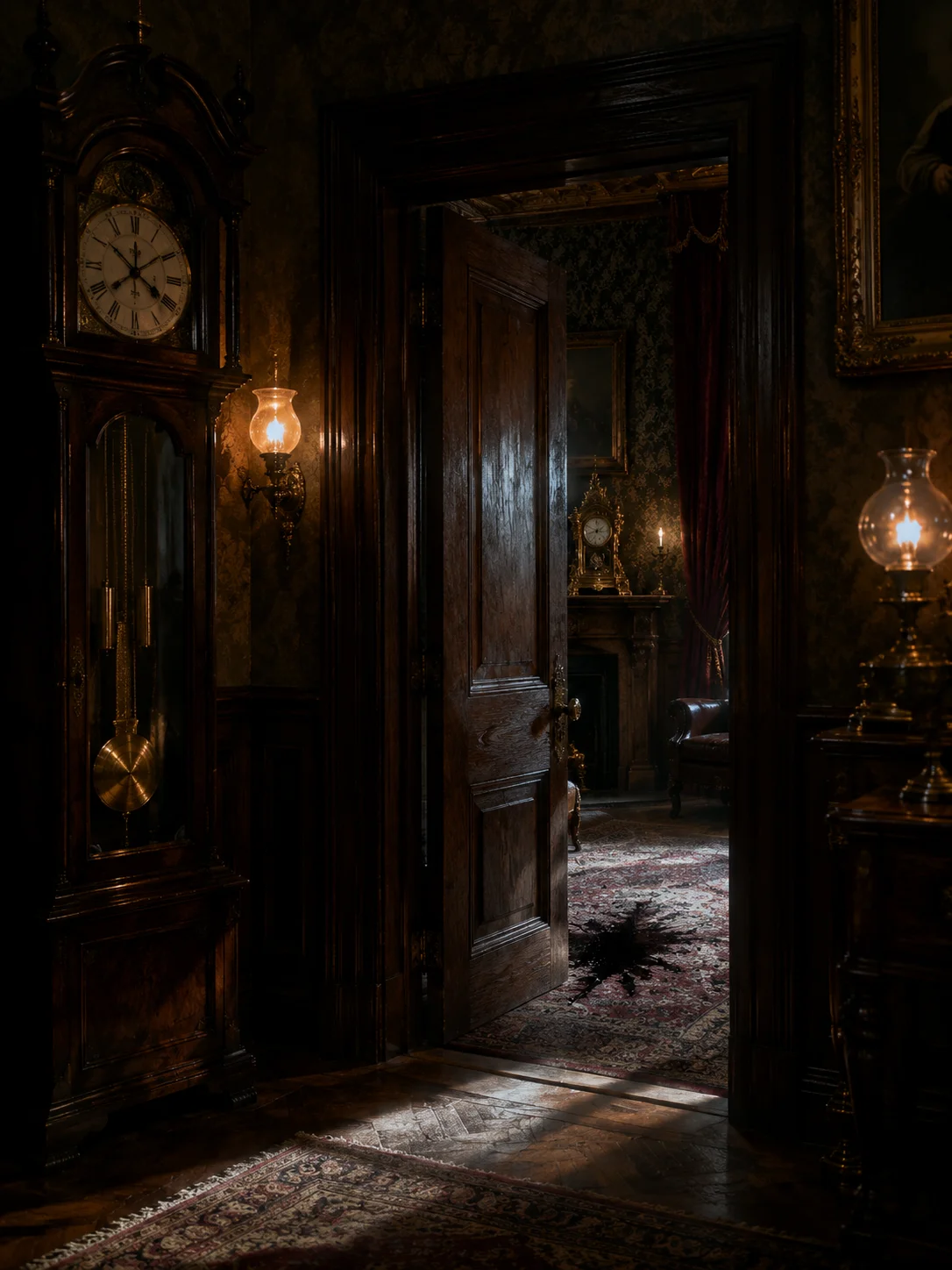
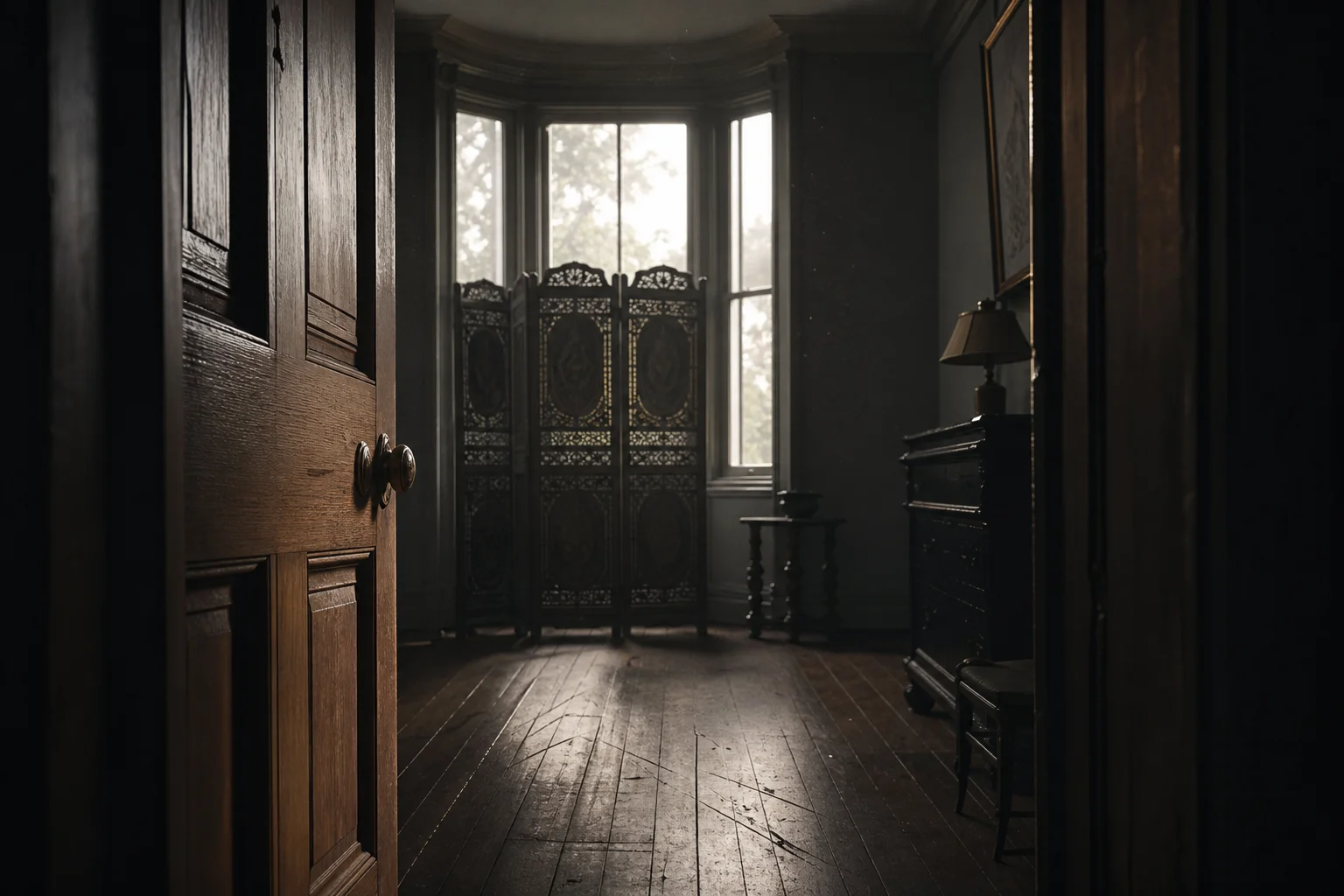
The heavy oak door groans open into a room steeped in stillness. The first breath carries the acrid tang of burned paper from the grate, a scent that clings to the air. A large, ornate room screen blocks the bay window, its felt feet leaving fresh parallel scuff marks on the polished floorboards. Dust motes drift in the gray light from the unobstructed upper panes, disturbed by the intrusion. The air is silent except for the faint, rhythmic creak of a specific floorboard under a new weight.
 Crime Scene Environment
Lighting is a diffused, gray daylight filtered through high, unobstructed window panes. The air is cool and still, carrying a humidity that feels stale and heavy, like breath held too long. Acoustic density is low; sounds are muffled by heavy drapes and thick carpets, yet every small noise—a settling board, a rustle of fabric—feels amplified in the hushed, claustrophobic atmosphere.
 Investigation Constraints
Handwritten letters, personal diaries, mechanical clocks, telegrams (delivered by hand or local operator), wall-mounted house telephones (internal lines only), brass locks and keys, matchsticks and hearth fires, oil lamps, hand-pumped water, manual silver polish, vintage cameras requiring plate development.
✦ Related Cases ✦