The Institutional Ledger
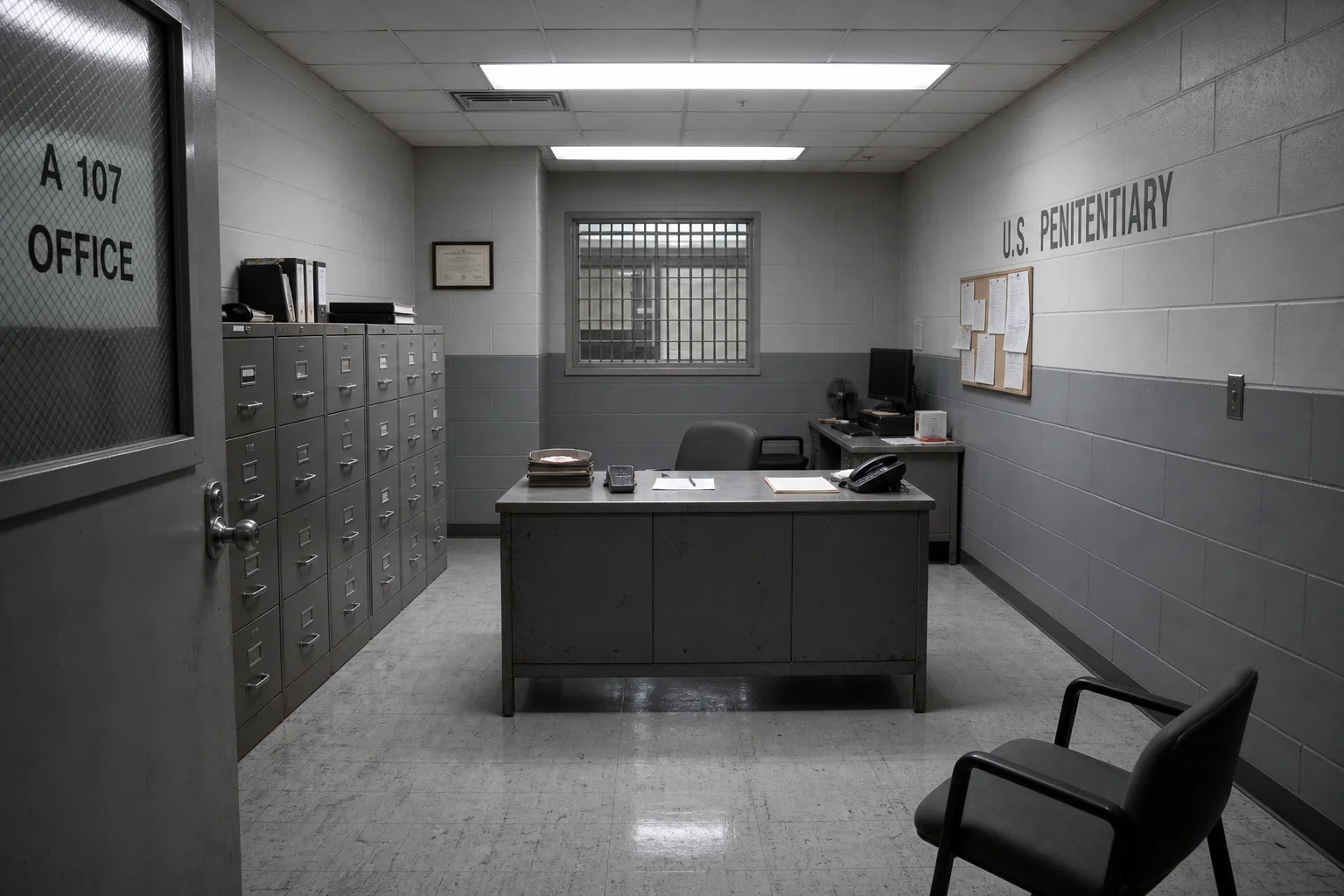
Within the controlled hierarchy of a state penitentiary, the discovery of a deceased inmate disrupts the facility's documented order. The investigation must untangle a web of professional obligations, recorded activities, and systemic data to reconstruct the events leading to the death.
 Initial Crime Scene
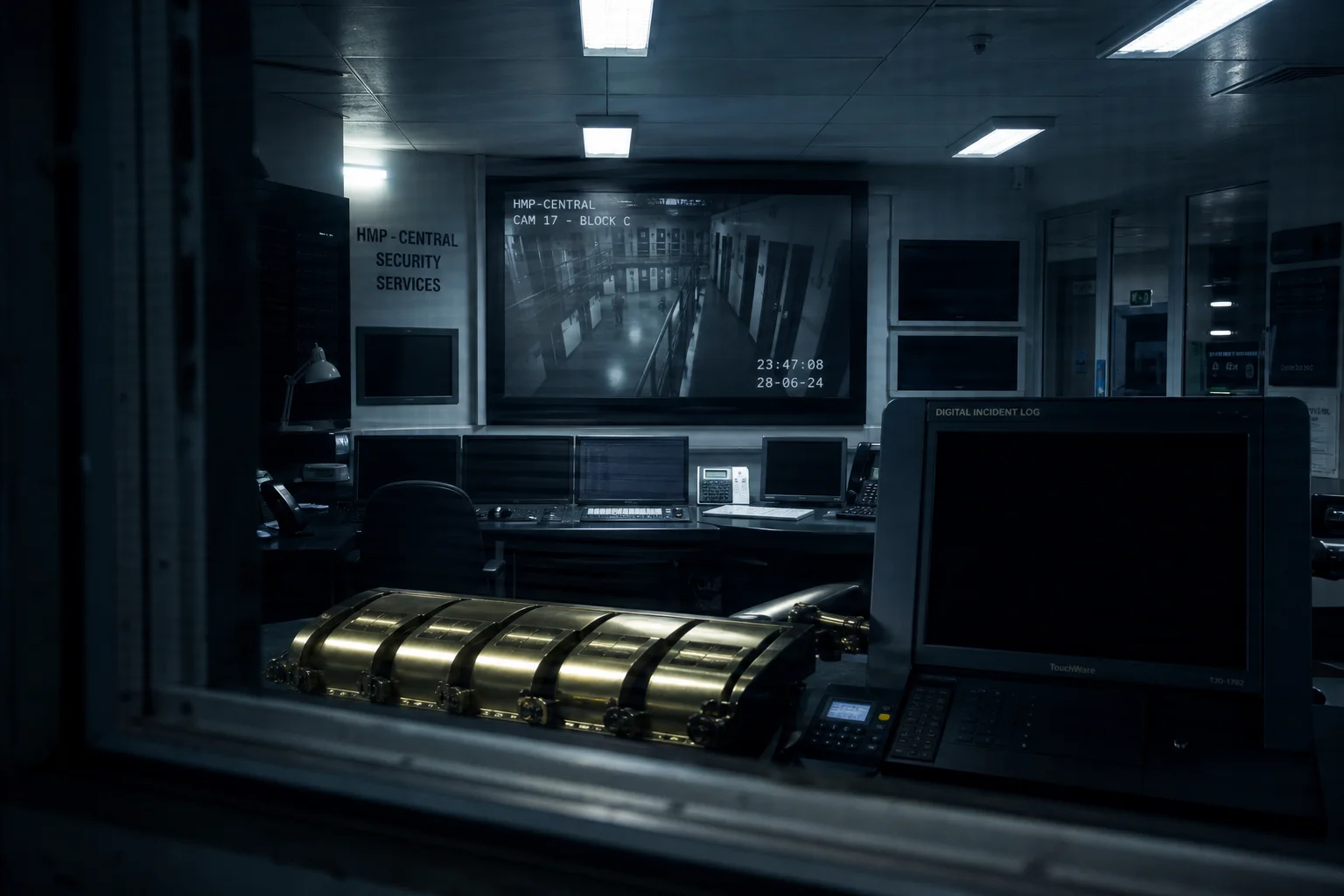
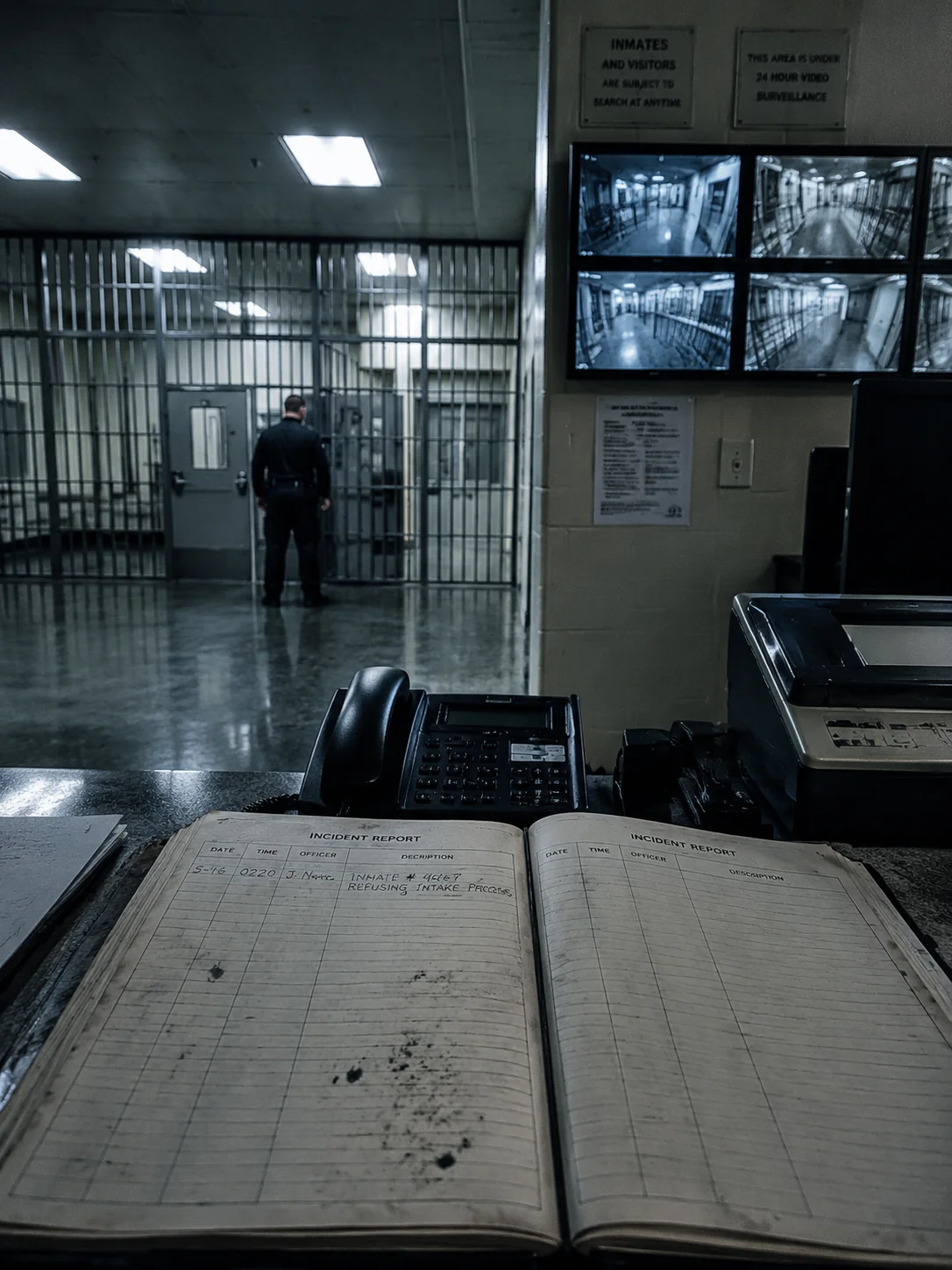
The cold, fluorescent light reflects off polished concrete and steel bars, casting a flat, shadowless glow across the intake area. The air carries the scent of stale cigarette smoke and floor polish. The worn, ink-stained pages of the guard's incident report ledger lie open on the desk, a single entry incomplete. A CCTV monitor bank on the wall shows a playback image frozen in static.
 Crime Scene Environment
Lighting is institutional and cold, provided by overhead fluorescent tubes that eliminate shadow and cast a flat, analytical illumination. The air is cool, with a consistent, low humidity that carries the faint, chemical scent of cleaning agents. Acoustic density is low, characterized by the hum of electronics, the distant echo of a closing steel door, and the muffled, indistinct sounds of the prison's operational background.
 Investigation Constraints
Centralized digital inmate tracking logs (TIMESTAMP, LOCATION, ACTIVITY), CCTV camera systems with limited playback and potential 'data gaps', electronic door access logs for cellblocks and common areas, portable forensic scanners for substance and biological trace analysis, internal memo systems on secured terminals, radio communications between guard posts, paper-based grievance and visitor logs maintained for legal compliance.
✦ Related Cases ✦