The Ivory Tower's Dust
A PhD candidate collapses during her thesis defense. An investigator is called to a mid-20th century academic setting to examine the physical evidence, environmental traces, and the personal conduct of the faculty and staff present. The focus is on untangling a sequence of events and statements.
 Initial Crime Scene
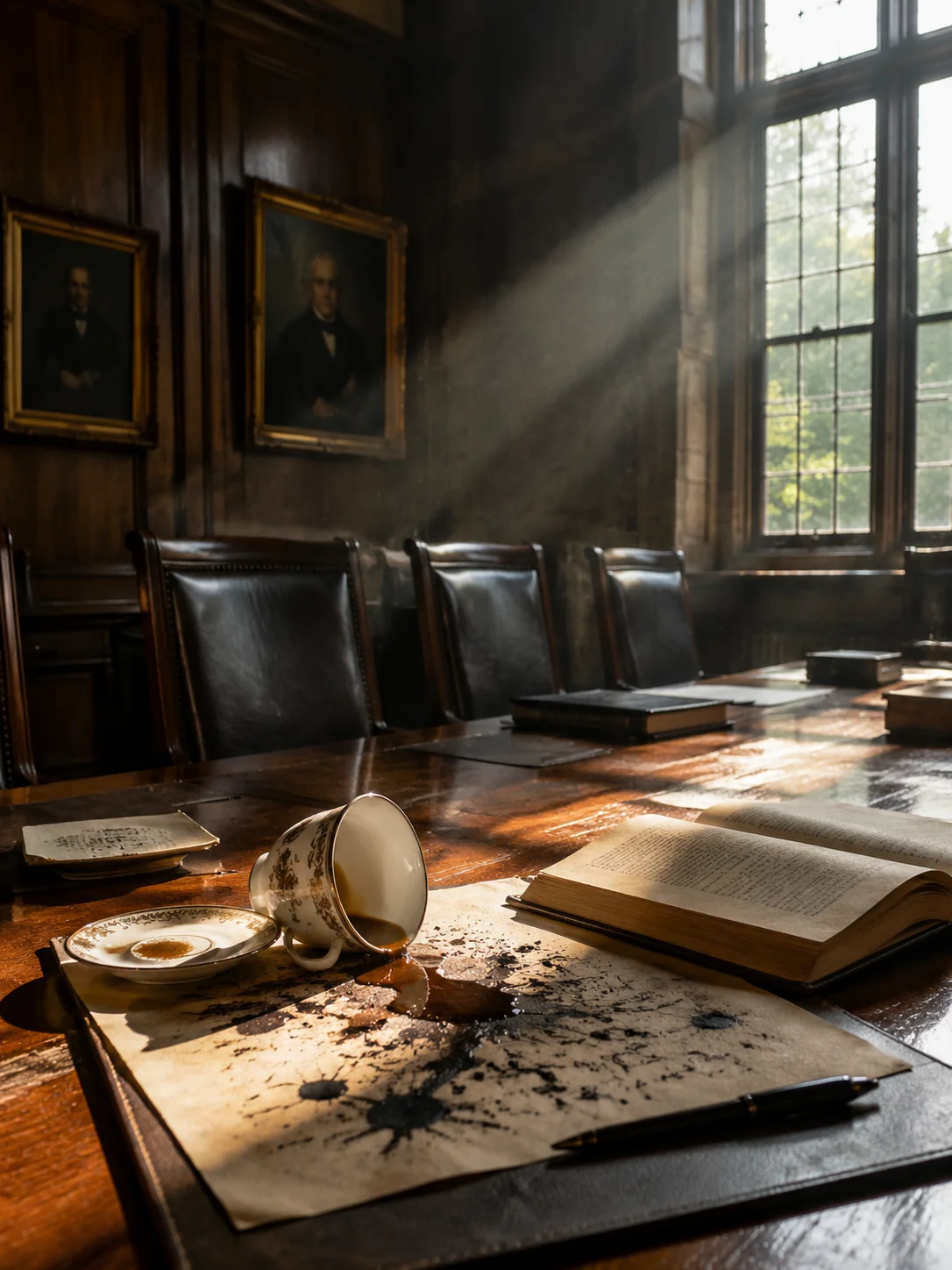
The scent of old paper and stale pipe tobacco hits first, thick and dry in the still air. A shaft of afternoon sunlight cuts through a tall, mullioned window, illuminating a long, polished oak table and the high-backed leather chairs surrounding it. Dust motes dance in the beam. On the table, a fine china teacup lies on its side, a dark, spreading stain soaking into the ink-stained blotter paper beneath it. Beside it, a leather-bound book rests open, its pages still.
 Crime Scene Environment
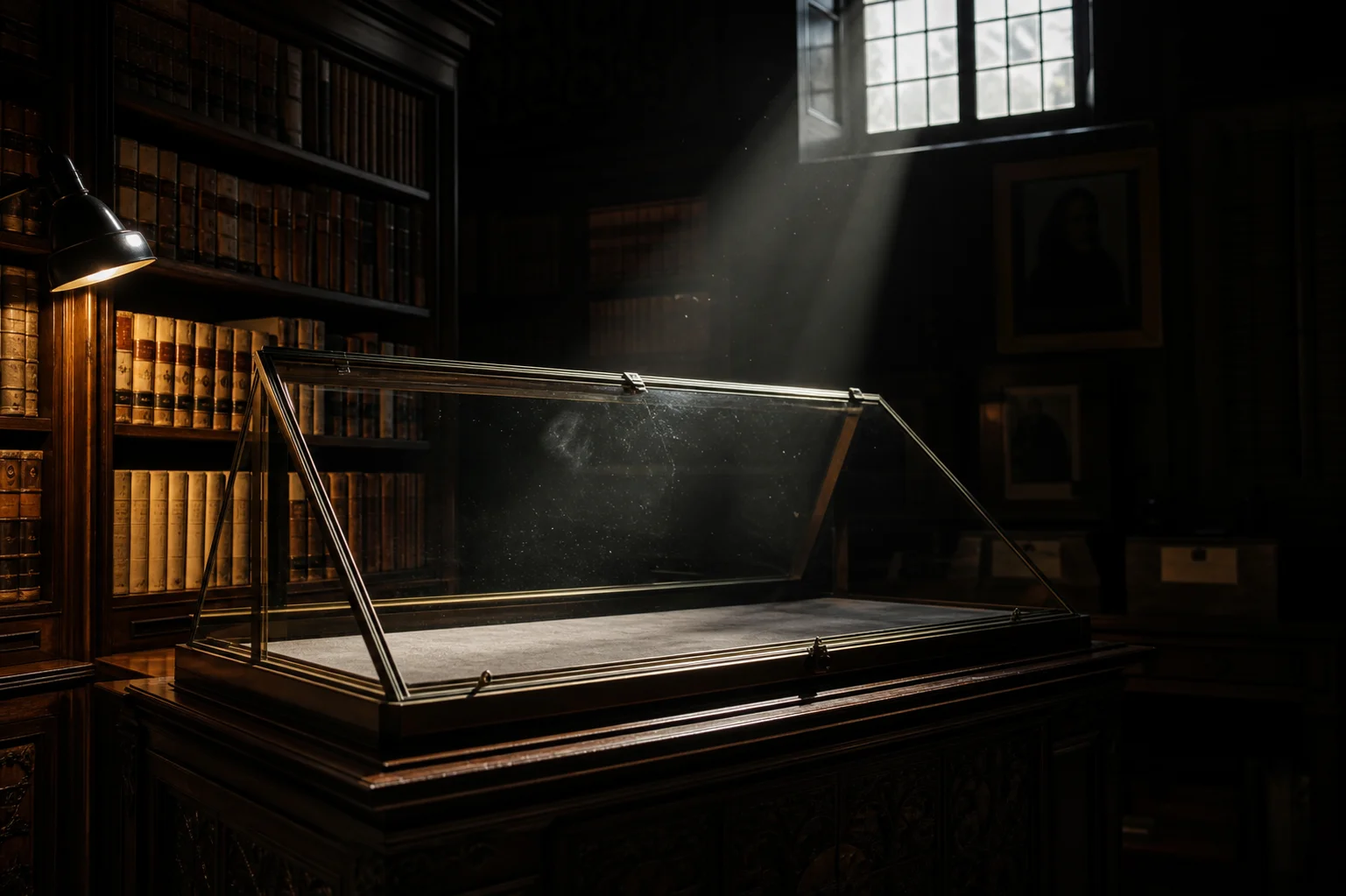
The lighting is natural and directional, filtering through tall windows with mullioned panes, creating sharp contrasts and deep shadows in the oak-paneled room. The humidity is low, the air dry and cool, with a persistent, faint chill. Acoustic density is minimal; sounds are absorbed by the wood paneling and leather upholstery, resulting in a hushed, reverberant quiet where even a slight rustle carries.
 Investigation Constraints
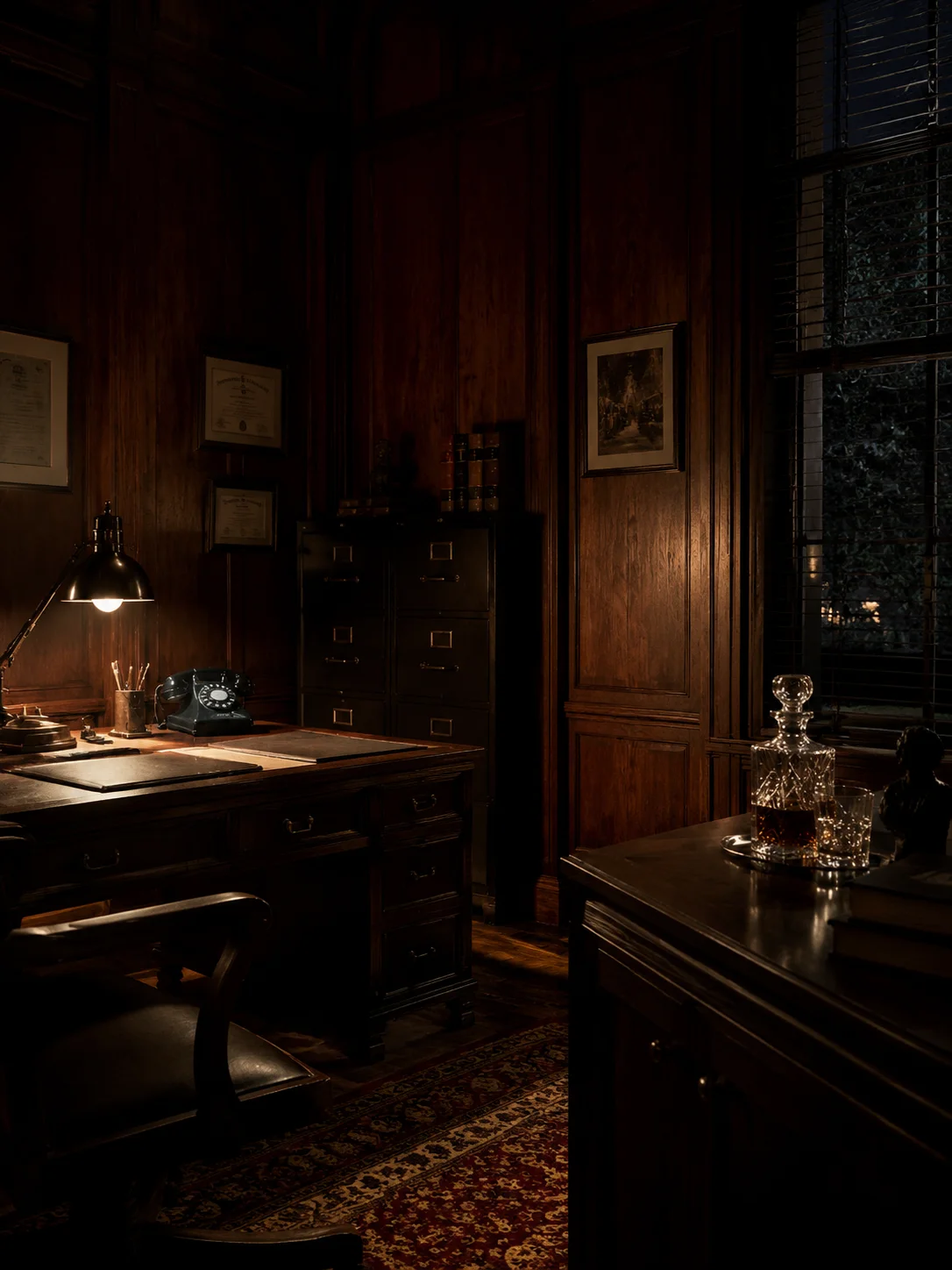
Mid-20th century academic setting. Tools include: rotary telephones, typewritten letters, carbon-copy memos, library card catalogues, hand-written research notebooks, analog laboratory equipment (microscopes, glass beakers), mechanical door locks with physical keys, paper-based administrative files, and formal engraved invitations. No digital systems, computers, or electronic recording devices exist.
✦ Related Cases ✦