The Ivyton Account
The matriarch of the Ivyton Knitting Circle is discovered deceased in her own sitting room. The members' testimonies present a labyrinth of contradictory details regarding household schedules, financial ledgers, and the positioning of antique furnishings. An independent investigator is summoned to disentangle the physical evidence from the social fabric.
 Initial Crime Scene
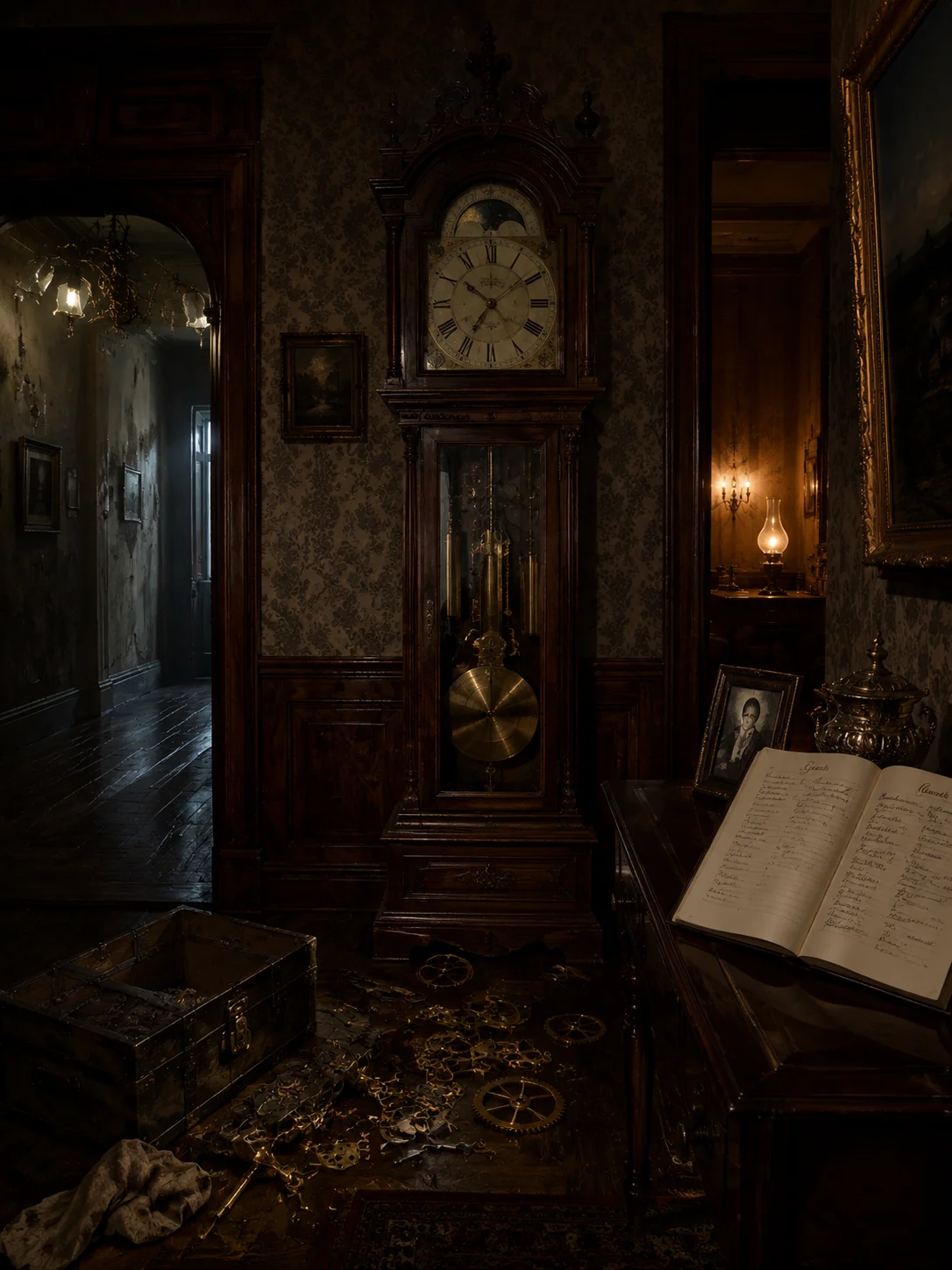
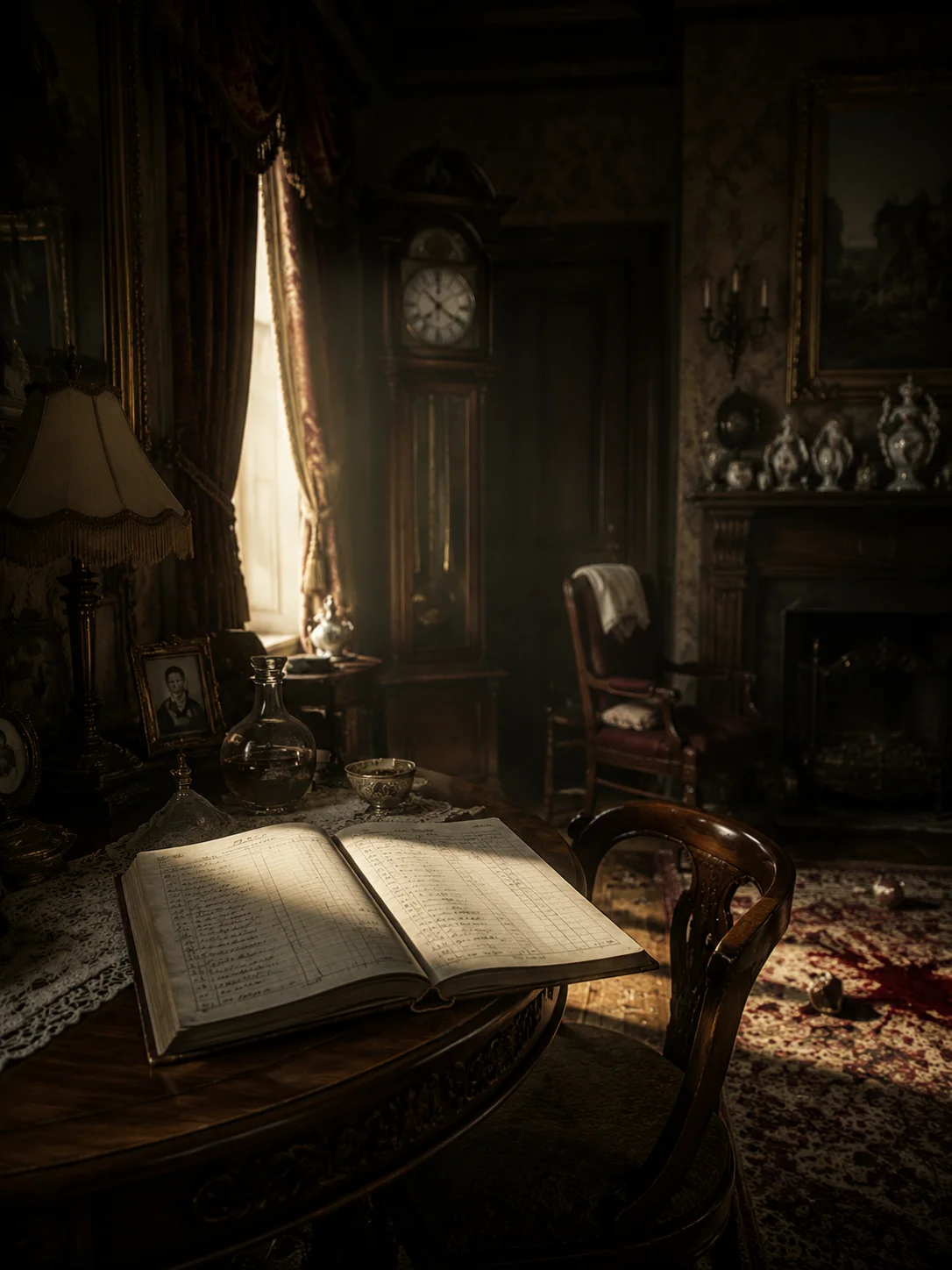
The air carries the scent of beeswax polish and dried lavender, undercut by a faint, metallic tang. Silence presses in, broken only by the slow, deliberate tick of a grandfather clock. The afternoon light, filtered through heavy velvet curtains, falls across the precise, handwritten entries of a household account book left open on a side table. The alignment of the heavy clock is exact. On the crowded mantelpiece, dust patterns on the porcelain figurines are undisturbed.
 Crime Scene Environment
The lighting is dim and watery, filtered through draped curtains, creating deep shadows in the corners. The humidity is low, the air dry and cool, carrying the faint chill of a rarely used, formal space. The acoustic density is high; sounds are muffled by thick rugs and heavy fabrics, making even slight movements seem pronounced against the underlying, constant tick of the clock.
 Investigation Constraints
Victorian to early Edwardian-era domestic tools only. Communication is via handwritten letters, telegrams, or face-to-face conversation. Locks are mechanical pin-tumbler or warded. Data is stored in personal diaries, household ledgers, or public parish records. There are no electronic devices, cameras, or digital traces.
✦ Related Cases ✦