The Laundry Directive
An independent forensic specialist is dispatched to the facility's industrial laundry processing zone following a reported incident involving a deceased inmate. The investigation begins with a review of the zone's mechanical systems, personnel logs, and digital access records.
 Initial Crime Scene
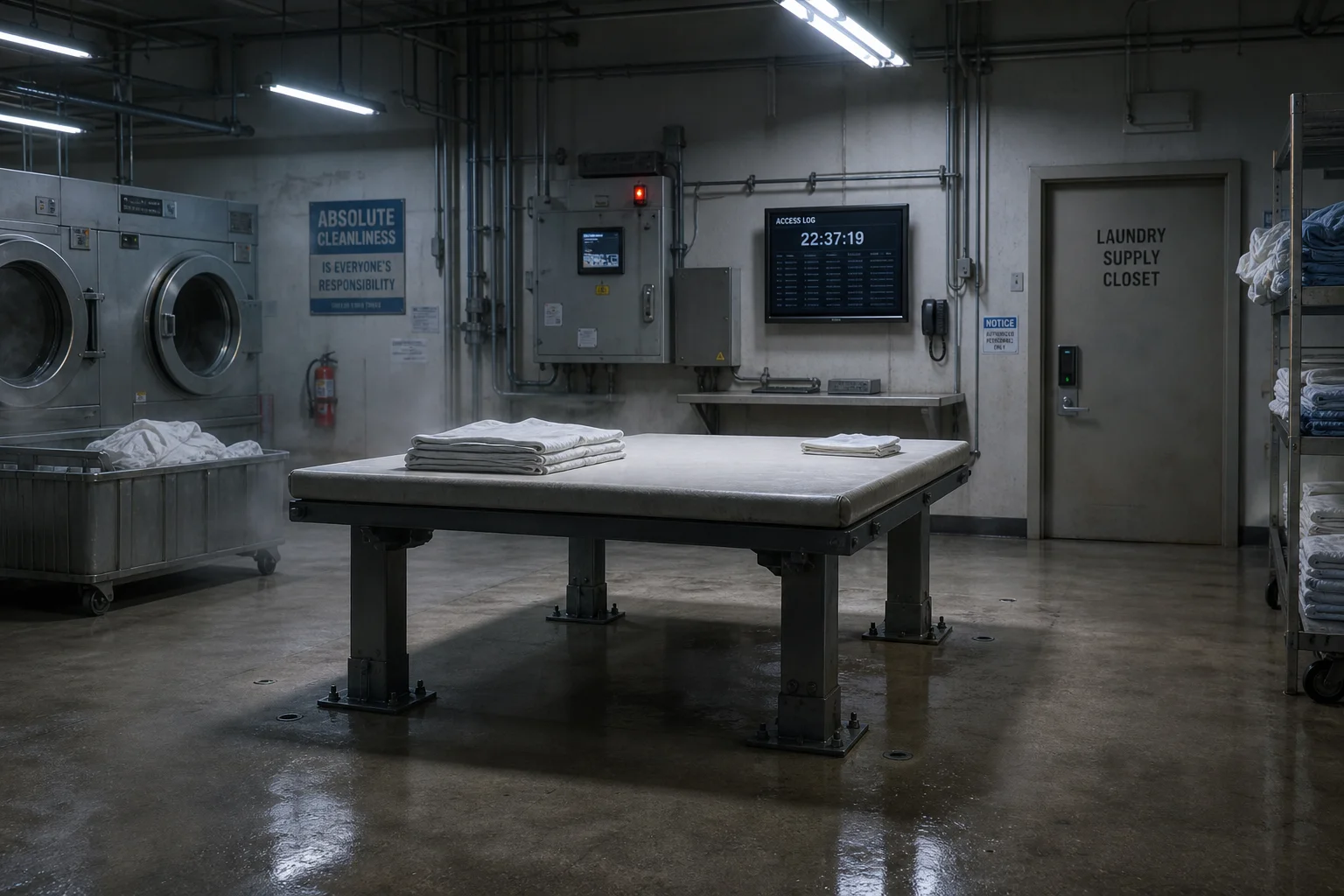
The heavy, bolt-mounted laundry folding table fills the center of your view. The air carries the sharp, chemical odor of industrial disinfectant. A single, persistent beeping emanates from the hardwired control panel on the far wall. Your gaze catches the misalignment of the table's legs against their bolt holes in the concrete. The swipe access timestamps on the digital log for the laundry supply closet display a static time.
 Crime Scene Environment
Lighting is a uniform, fluorescent glare from overhead fixtures, casting minimal shadows. The acoustic density is high, defined by the constant, low hum of machinery and the intermittent whine of hydraulics. The humidity profile is elevated, with damp fabric and steam creating a thick, clinging atmosphere. The tonal vocabulary of the space is sterile, with protocol and malfunction as the dominant sensory notes.
 Investigation Constraints
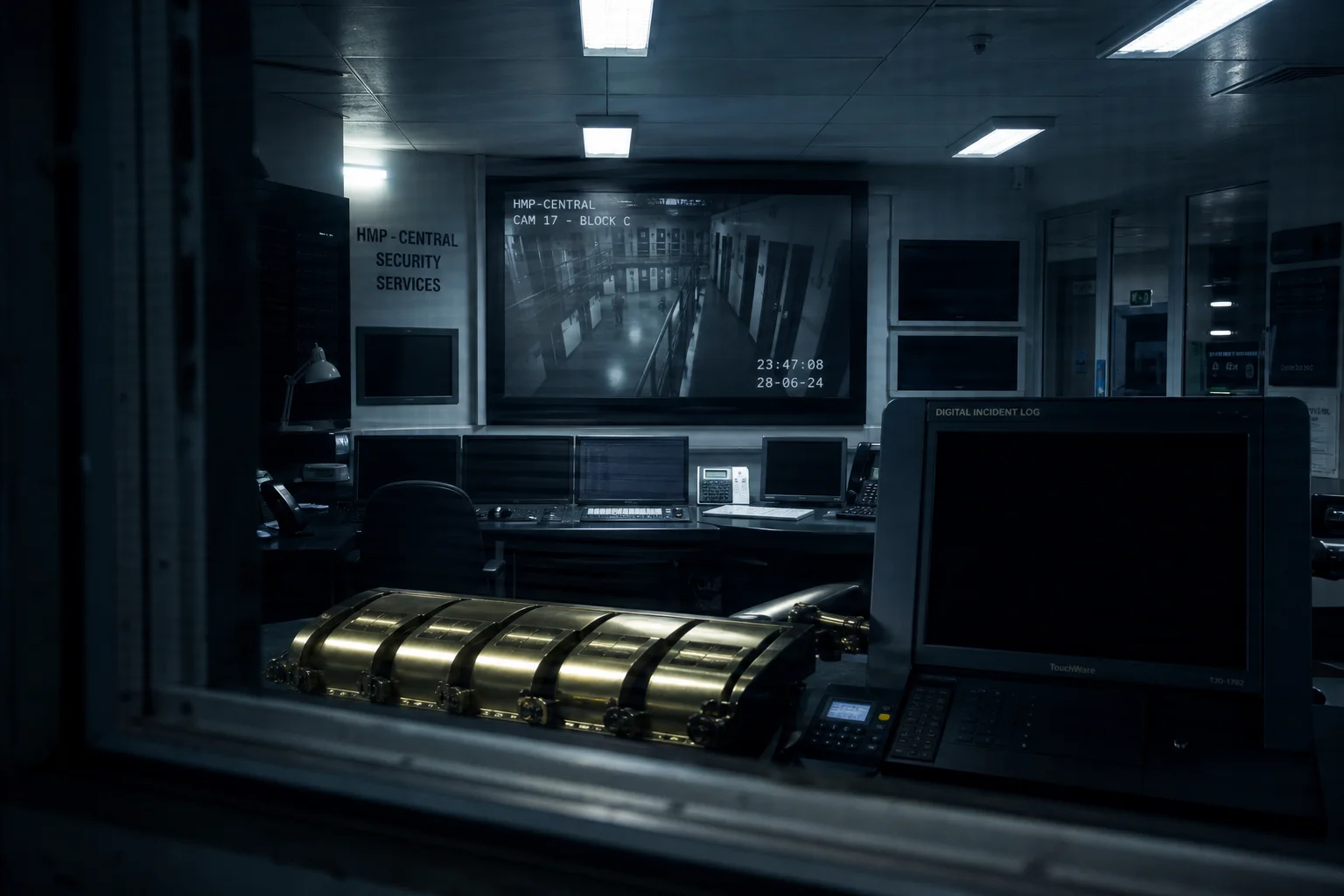
Electronic keycard access logs for restricted zones, biometric staff sign-in terminals (fingerprint), centralized CCTV with limited retention and blind spots, institutional database for inmate movements and infractions, standardized digital incident report forms, time-stamped industrial laundry machinery control panels, single shared radio frequency for guard communications.
✦ Related Cases ✦