The Ledger and the Lie
An independent investigator is summoned to a country estate after a visiting restorer is found dead in the grand foyer. The household is a closed system of lingering tea, polished silver, and silent watchfulness. Each resident maintains a polished surface, yet the environment itself bears subtle, contradictory marks of recent activity. The task is to parse the physical evidence and the inhabitants' accounts to establish a coherent sequence of events.
 Initial Crime Scene
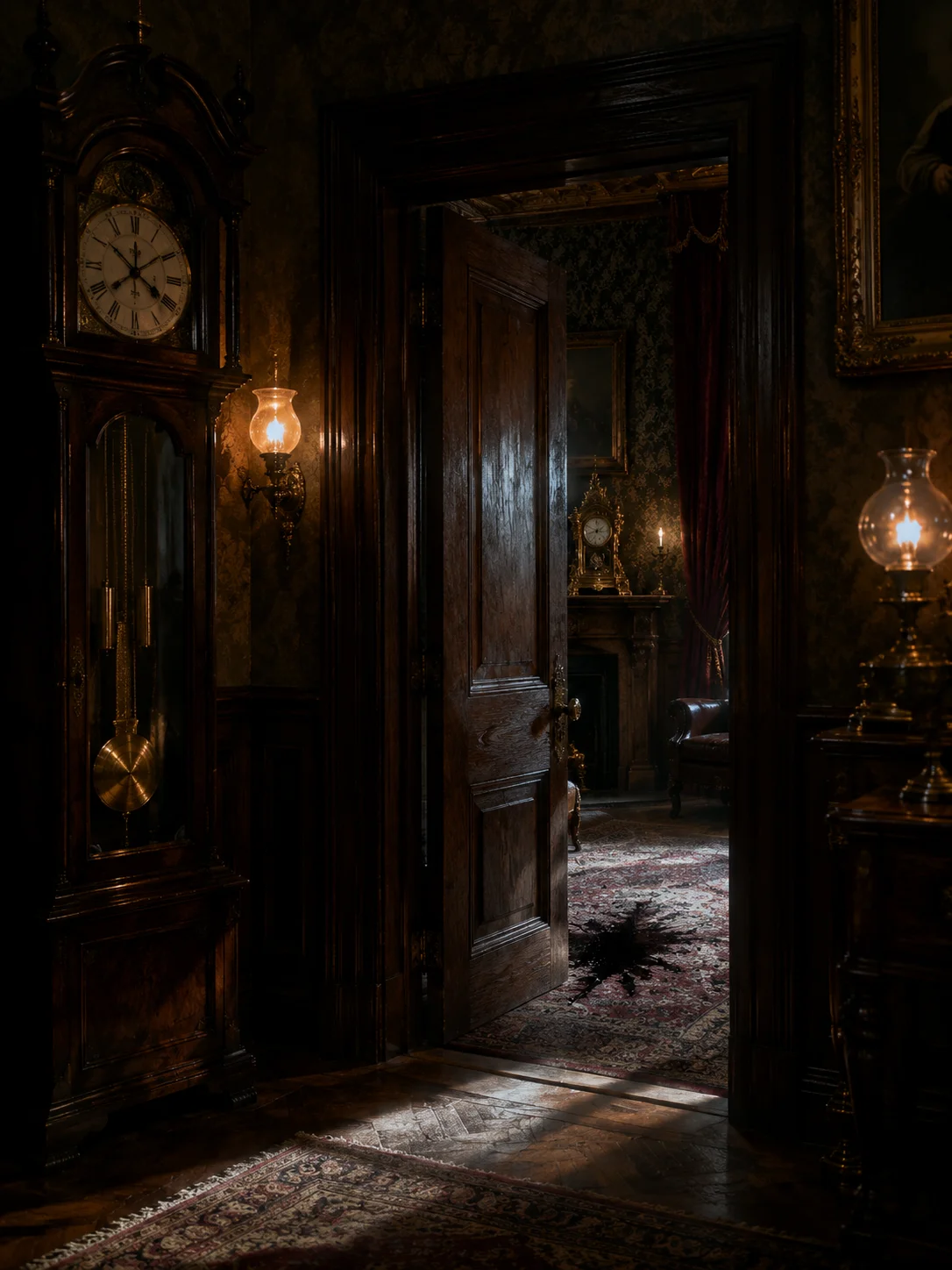
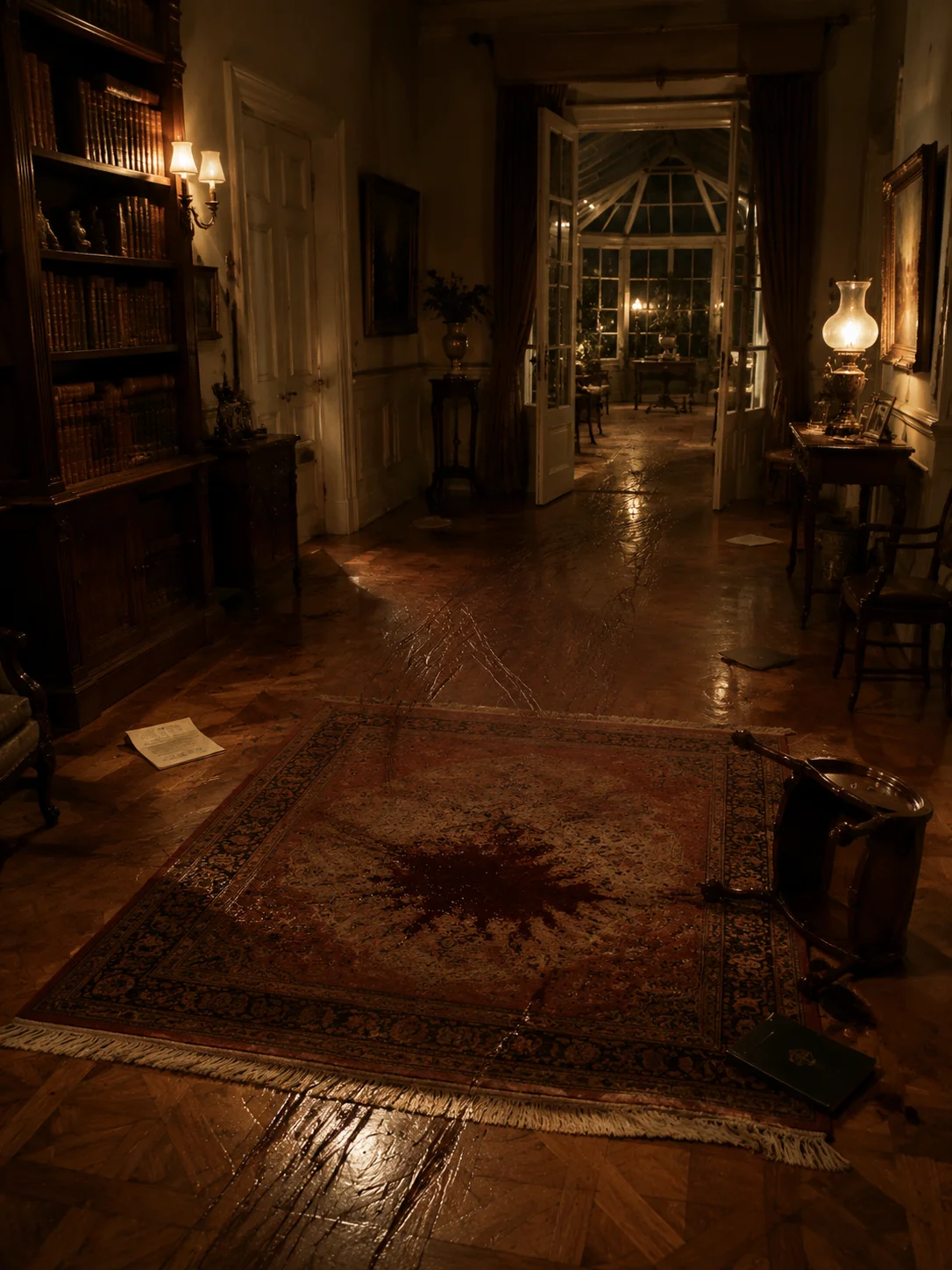
The scent of cold ashes and old paper hangs in the air. A distant, rhythmic *tink-tink-tink* of a signet ring against mahogany echoes from the adjacent study. Your gaze catches three immediate markers: deep, directional gouges scarring the polished parquet floor from the bay window to the conservatory door; a single, spreading tea stain darkening the center of the Persian rug; and the faint, claret-colored spatter across the leather spines on the third shelf of the east wall bookcase.
 Crime Scene Environment
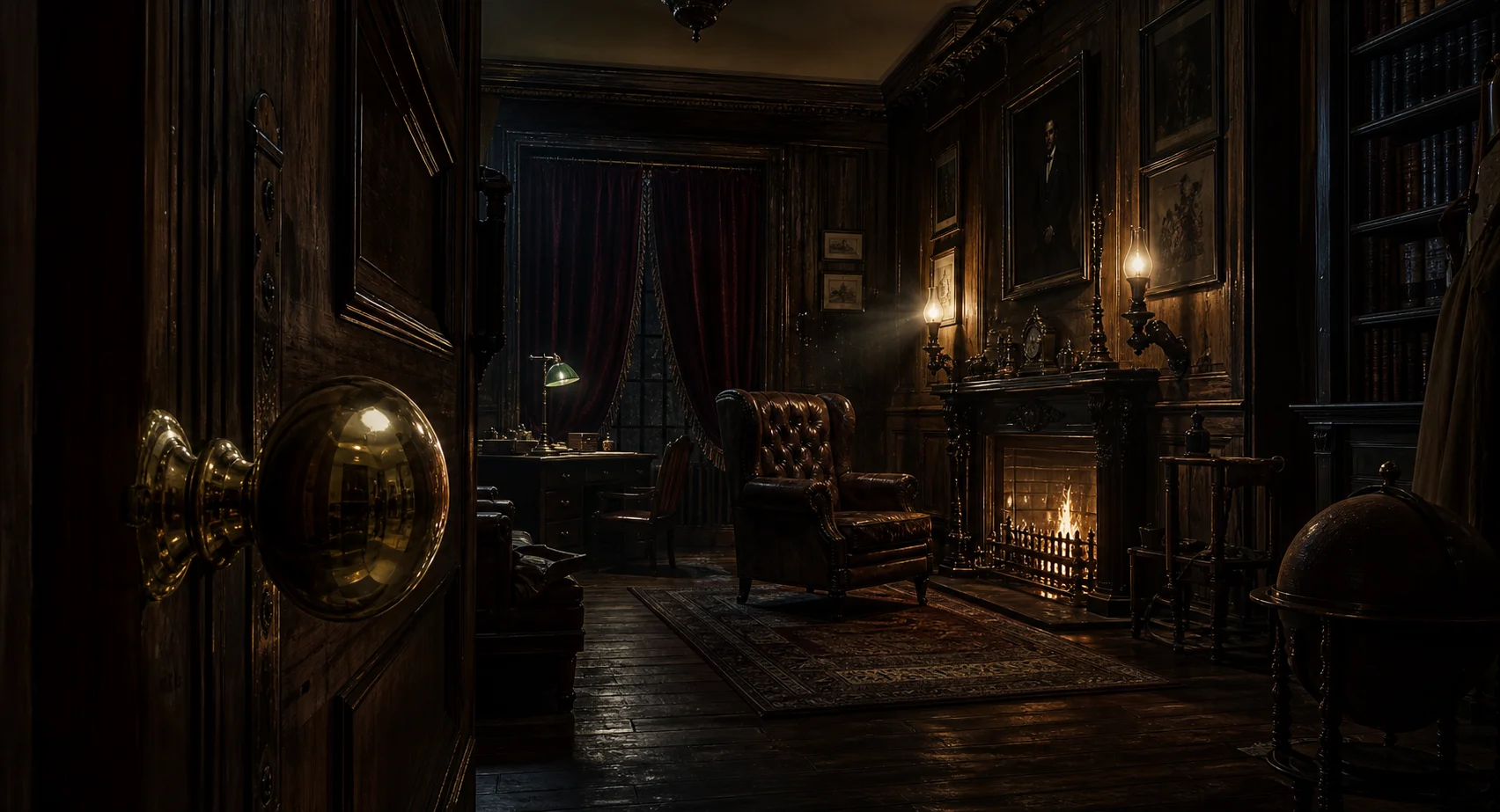
The primary illumination is from gas lamps, casting a warm but flickering glow that creates shifting shadows. The ambient humidity is low, the air dry and carrying the scent of old leather and lamp oil. Acoustic density is high; sounds are absorbed by thick carpets and heavy drapes, making distant noises muffled and close sounds unnervingly clear. The tonal atmosphere is one of oppressive, fragile domesticity.
 Investigation Constraints
Era-bound technologies: hand-cranked telephones, wall-mounted speaking tubes, gas lamps with manual ignition, mechanical door locks with physical keys, handwritten ledgers, wax-sealed envelopes, black-and-white photography requiring a darkroom, gramophone records for audio.
✦ Related Cases ✦