The Ledger's Missing Stub
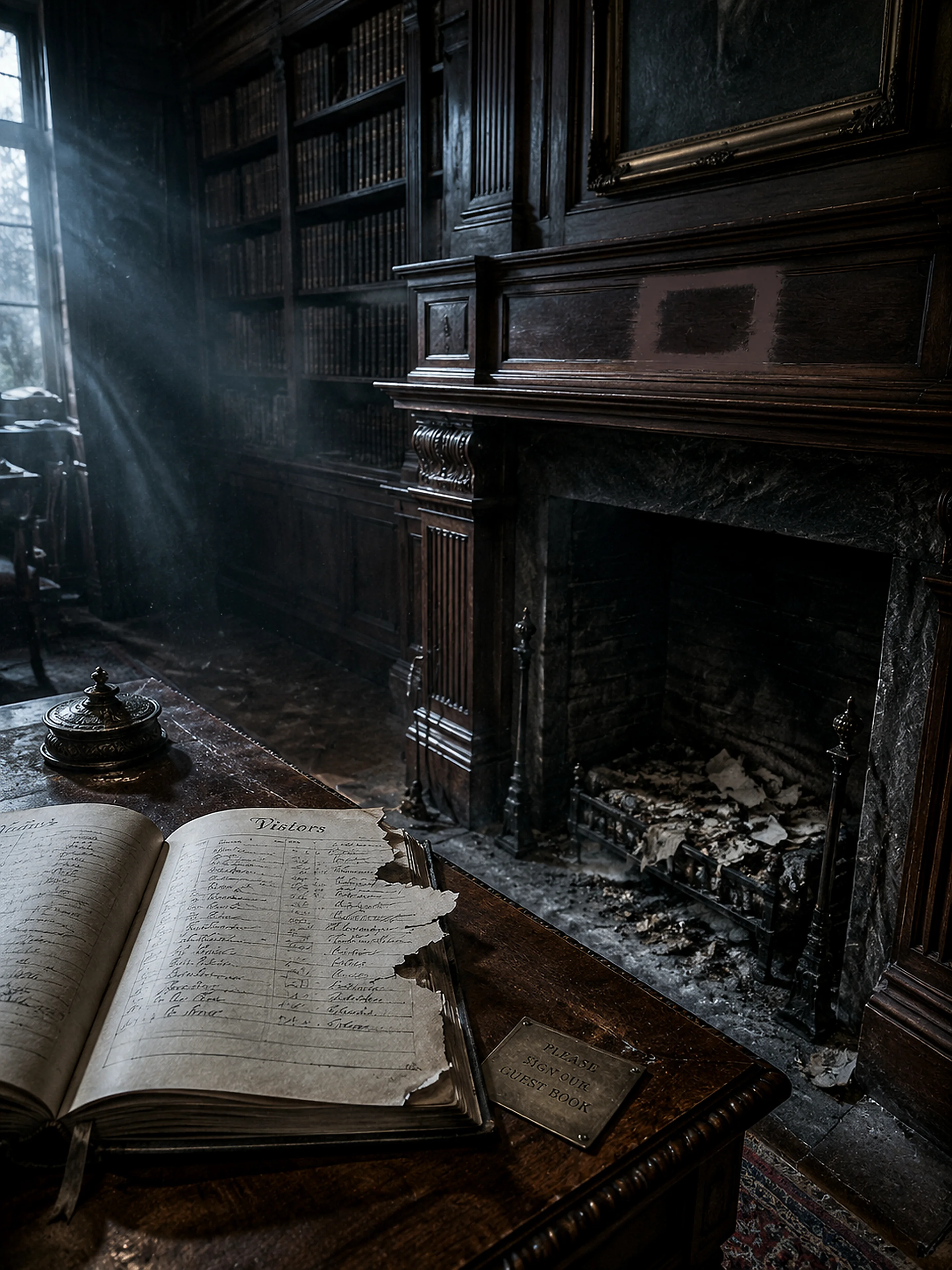
At a weekend gathering at Haverford Manor, the socialite hostess is found deceased in the library. A page from the guest ledger, bearing a timestamp, has been removed. The investigation must navigate the household's recorded tensions and the physical evidence of personal panic that has altered the timeline.
 Initial Crime Scene
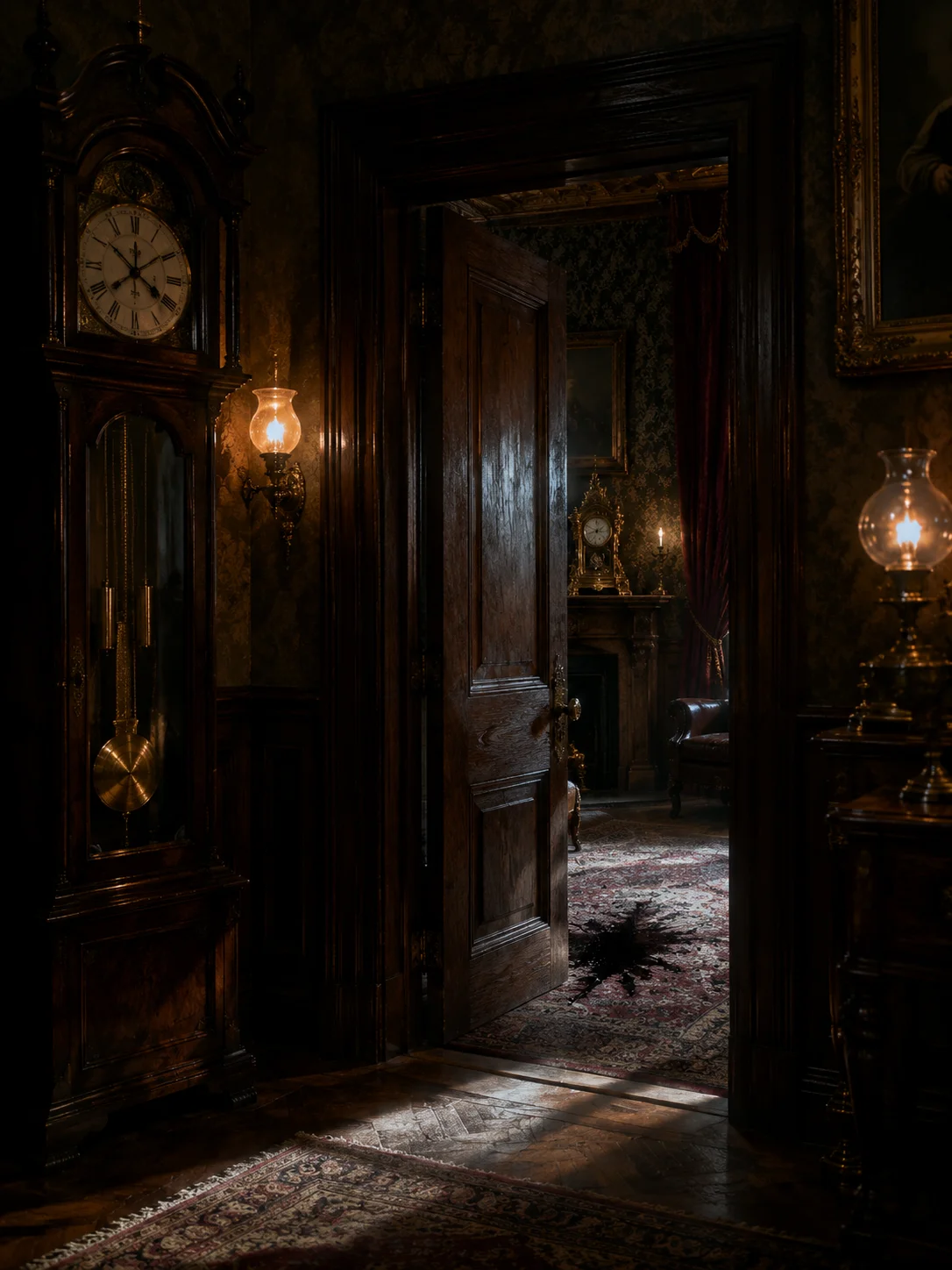
The scent of cold coal ash and old paper hangs in the library air, mingling with a faint, sweet cologne. The only sound is the soft tick of a mantel clock from the adjacent room, a counterpoint to the deep silence where the grandfather clock's chime should be. Before you, a guest ledger lies open on a side table, its page torn raggedly. In the cold hearth, a fine gray ash holds fragments of cream-colored paper. The polished wood of the mantelpiece shows a clean rectangular outline, empty of its usual decorative object.
 Crime Scene Environment
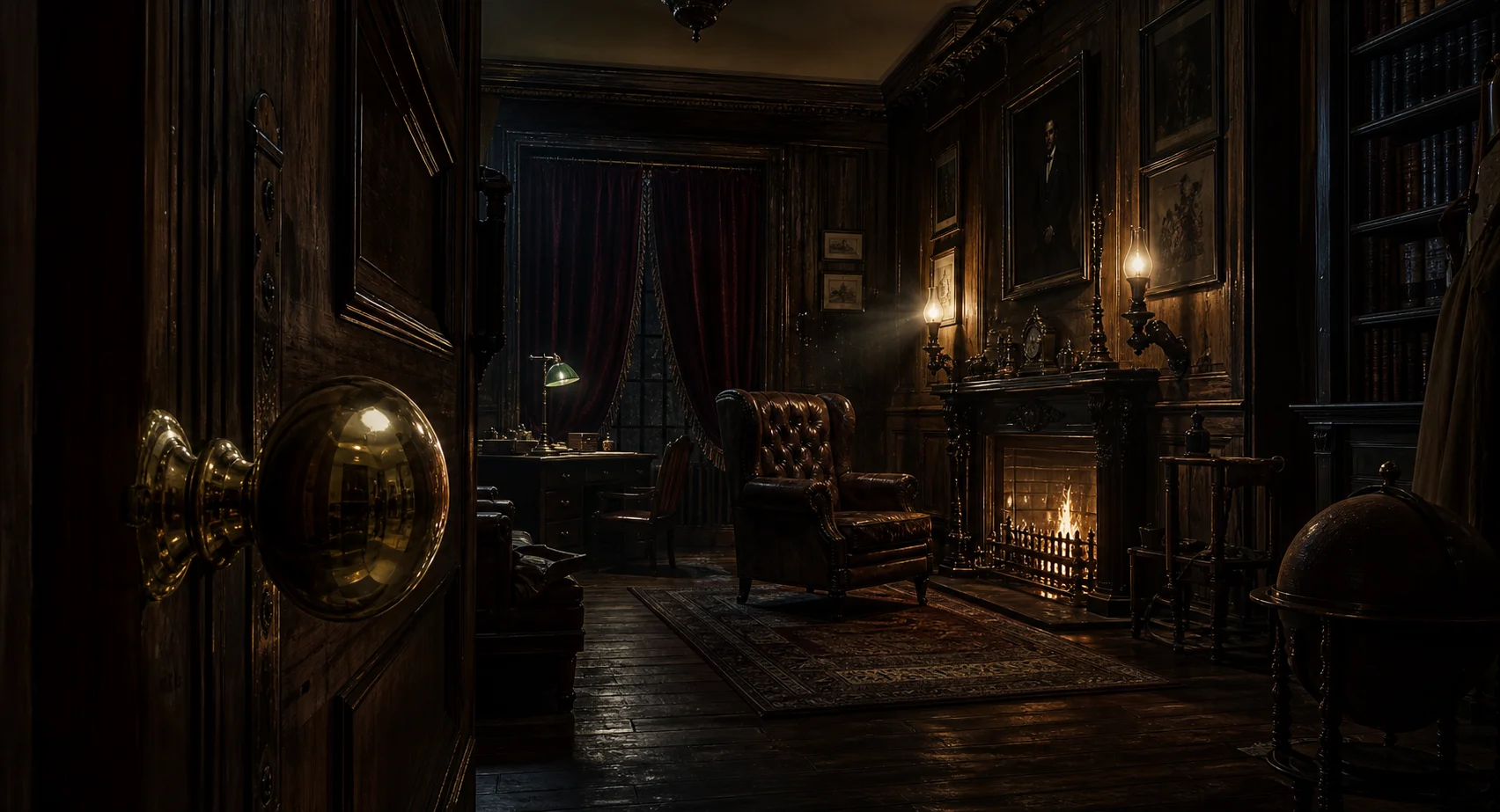
The environment is defined by dim, natural light filtering through tall, dusty windows, creating long shadows in wood-paneled rooms. The air is cool and still, carrying a persistent damp chill from the stone floors and unlit hearths. Acoustic density is low, characterized by the absence of expected mechanical sounds and the occasional, sharp intake of breath from occupants in adjacent rooms.
 Investigation Constraints
1920s/1930s era technology. Tools include fountain pens, mechanical typewriters, rotary telephones, analog clocks with chimes, wind-up clocks, manual door locks with individual keys, bell-pull systems for servants, coal-fired hearths, handwritten ledgers and diaries, wax seals, and early pneumatic tube message systems in large manors. No electrical sensors, CCTV, or digital records.
✦ Related Cases ✦