The Live Broadcast
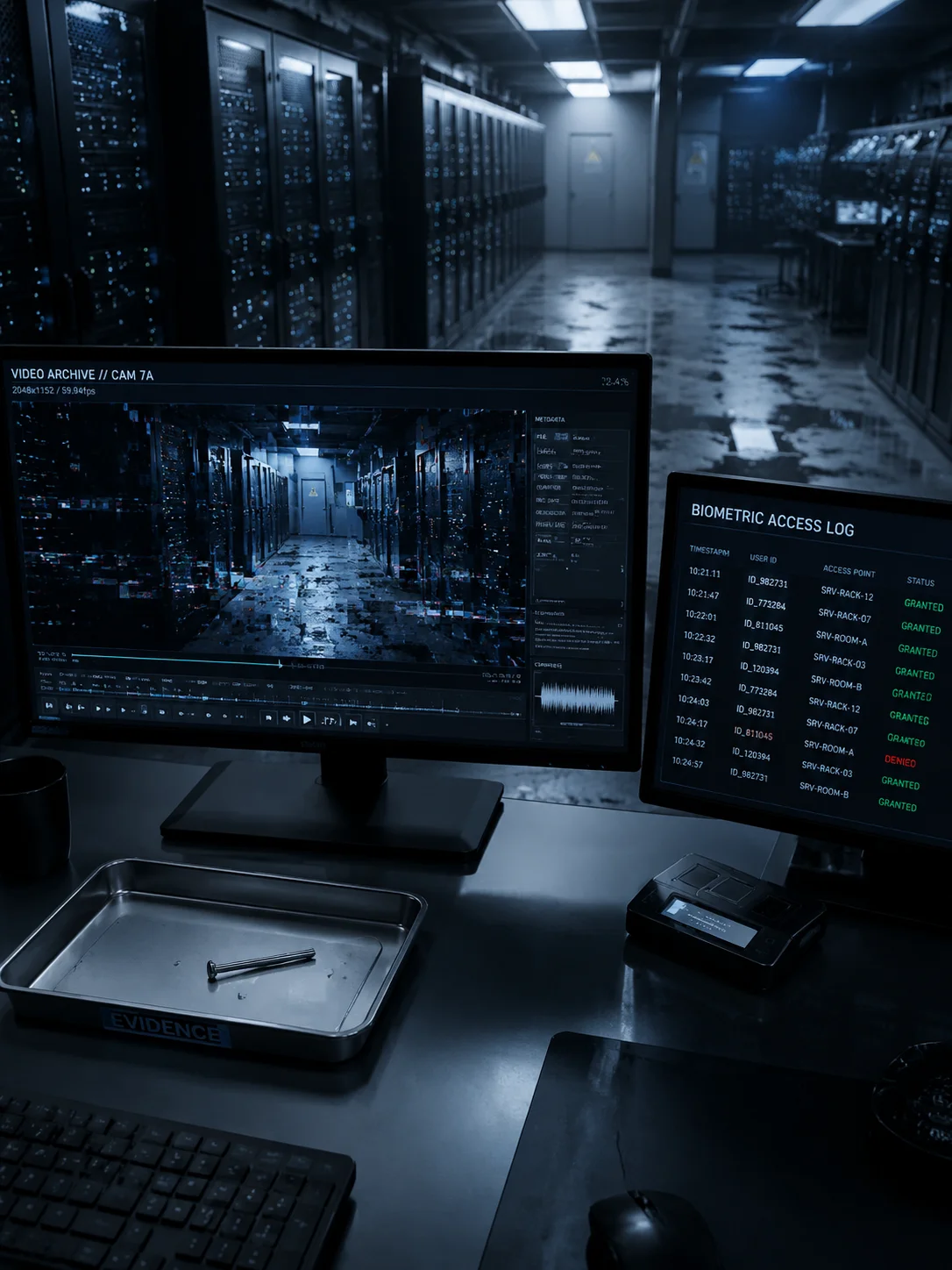
During the live finale of a reality competition show, a lead contestant is found deceased in her locked makeup trailer. The production team, facing an imminent broadcast deadline, must investigate a series of digital anomalies, shredded documents, and conflicting personal accounts within the high-pressure studio environment.
 Initial Crime Scene
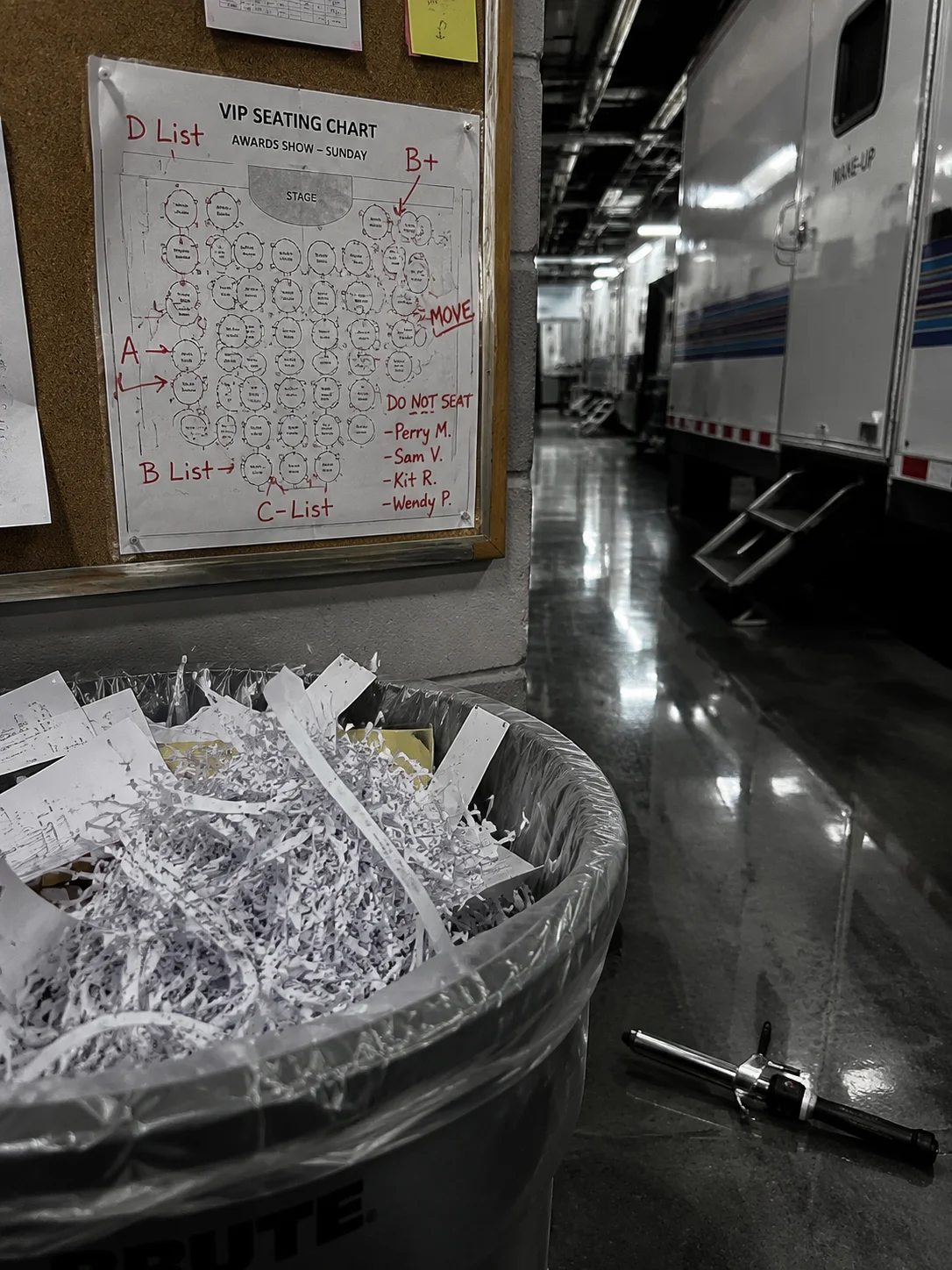
The harsh studio lights beat down on the polished floor of the backlot. A faint, sweet chemical odor, reminiscent of setting spray, mixes with the smell of stale coffee from a nearby cart. The distant, muffled thrum of a generator provides a constant baseline hum. To your left, a laminated VIP seating chart with frantic red-ink annotations is pinned to a corkboard. Directly ahead, a trash can overflows with shredded, heavy-stock paper pages. Your eyes catch the glint of a chrome curling iron barrel discarded near a trailer door.
 Crime Scene Environment
Lighting is a harsh, directional fluorescent that eliminates shadows and creates high-contrast glare on reflective surfaces. The air is cool and dry, conditioned by studio systems, carrying a persistent, low acoustic density from humming electronics and distant, muffled crew chatter. The space is a constructed, high-stakes environment of performative calm and contractual obligation.
 Investigation Constraints
High-end but chaotic reality TV production environment. Includes: smartphone-based encrypted messaging apps (Signal, WhatsApp), Instagram/TikTok DMs, cloud-based production scheduling software (with limited access logs), basic keycard/traditional lock systems for trailers, studio Wi-Fi network with packet-sniffing capabilities (but no full forensic suite), digital NDA e-signature platforms, and paparazzi long-range lenses. No military-grade hacking tools or full AI surveillance.
✦ Related Cases ✦