The Manor's Debris
At a seaside manor hosting a liaison meeting, the absence of a cipher machine from its storage shelf is discovered. The investigators must examine the physical traces and testimonies of the resident diplomats, officers, and household staff, where each individual's personal circumstances have generated a layer of private, contradictory activity.
 Initial Crime Scene
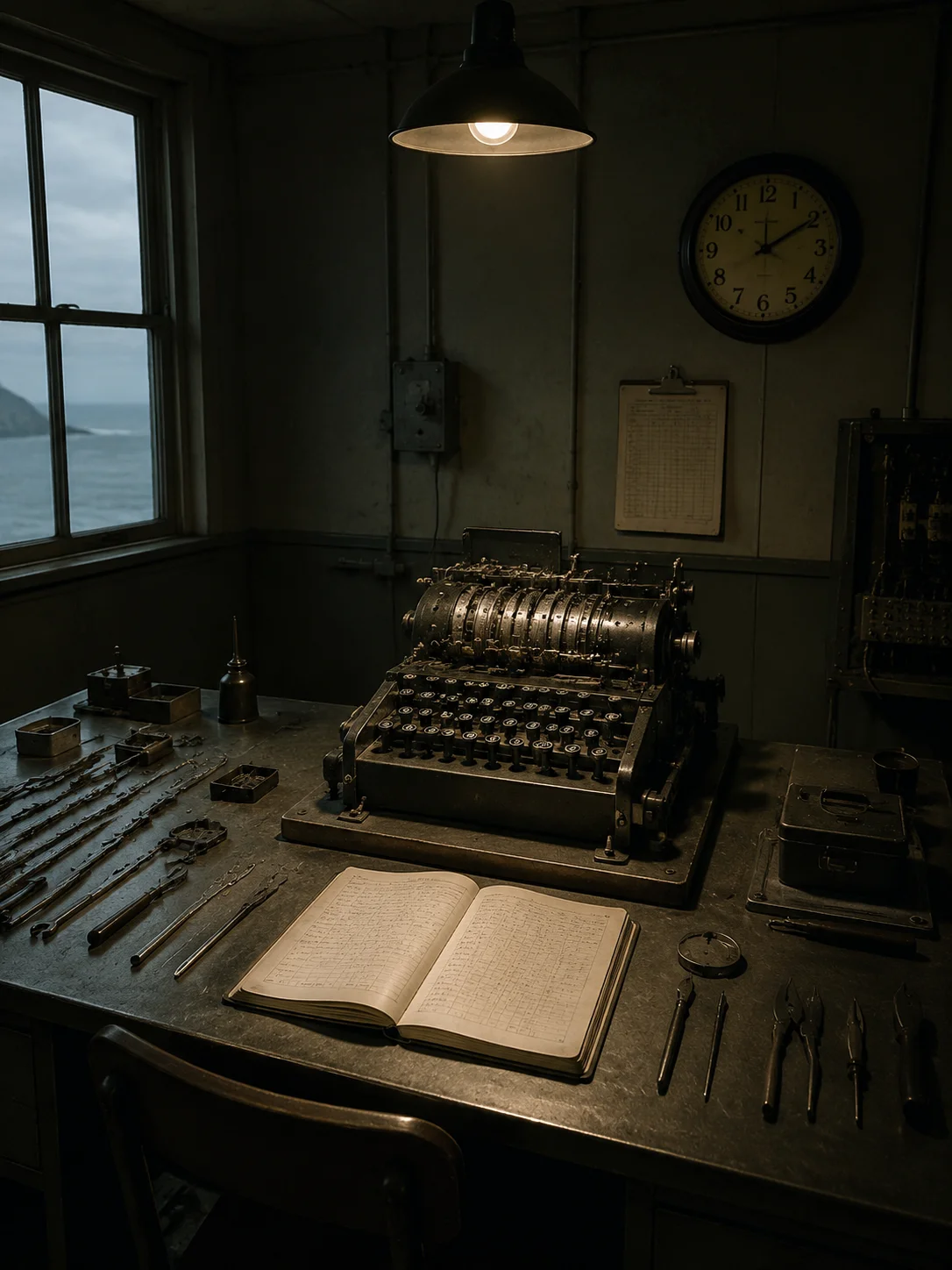
A sharp scent of ozone and machine oil cuts through the musty air as you step into the signals room. The low hum of an electrical transformer vibrates in your chest. Your gaze first catches the sterility of the workbench, where tools lie in unnervingly parallel rows, then the imposing, bolted-down cipher machine in the center, and finally the single, hand-written ledger lying open beneath a wall clock.
 Crime Scene Environment
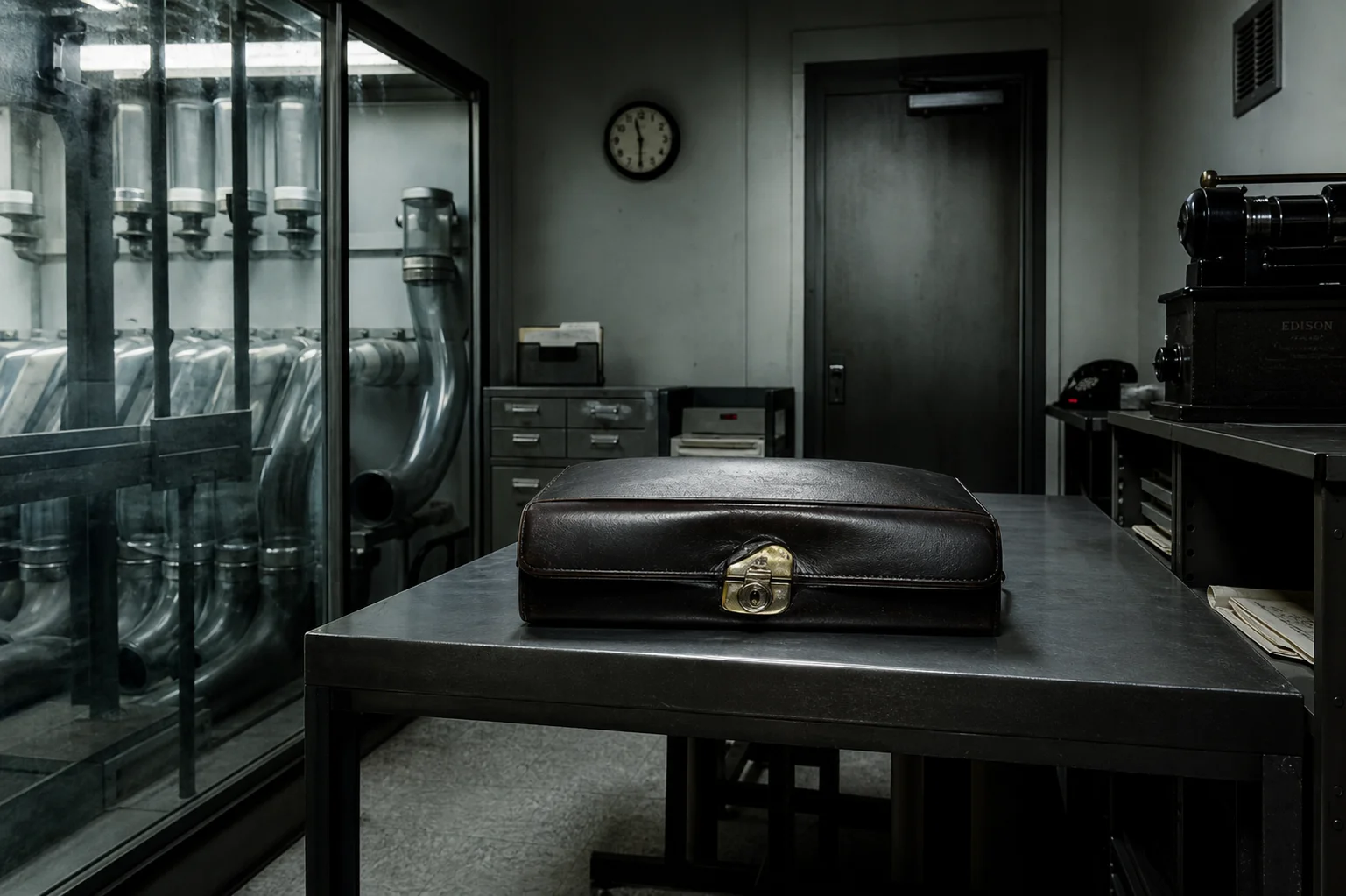
The initial environment is defined by a dim, overhead incandescent lighting profile casting long shadows. The humidity is low and dry, conducive to preserving paper and metal, with a cool temperature maintained for the equipment. Acoustic density is minimal, characterized by the omnipresent, low-frequency hum of electrical gear and the occasional, distant tick of a pneumatic tube clock.
 Investigation Constraints
Analog-era 1970s Cold War setting. Technologies include mechanical typewriters, rotary dial telephones, hand-written ledgers, physical file cabinets with combination locks, microfilm viewers, short-wave radios, pneumatic tube message systems within the manor, and a single, secure Telex machine in a locked study. No digital systems, computers, or mobile devices.
✦ Related Cases ✦