The Meridian Station Log
A senior liaison at a remote data relay hub is found deceased in his office. The investigation examines a series of overlapping security logs, misplaced equipment, and routine administrative discrepancies within the late-1990s corporate environment.
 Initial Crime Scene
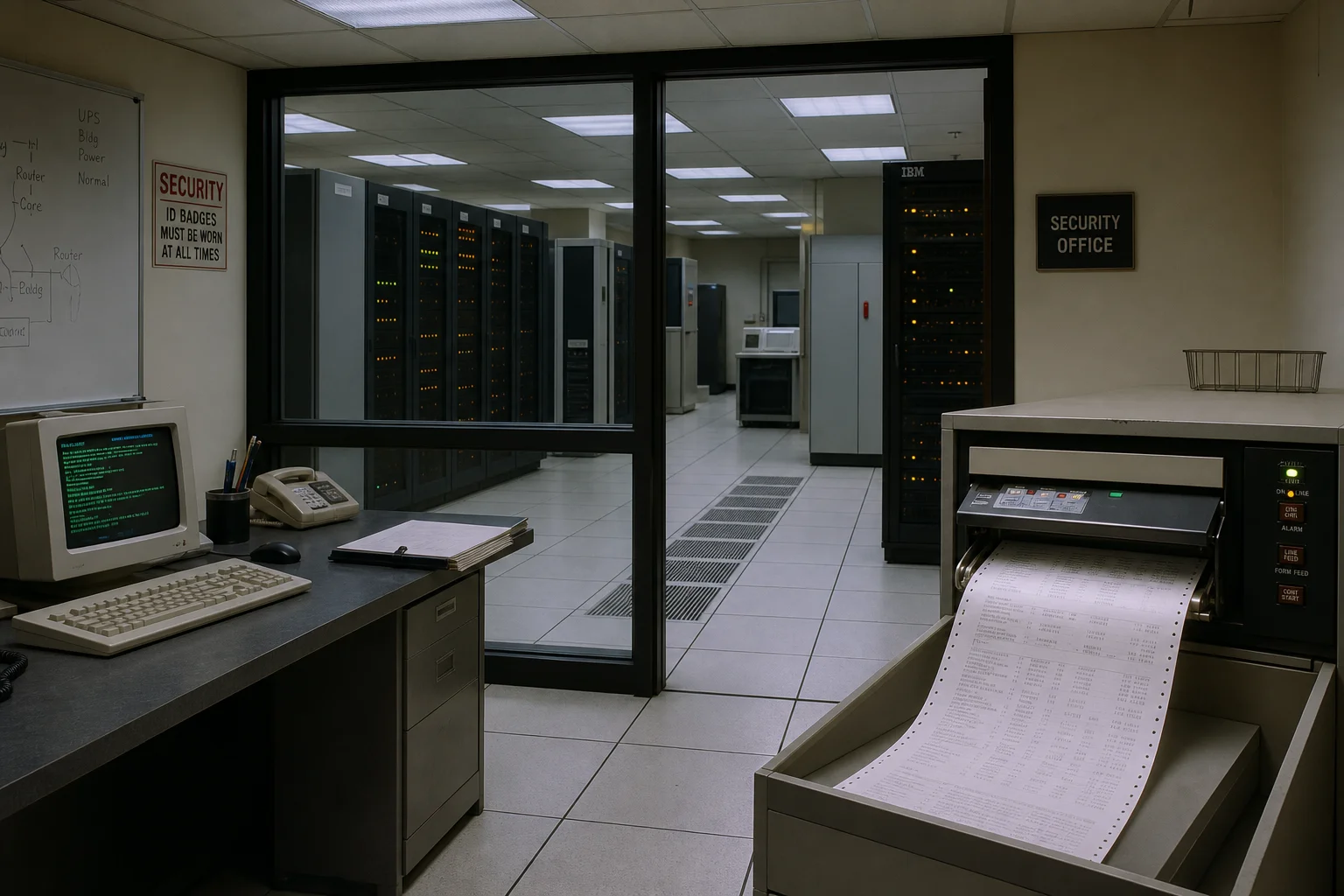
The overhead fluorescent lights cast a flat, sterile glow across the raised floor tiles, erasing shadows. The low, constant hum of cooling fans vibrates through the air, accompanied by the smell of ozone and cold plastic. Blinking amber and green diagnostic lights on mainframe server racks create a synchronized, silent rhythm against the white noise. A key-card swipe log, printed on continuous-feed paper, lies half-curled from its thermal printer tray.
 Crime Scene Environment
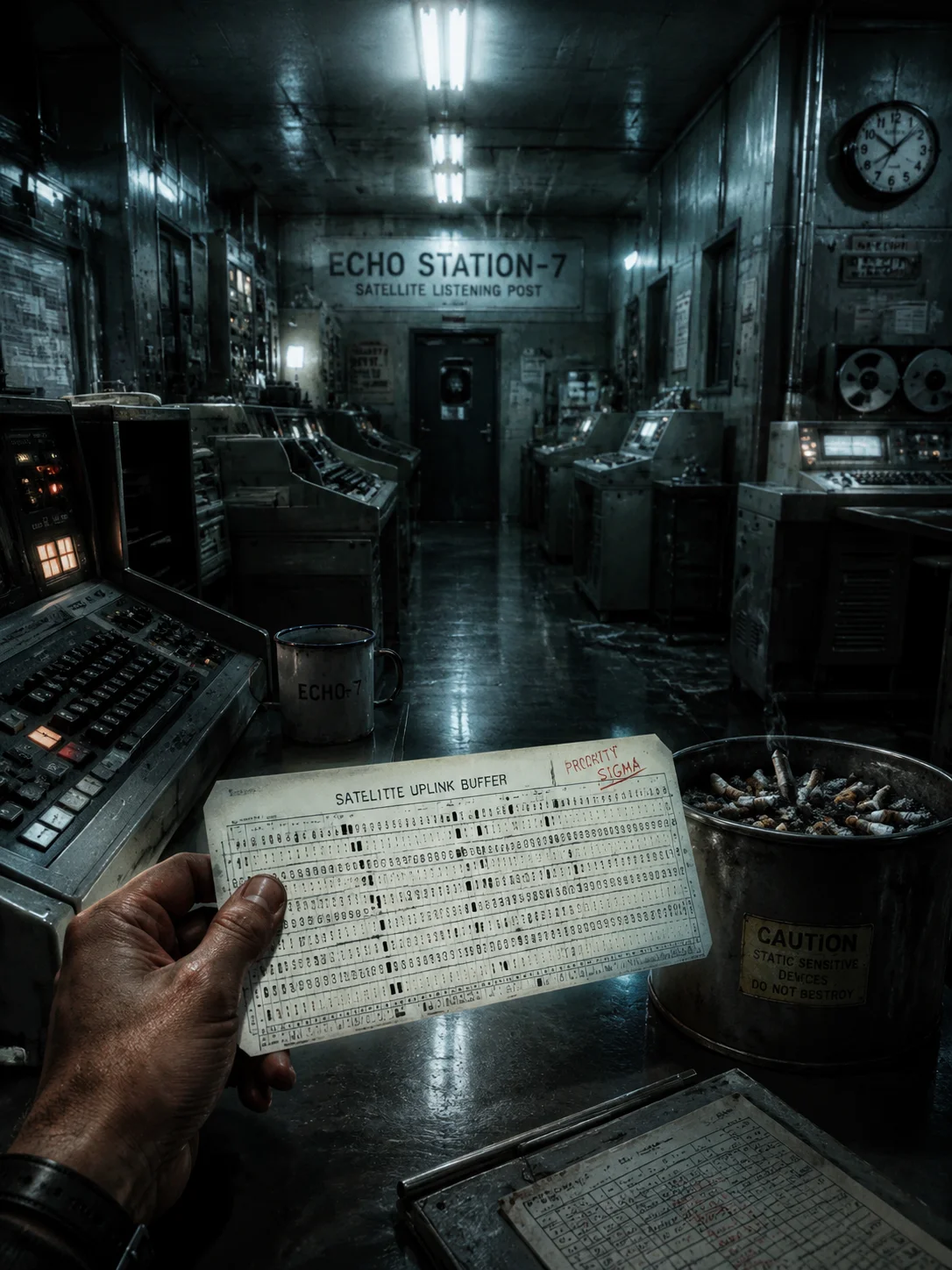
The sandbox operates under flat, fluorescent lighting with a consistent, shadowless illumination profile. The environment is chilled and dehumidified, maintaining a cool, dry air density. Acoustic density is low-to-moderate, characterized by a persistent, low-frequency hum from cooling systems and the sporadic static hiss from telecom equipment. All technology adheres to a late-1990s corporate espionage aesthetic.
 Investigation Constraints
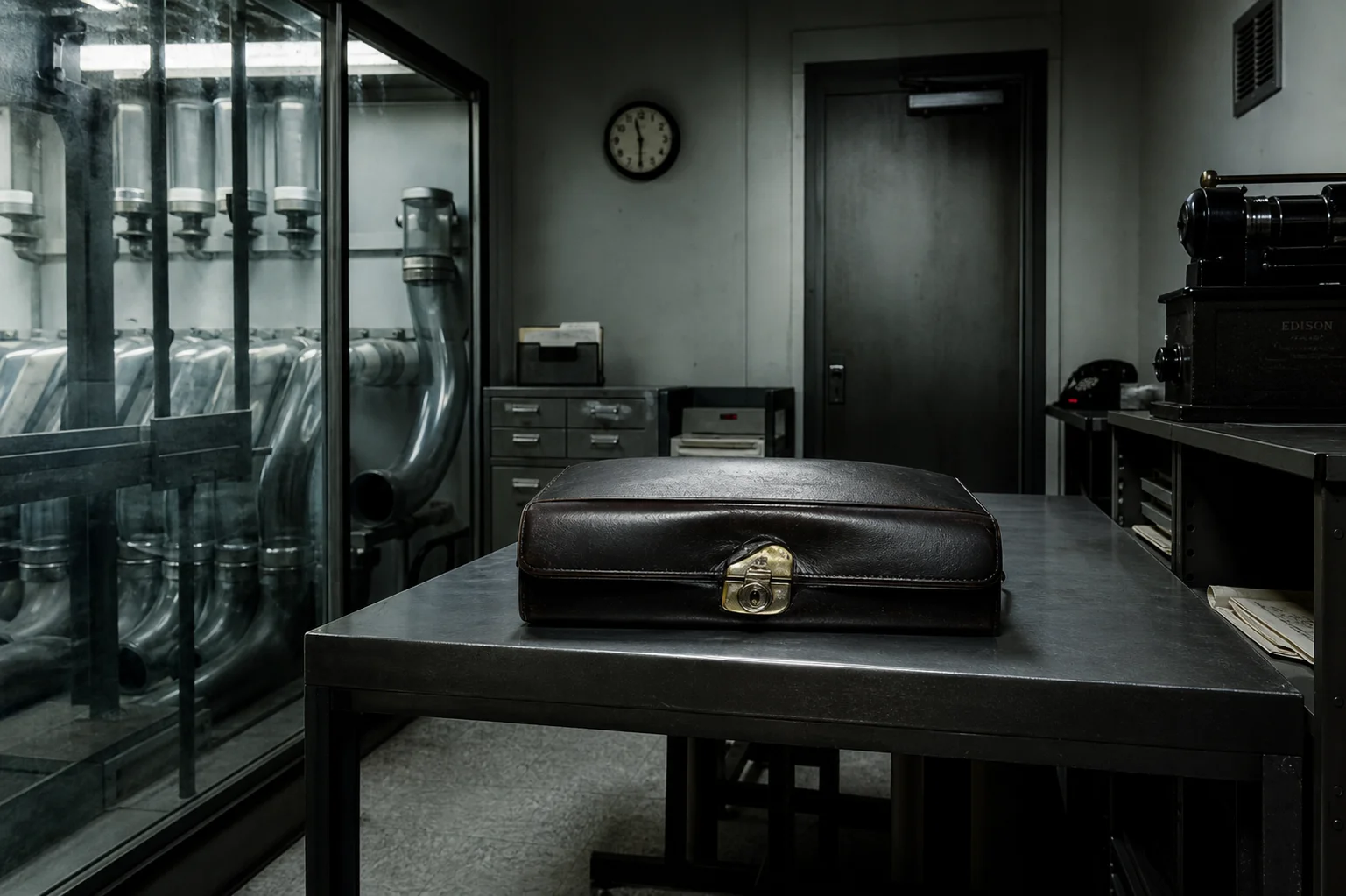
Late 1990s to early 2000s corporate espionage environment. Key tools include: proprietary encrypted pagers, secure landline phones with conference bridges, physical key-card access logs, magnetic tape backups, mainframe server rooms with manual log entries, paper-based sign-in sheets, infrared data ports on early PDAs, and pneumatic tube message systems within large office complexes. No widespread internet or mobile data; information moves via physical media or dedicated telecom lines.
✦ Related Cases ✦