The Missing Minute
An annual university initiation held within its venerable halls concludes with a death in the rare book vault. The library's ancient checkout log contains a single, unaccounted-for minute.
 Initial Crime Scene
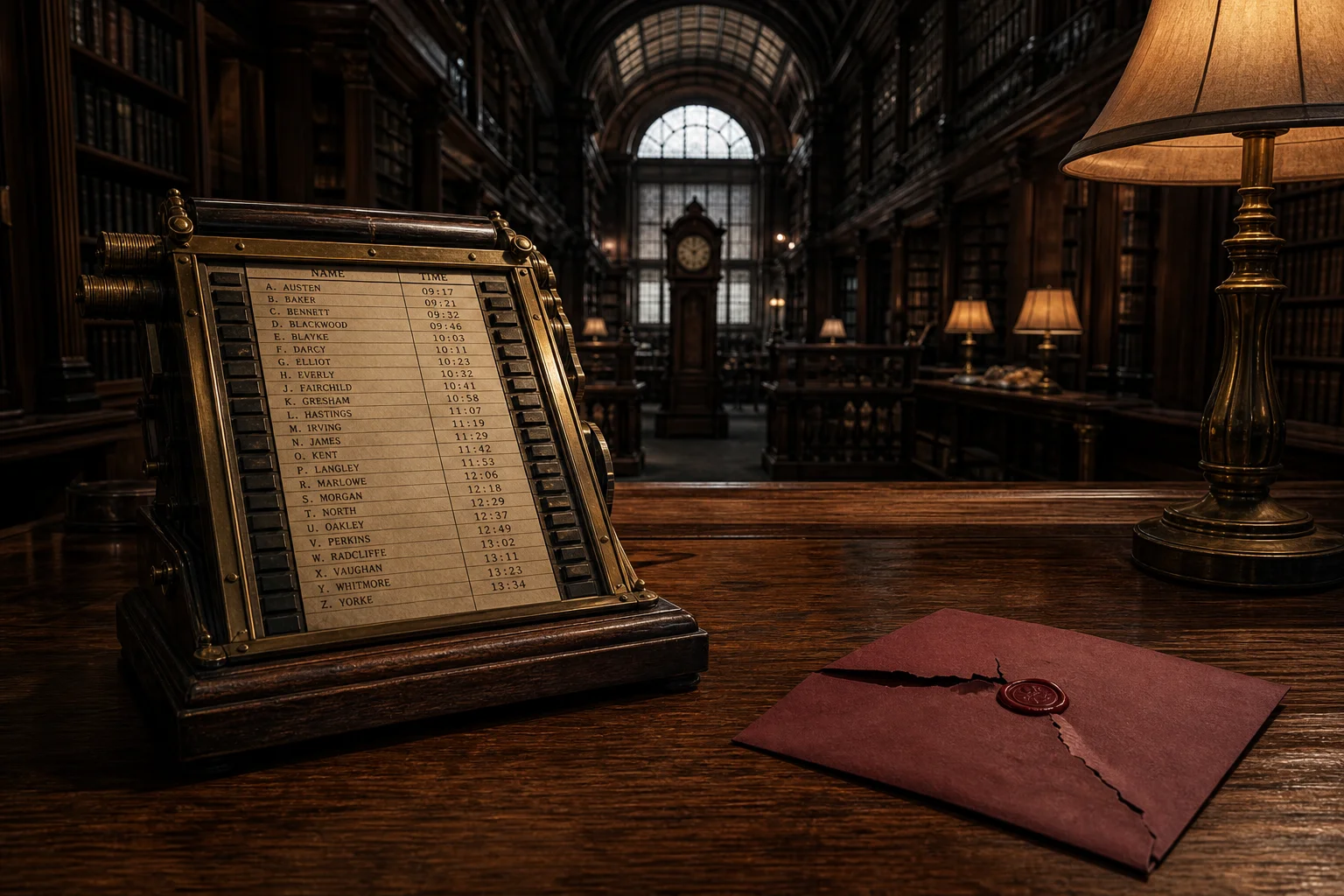
The polished oaken surface of the checkout desk fills your lower vision. Your nostrils detect the faint, lemony scent of floor wax layered over the dry, papery breath of old bindings. A single, heavy grandfather clock ticks from the faculty lounge, its sound a hollow metronome in the still air. The brass-and-wood mechanical ledger lies open before you, its columns of names and times a silent record. Beside it rests a wax-sealed envelope, the seal broken, its red wax jagged.
 Crime Scene Environment
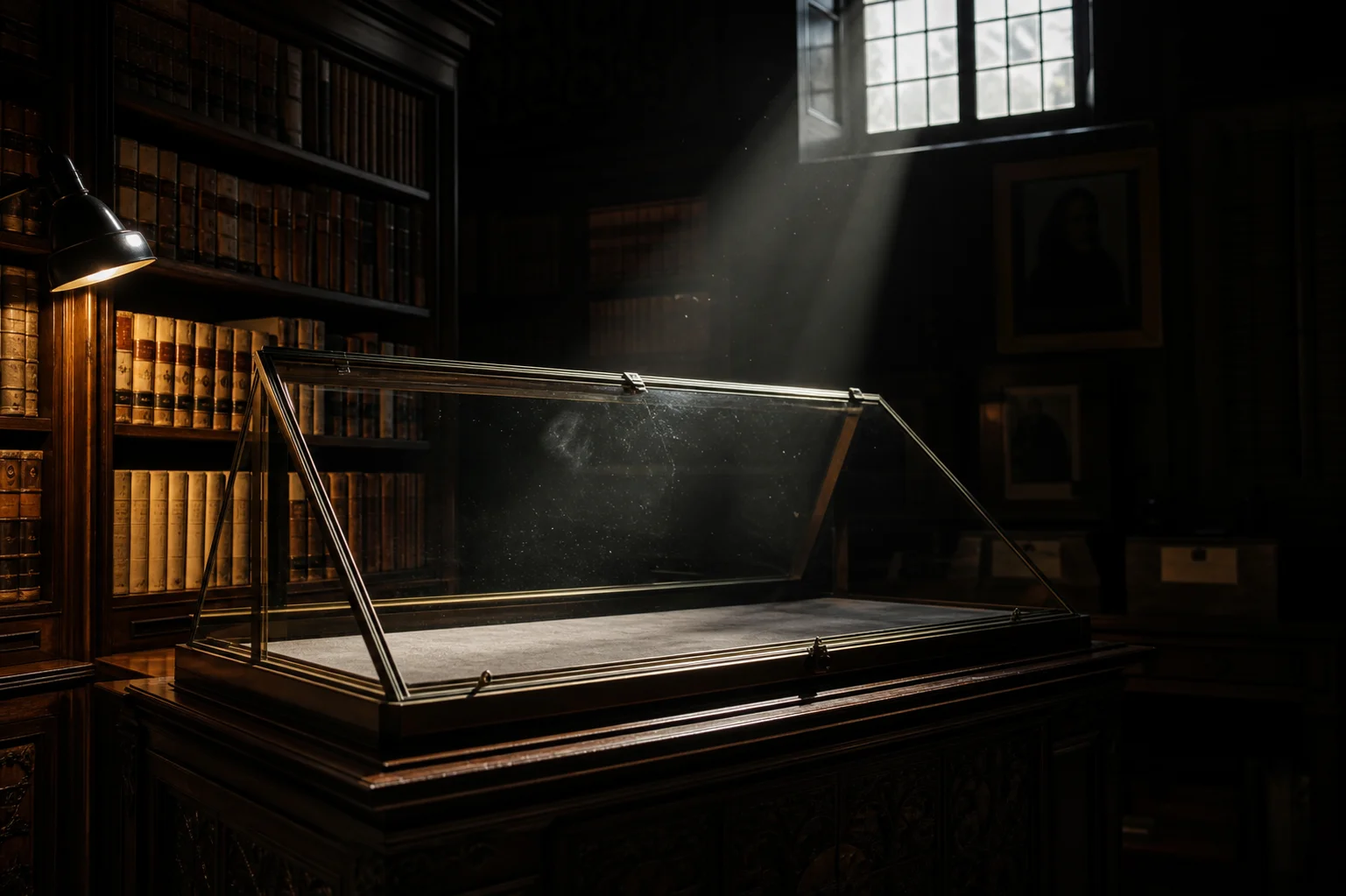
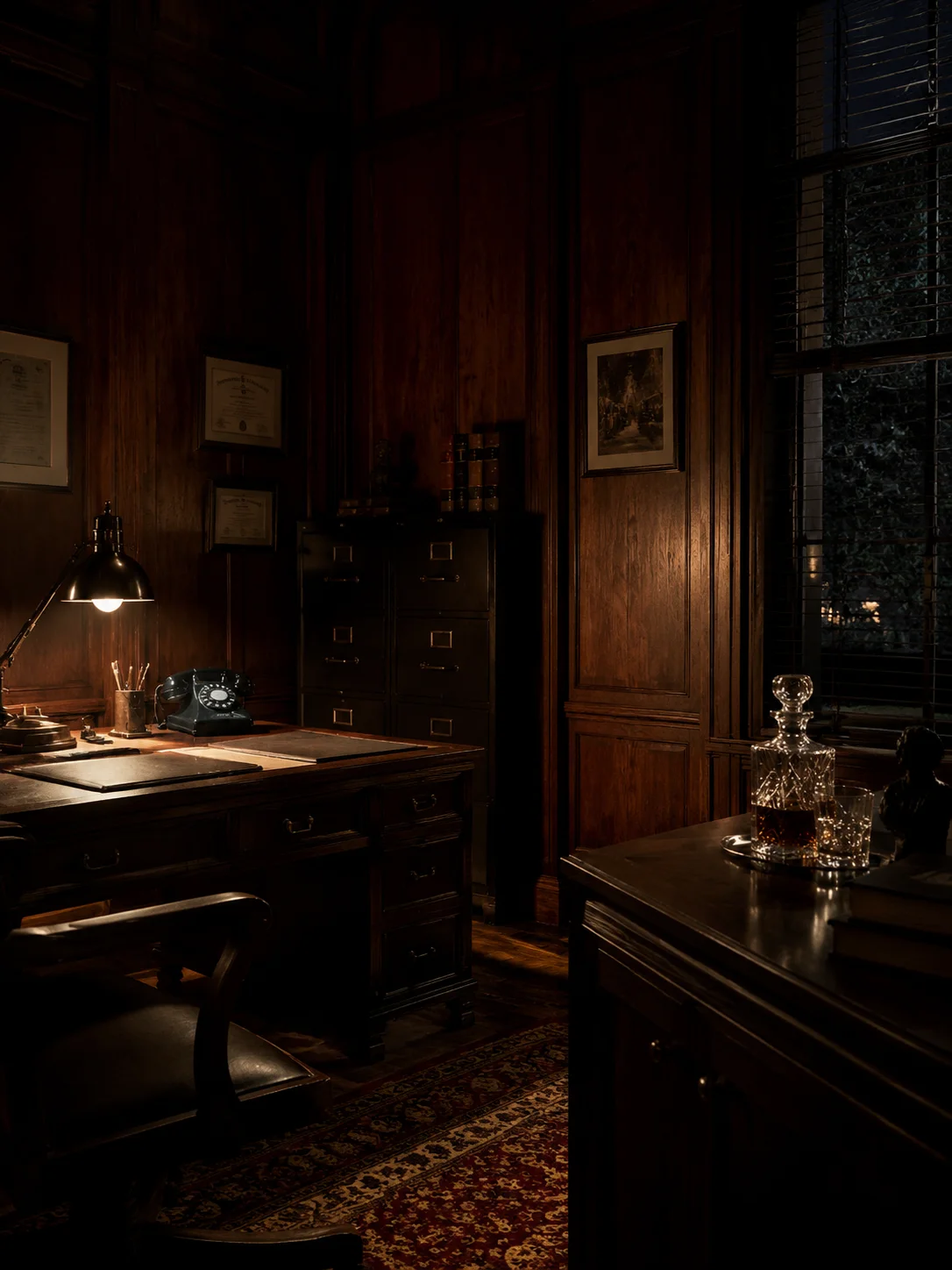
The lighting is a low, amber glow from shaded lamps, creating pools of shadow in the corners. The air is cool and dry, holding a slight static crispness. Acoustic density is high; the space absorbs sound, leaving only the clock's tick and the occasional distant creak of old wood.
 Investigation Constraints
Handwritten ledgers, mechanical time-stamps (library book checkout systems, grandfather clocks), rotary telephones, handwritten notes, wax seals, physical key rings, period-appropriate forensic tools (fingerprint powder, magnifying glasses), carbon-copy typed reports.
✦ Related Cases ✦