The Muted Reel
An independent investigator is called to a small coastal town to examine an audio artifact recovered from a damaged micro-cassette recorder. The recording, featuring a measured voice and anomalous sounds, was found in the Town Archive. The task is to analyze the physical environment and overlapping timelines of civic figures to determine the sequence of events surrounding the recorder's displacement.
 Initial Crime Scene
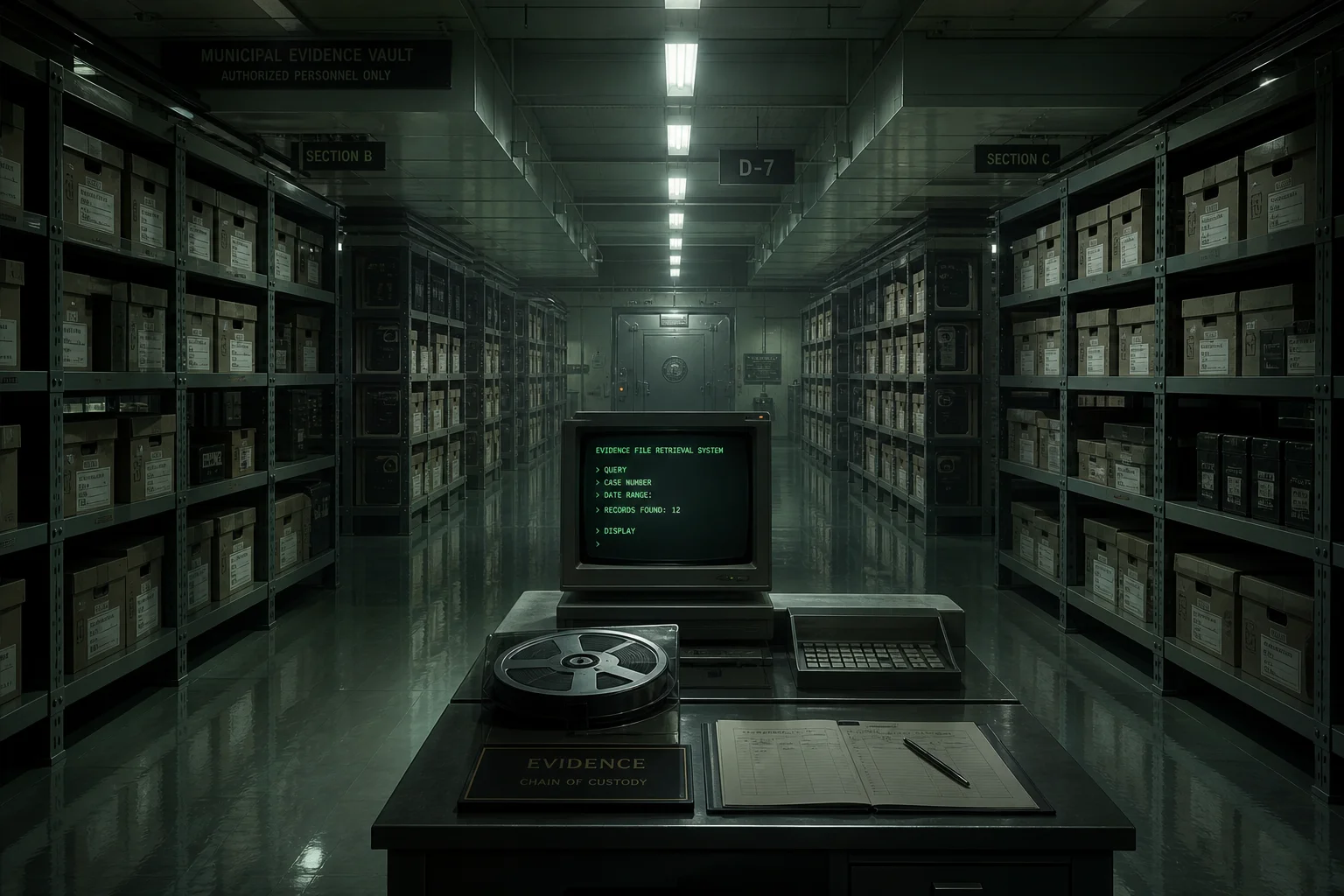
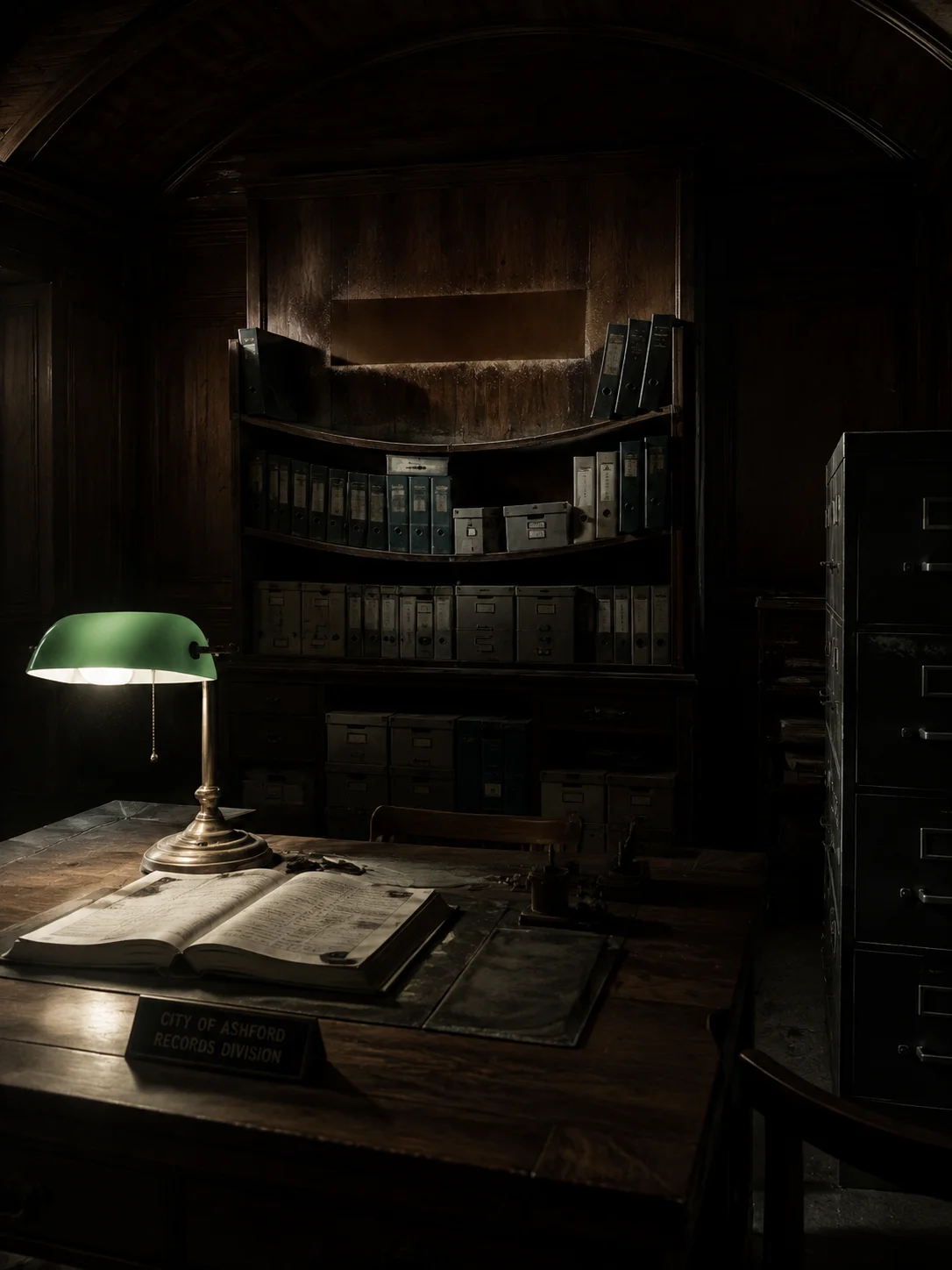
The air is thick with the dry, papery scent of dust and old leather bindings. A faint, mechanical hum emanates from a reel-to-reel tape recorder on a high shelf, its reels motionless. Dust motes drift through the single beam of light from a green-shaded desk lamp, illuminating the deep grain of a large oak table, the dark, scarred wood of floor-to-ceiling shelves, and the stiff, yellowed pages of an open ledger.
 Crime Scene Environment
Lighting is a harsh pool of focused artificial lamplight surrounded by deep, grainy shadows. The air is cool, dry, and acoustically dense, absorbing sound. Ambient audio is limited to the low hum of electrical fixtures and the occasional, settling creak of aged wood.
 Investigation Constraints
Analog and early digital media: micro-cassette recorders, film cameras, physical photo darkrooms, rotary dial telephones, handwritten ledger books, pneumatic tube message systems in old buildings, basic carbon-copy paper duplicates. No internet, mobile phones, or modern digital forensics. Information travels via physical transport, mail, or landline switchboards.
✦ Related Cases ✦