The Night Shift Anomaly
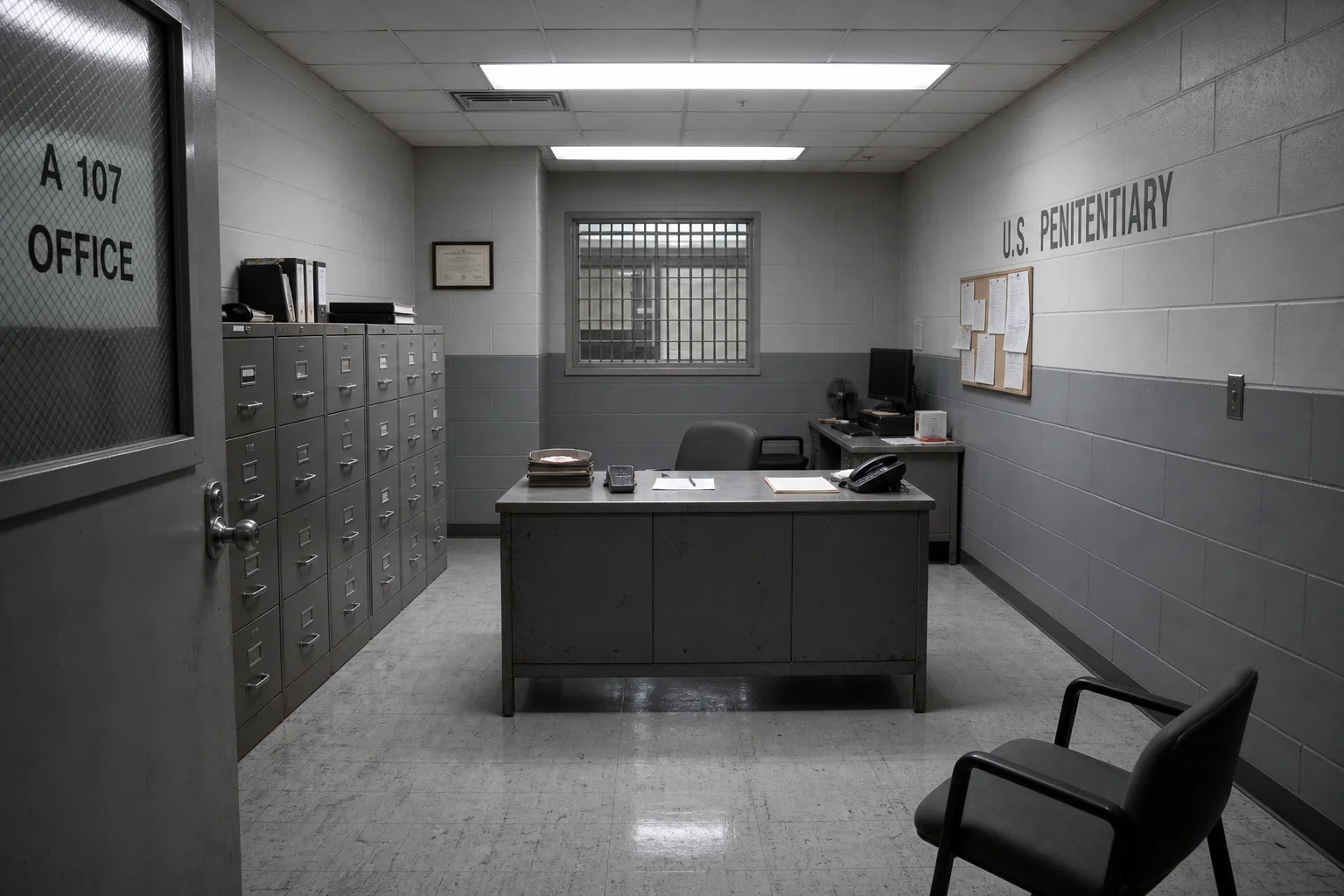
A forensic specialist is dispatched to a state penitentiary following an incident involving a parole board official. Initial reviews of staff schedules, access logs, and physical environment present a series of overlapping inconsistencies. The investigation examines institutional routines, personnel documentation, and physical evidence from multiple secure zones within the facility.
 Initial Crime Scene
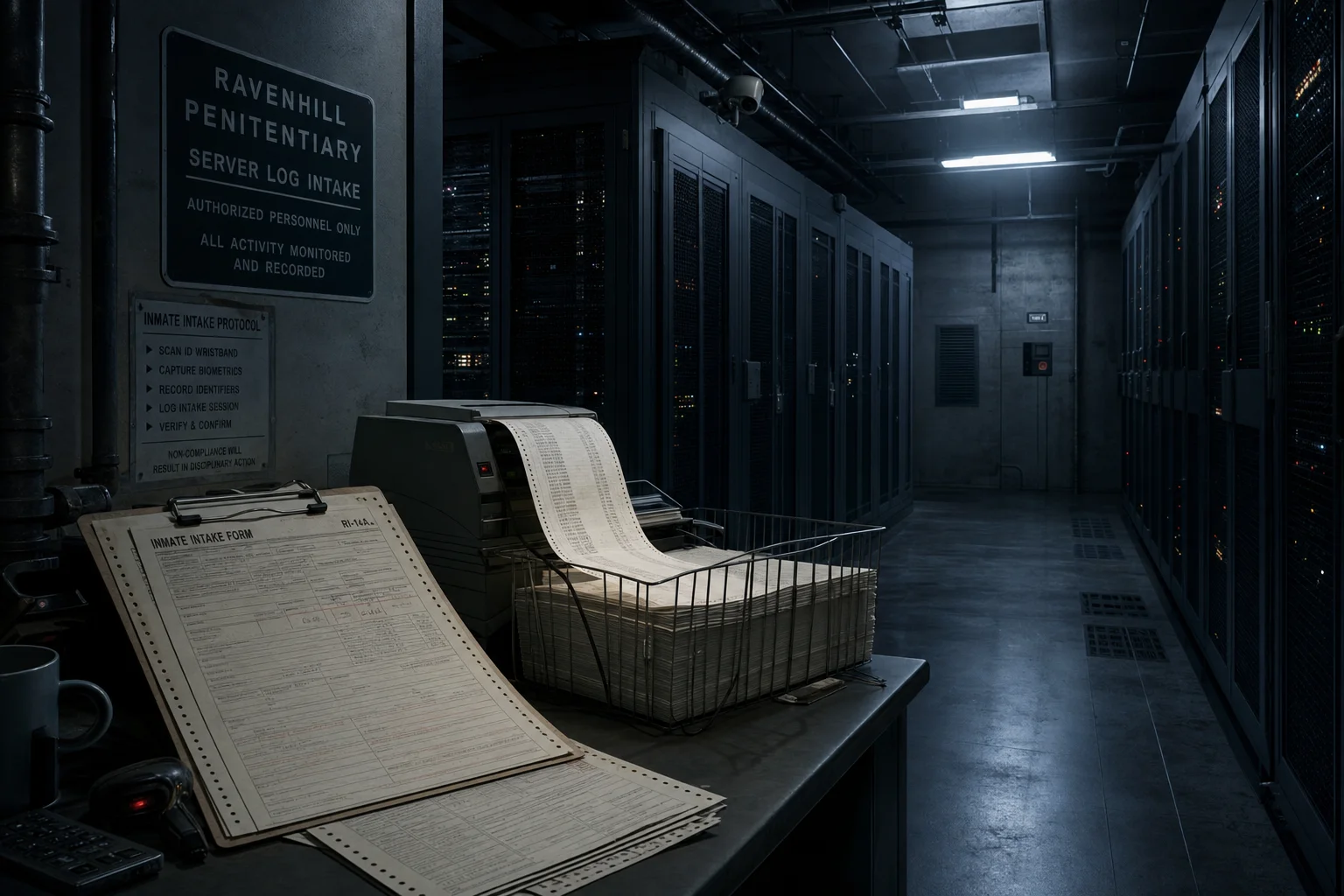
The metallic tang of ozone and warm electronics hits first, a scent of humming machinery. A single, flickering fluorescent tube overhead casts a jerky, pulsing light across banks of monolithic servers. Ink-ribbon impressions on carbon-copy intake forms. Micro-scratches on magnetic stripe card readers. Thermal paper logs from the central terminal spool endlessly into a wire basket, their faint, overlapping print impressions a dense, unreadable column.
 Crime Scene Environment
Lighting profile: fluorescent, inconsistent, casting moving shadows from flickering tubes. Humidity/temperature profile: climate-controlled dryness, cool air recycled through institutional vents. Acoustic density: low-frequency, constant hum from server banks and ventilation systems, punctuated by the intermittent clatter of mechanical printers and distant, echoing institutional sounds.
 Investigation Constraints
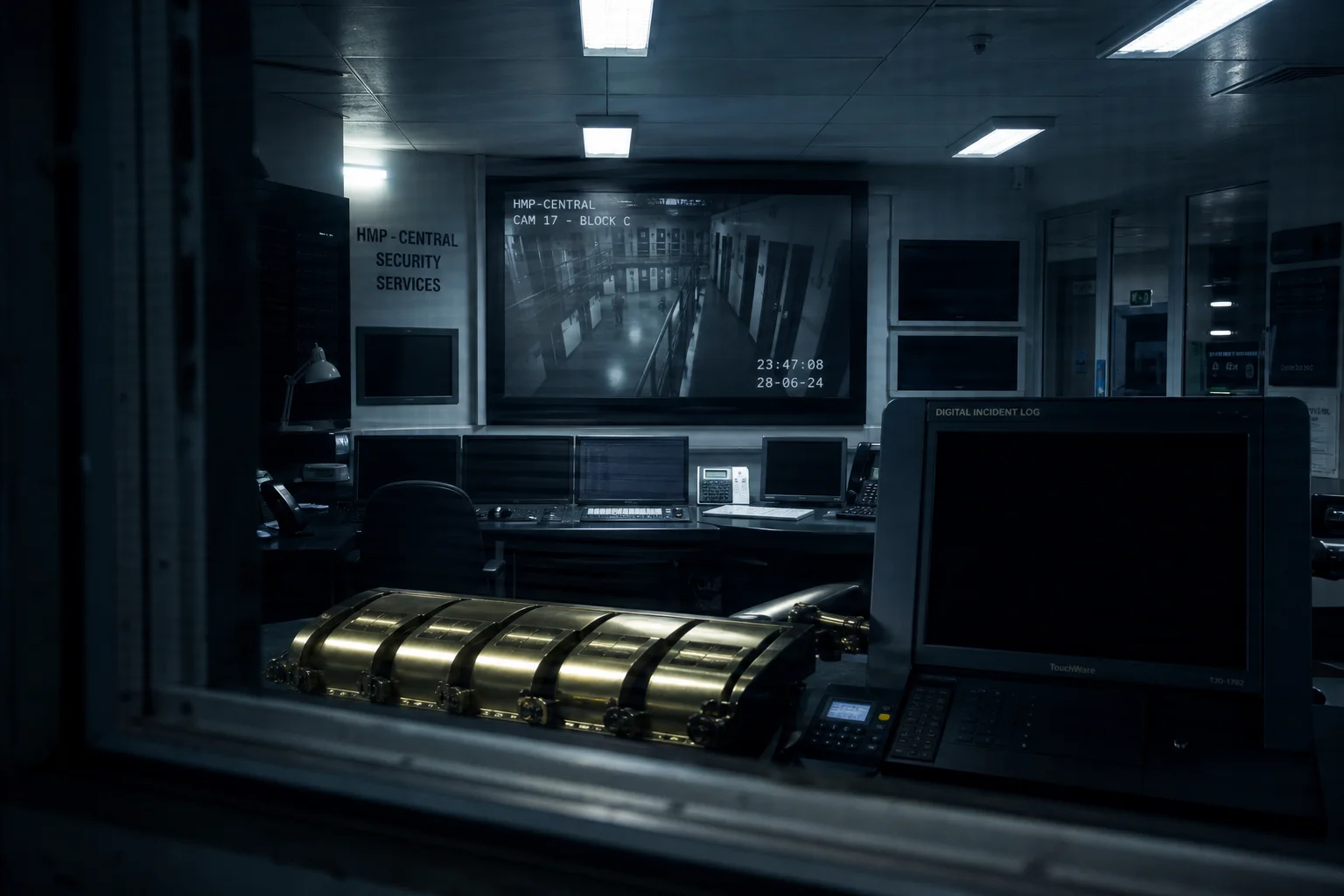
Secure landline telephones, closed-circuit surveillance tapes (with manual timestamp logging), biometric keycard access logs for doors, institutional server audit trails (text-based, no live feeds), pneumatic tube message systems within the facility, ink-stamped time clocks for staff shifts, and magnetic stripe ID cards for personnel.
✦ Related Cases ✦