The Override Log
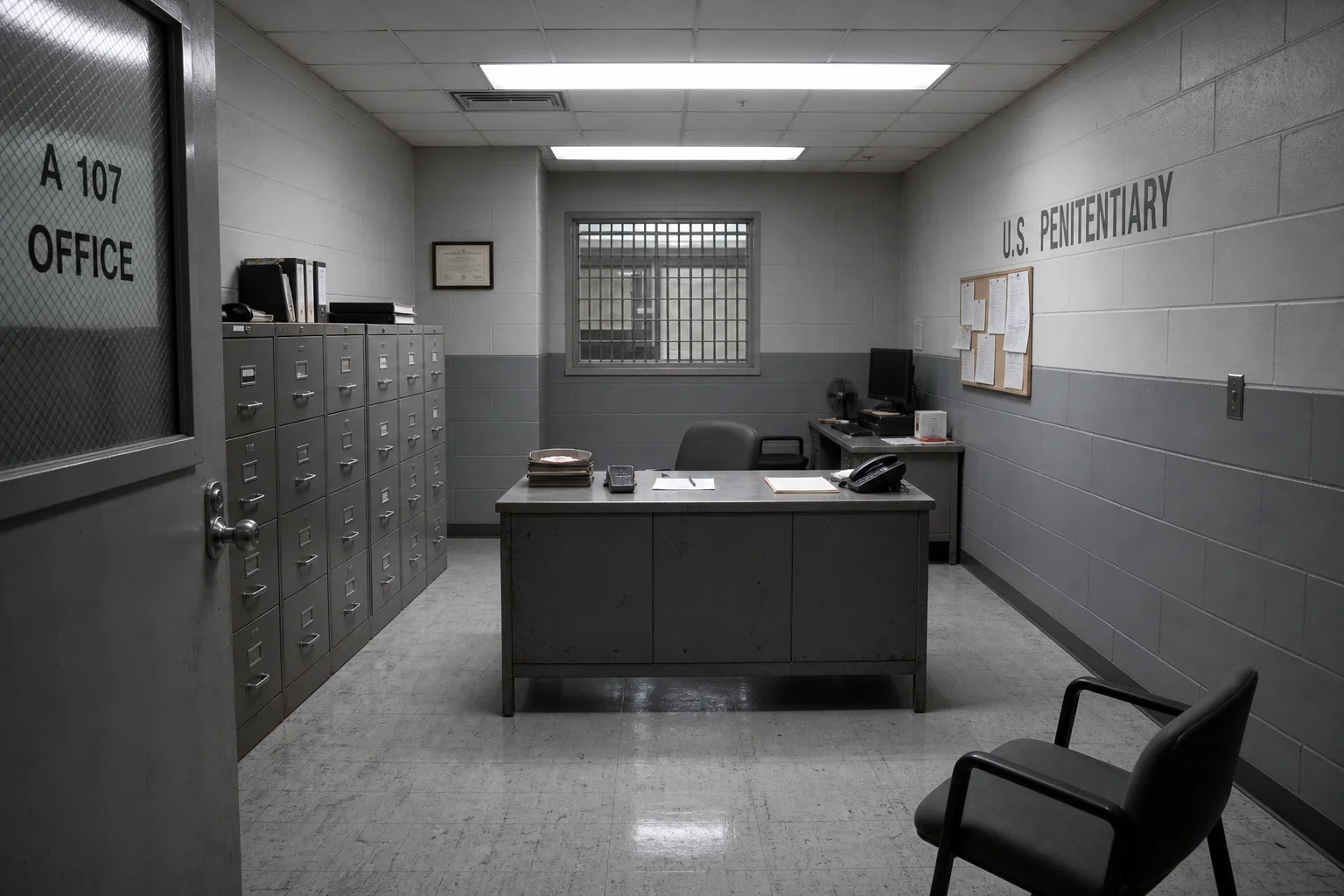
An independent forensic specialist is summoned to a maximum-security prison's administrative wing following the discovery of a deceased inmate in a locked cell. The investigation focuses on reconciling conflicting institutional logs, testimonial timestamps, and physical evidence within a confined, high-surveillance environment. The objective is to determine the precise sequence of events and the nature of the system failures that contributed to the incident.
 Initial Crime Scene
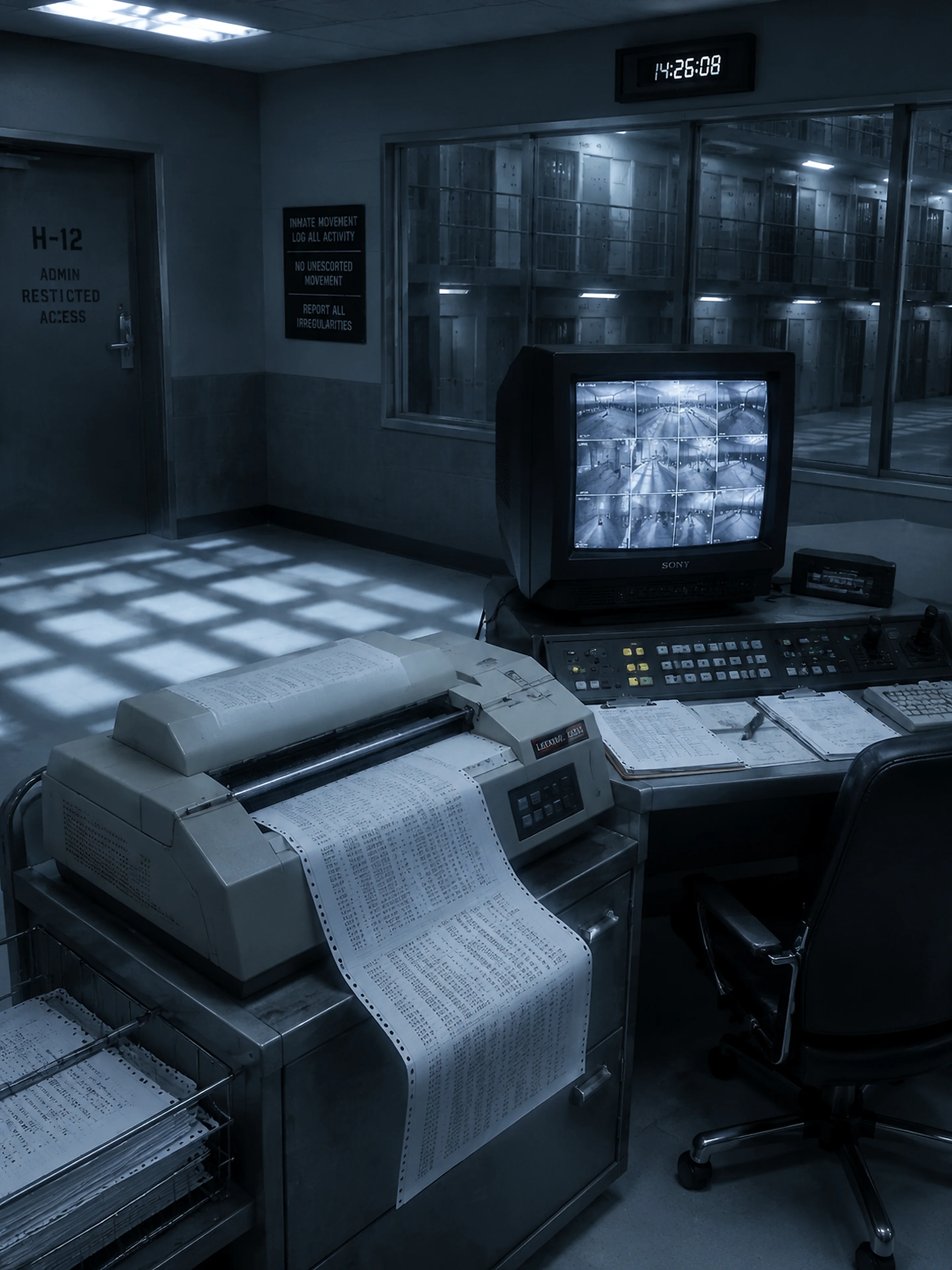
A wave of ozone and stale coffee hits as the door swings open. The fluorescent light casts a sterile, blue-hued grid across the polished linoleum floor, reflecting the grainy image on an analog monitor. The steady hum of a dot-matrix printer mixes with the distant, rhythmic clang of a cell door echoing down the corridor.
 Crime Scene Environment
The environment operates under a harsh, fluorescent lighting profile with minimal shadow. The air carries a persistent, low-level humidity from electronic cooling systems, maintained at a cool, institutional temperature. Acoustic density is moderate, characterized by the constant hum of surveillance equipment, the clatter of printers, and the muffled sounds of the facility's automated systems.
 Investigation Constraints
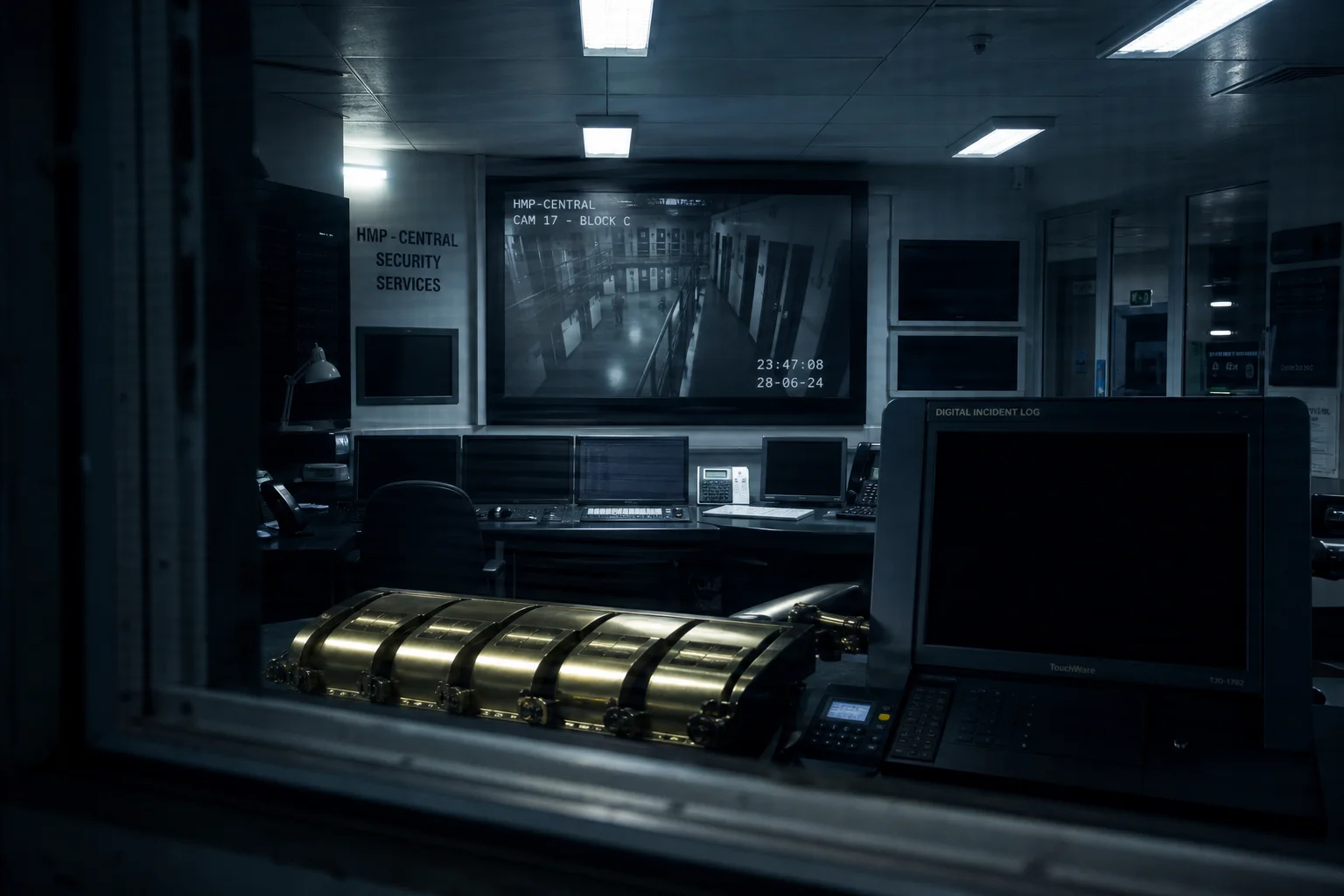
Institutional electronic systems: swipe-card door logs with timestamped entries, biometric scanners (thumbprint and retinal) at key checkpoints, analog CCTV cameras with time-code overlays on VHS tapes, pneumatic tube message systems for internal memos, and basic computer terminals running proprietary prison management software for inventory and shift schedules. No personal mobile phones or internet access for staff. Locks are heavy-duty electromechanical models requiring both a keycard and a correct PIN, with a manual key override in a sealed 'Break-Glass' box for emergencies.
✦ Related Cases ✦