The Parole Hearing
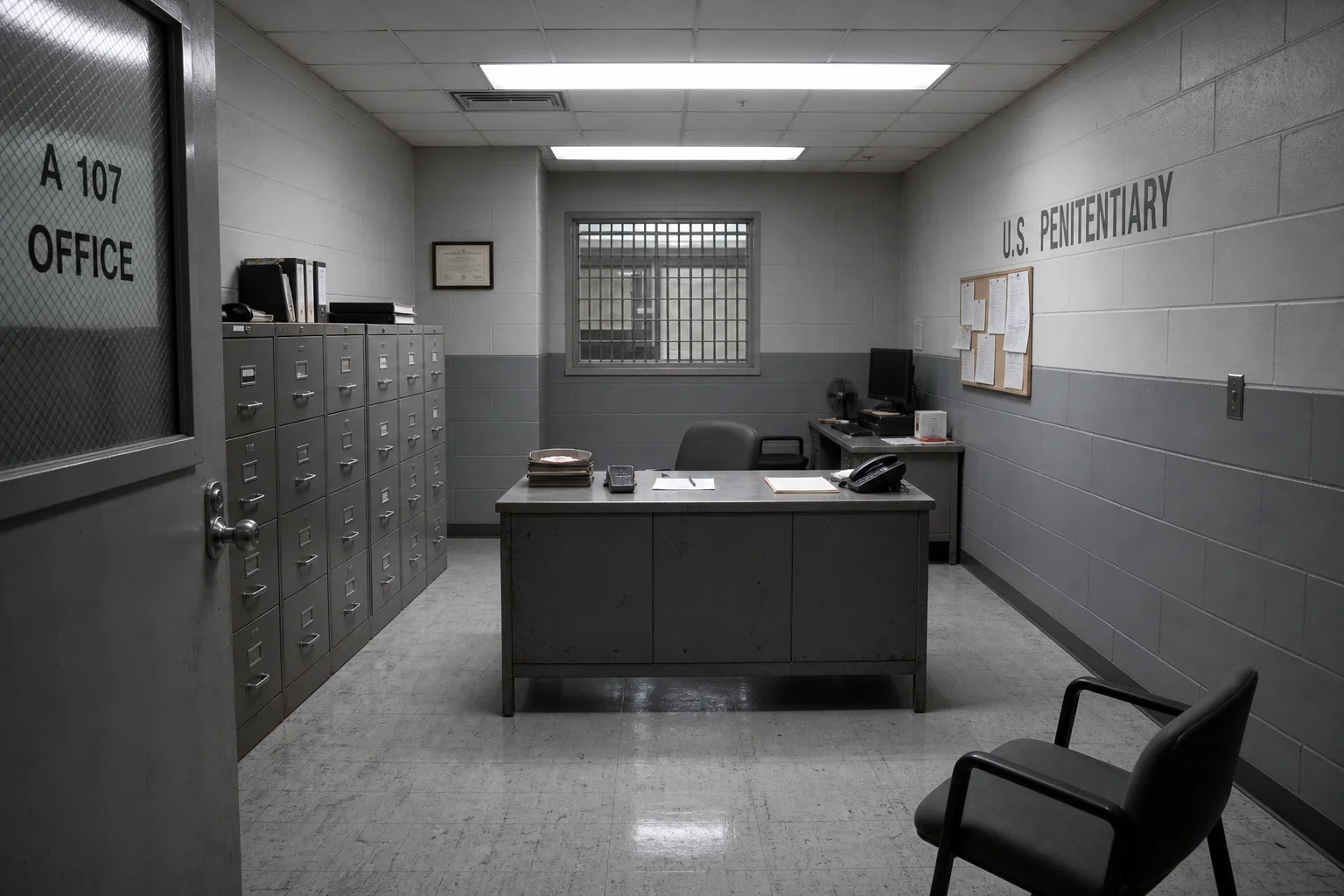
A routine parole review process at Whitmore State Penitentiary is disrupted when the presiding warden is discovered deceased in his administrative office. An independent investigator enters the facility to conduct a procedural audit, tasked with analyzing institutional records, security logs, and staff testimonies to establish the sequence of events leading to the death.
 Initial Crime Scene
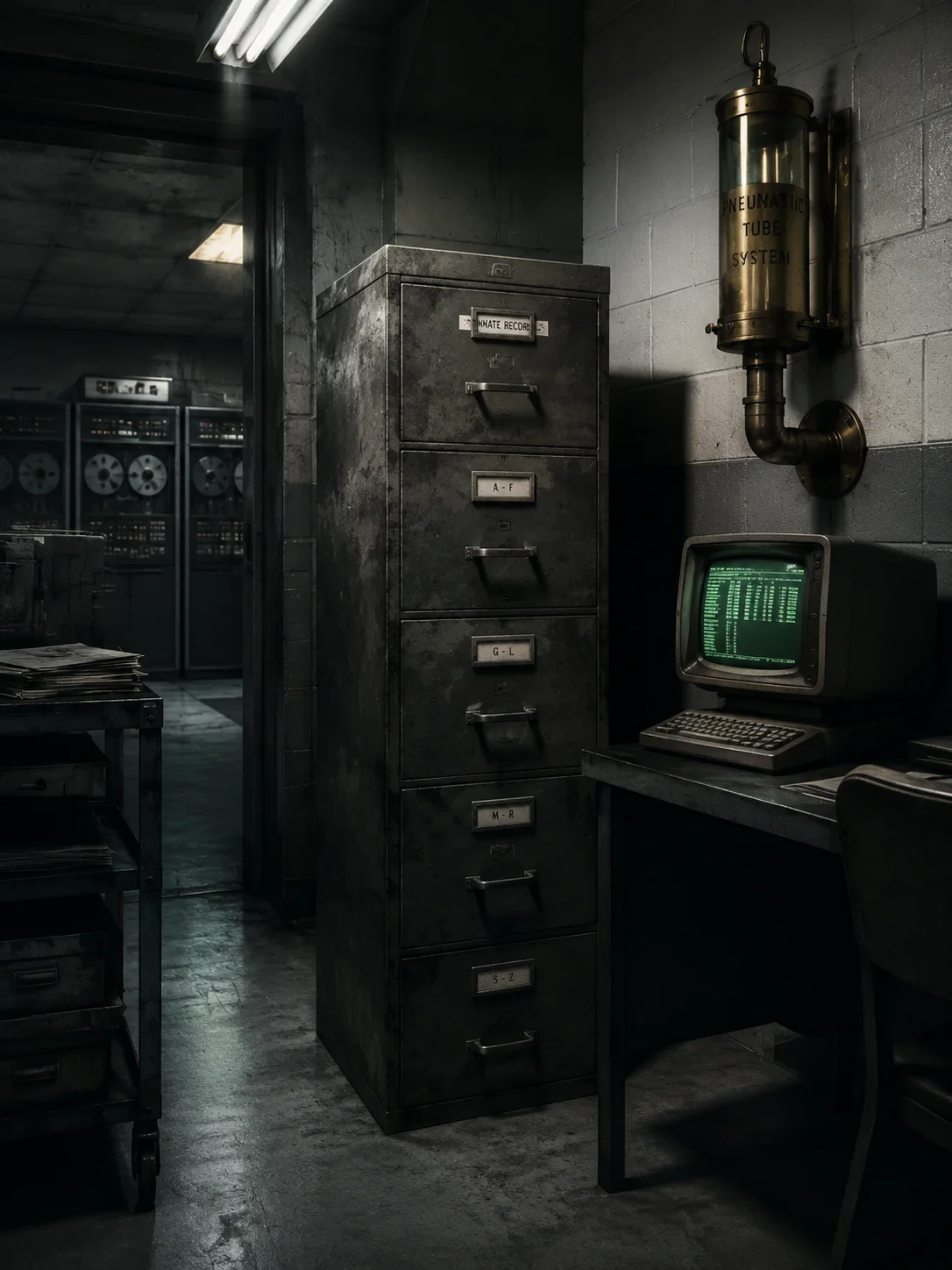
The scent of developing fluid, sharp and chemical, cuts through the institutional air as you cross the threshold into the records vault. A low, persistent hum emanates from a mainframe tape drive processing a file somewhere down the corridor. Fine, grey institutional dust coats the surface of a central filing cabinet, and the flickering green glow of a CRT monitor casts long shadows across the linoleum floor. A pneumatic tube sender, its polished brass cool to the touch, is mounted on the wall.
 Crime Scene Environment
The lighting is a sterile, flickering fluorescent wash, creating a harsh, shadowless environment. The air is dry, carrying a slight coolness from the climate control, and is acoustically dense with the low hum of electronics and the distant, muffled echoes of institutional activity.
 Investigation Constraints
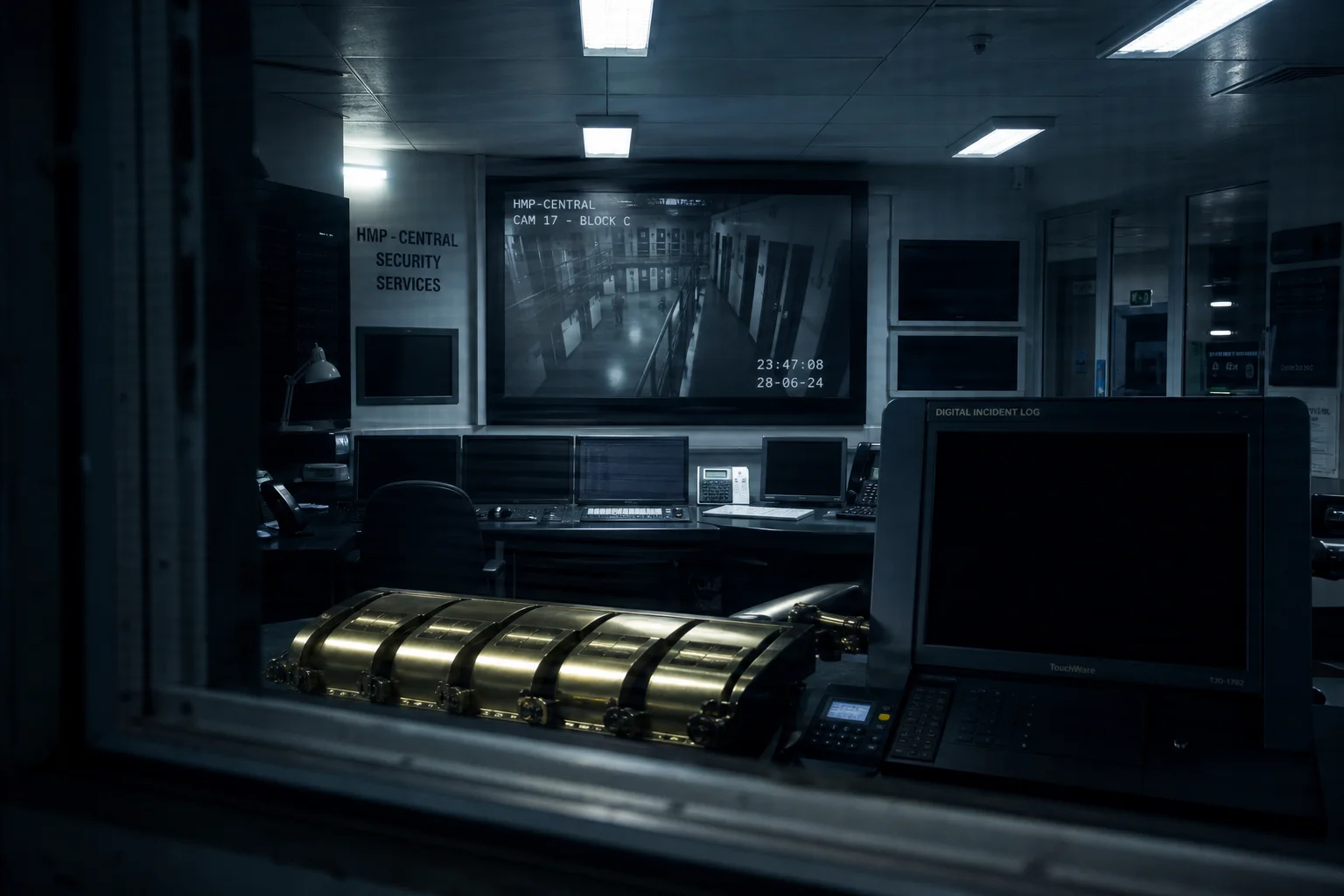
Analog and early digital hybrid systems: pneumatic tube message delivery, mainframe computer terminals with green phosphor monitors for inmate records, paper logbooks with carbon copies, closed-circuit television (CCTV) with grainy, time-stamped VHS tapes, landline telephones with extension lines and call-logging machines, manual key-card access systems for secure doors, forensic kits for basic chemical and dust analysis.
✦ Related Cases ✦