The Passenger Manifest
An independent investigator is called to the scene of a stagecoach massacre in the Arizona Territory. The passenger list is found to be a forgery. The inquiry must untangle the web of financial ledgers, frontier social standing, and accidental timeline contamination created by individuals hiding their own private affairs.
 Initial Crime Scene
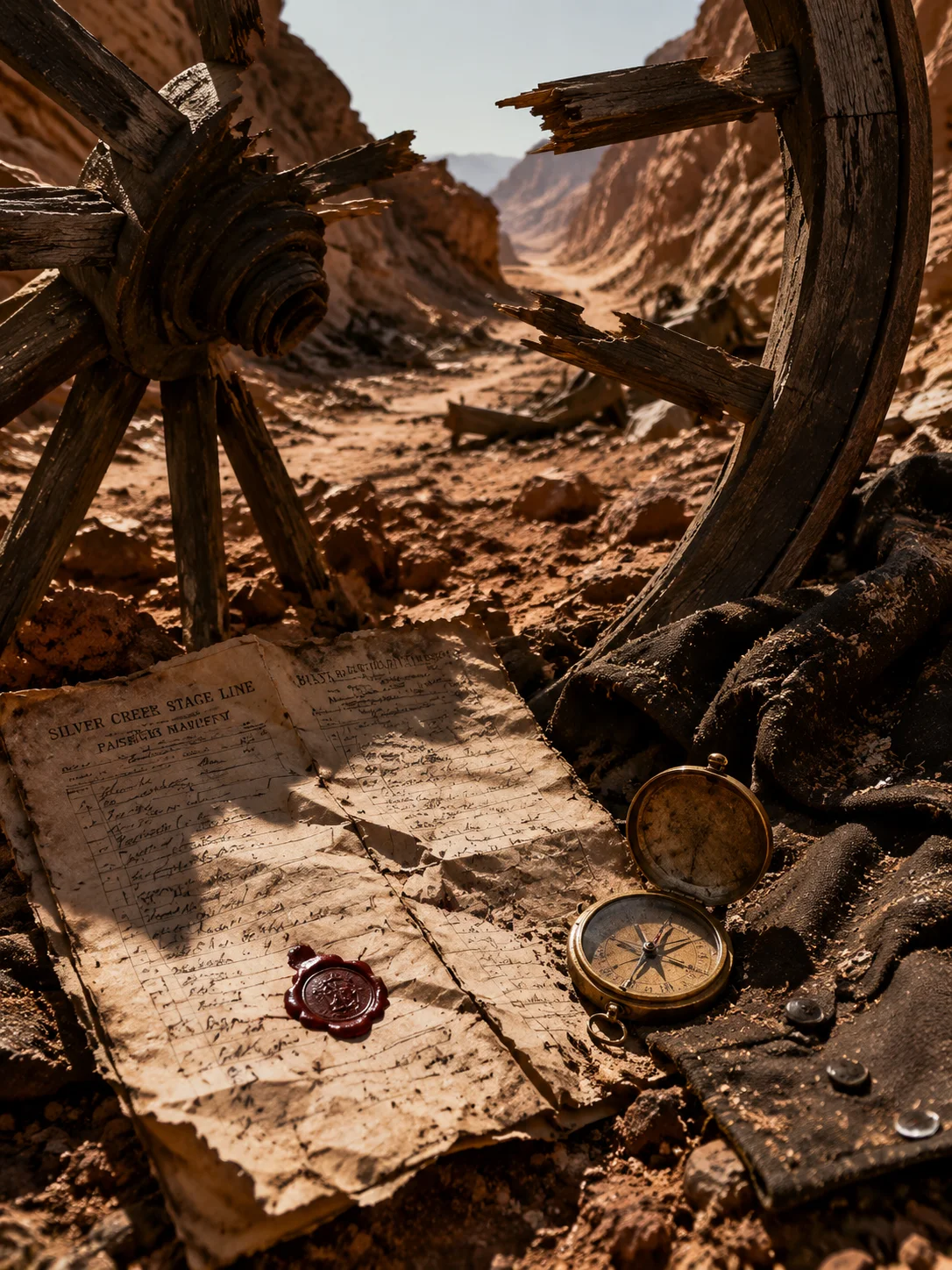
The scent of old blood and spilled whiskey hangs thick in the still desert air, cut by the sharp tang of sagebrush. A lone crow caws from the shattered wheel of the stagecoach, its sound echoing across the gully. Your boots sink into the fine, reddish dust. Before you, a wax-sealed passenger manifest lies splayed open, its pages gritty. A brass pocket compass rests near the driver, its needle spinning in a lazy, erratic circle. Coarse, glittering sand grains are embedded in the dead man's coat collar.
 Crime Scene Environment
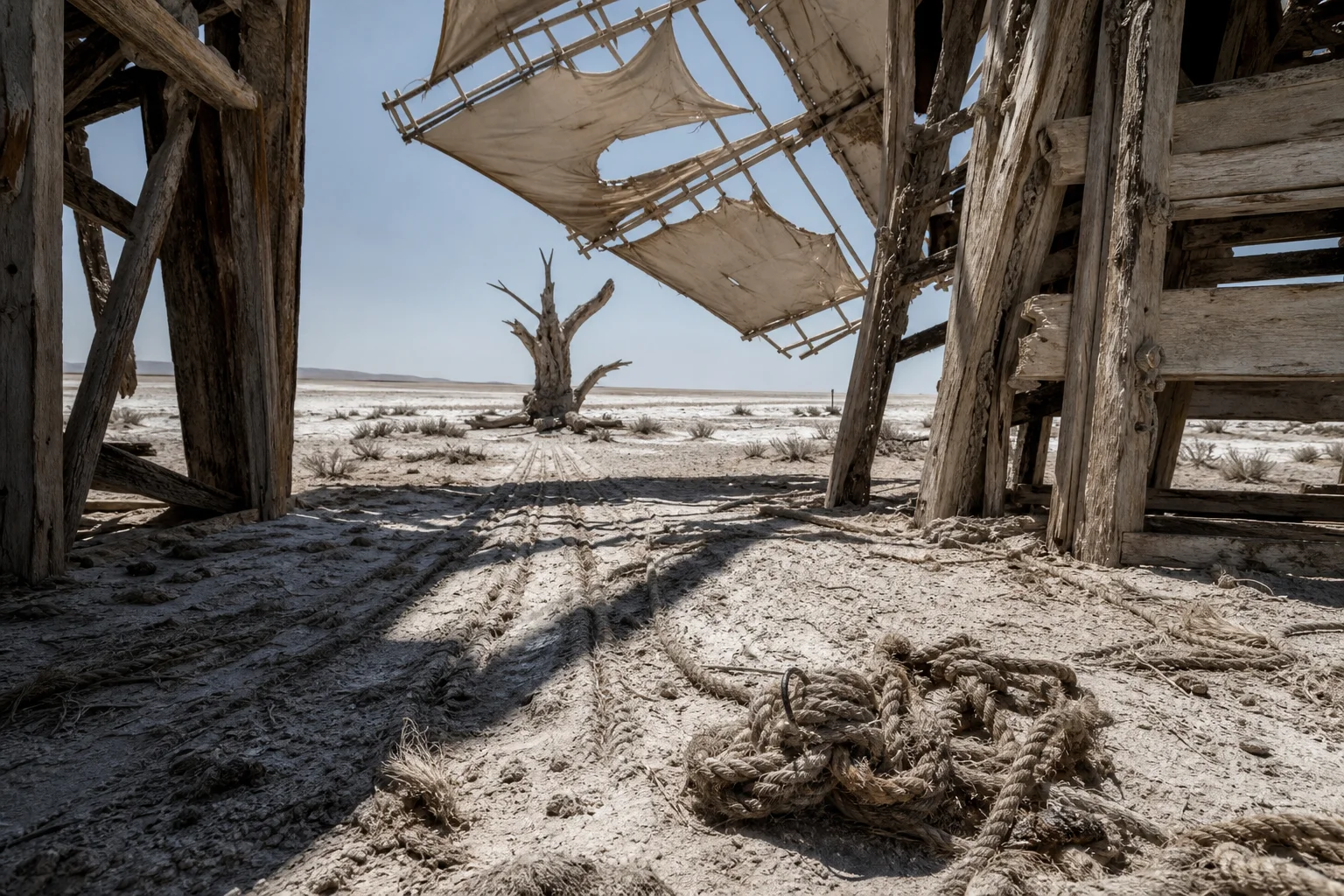
The lighting is harsh, direct desert sun casting sharp, short shadows from the wreckage. The air is hot and dry, with a low humidity that makes the dust hang in a perpetual, gritty haze. Acoustic density is low; the dominant sounds are the wind across the gully and the distant caw of the crow, creating a heavy, watchful silence.
 Investigation Constraints
Hand-cranked telegraph, mechanical clock towers, leather-bound ledgers with wax seals, temperamental steam-powered printing presses, black powder firearms, glass plate photography, and period-accurate forensic tools like simple magnifying lenses and calipers.
✦ Related Cases ✦