The Pneumatic Cipher
The body of a government cipher clerk is discovered in a London townhouse, a rare stamp clutched in his hand. The subsequent investigation encounters a contaminated evidence timeline from a nearby domestic residence, requiring the untangling of multiple overlapping personal and professional entanglements.
 Initial Crime Scene
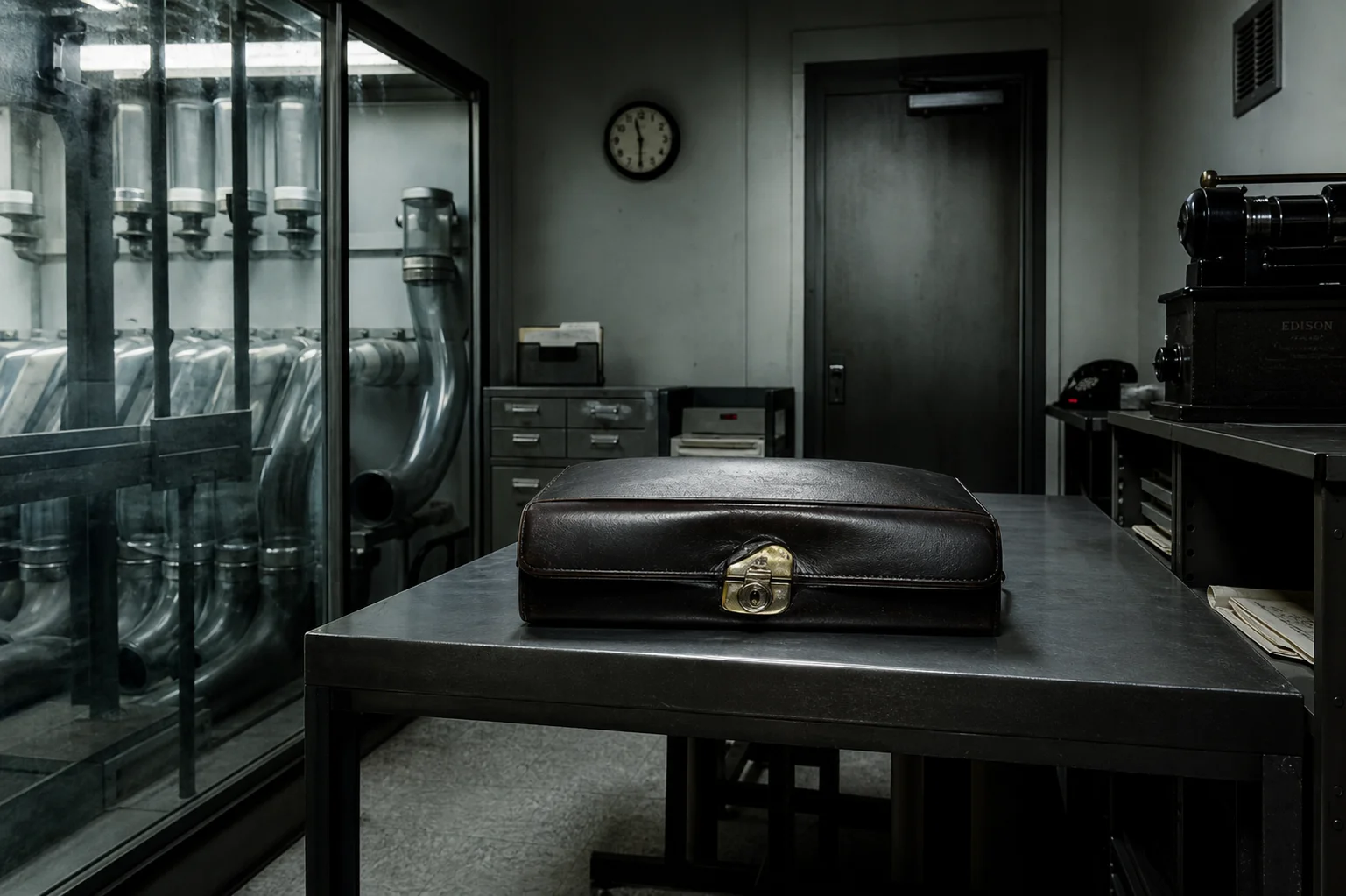
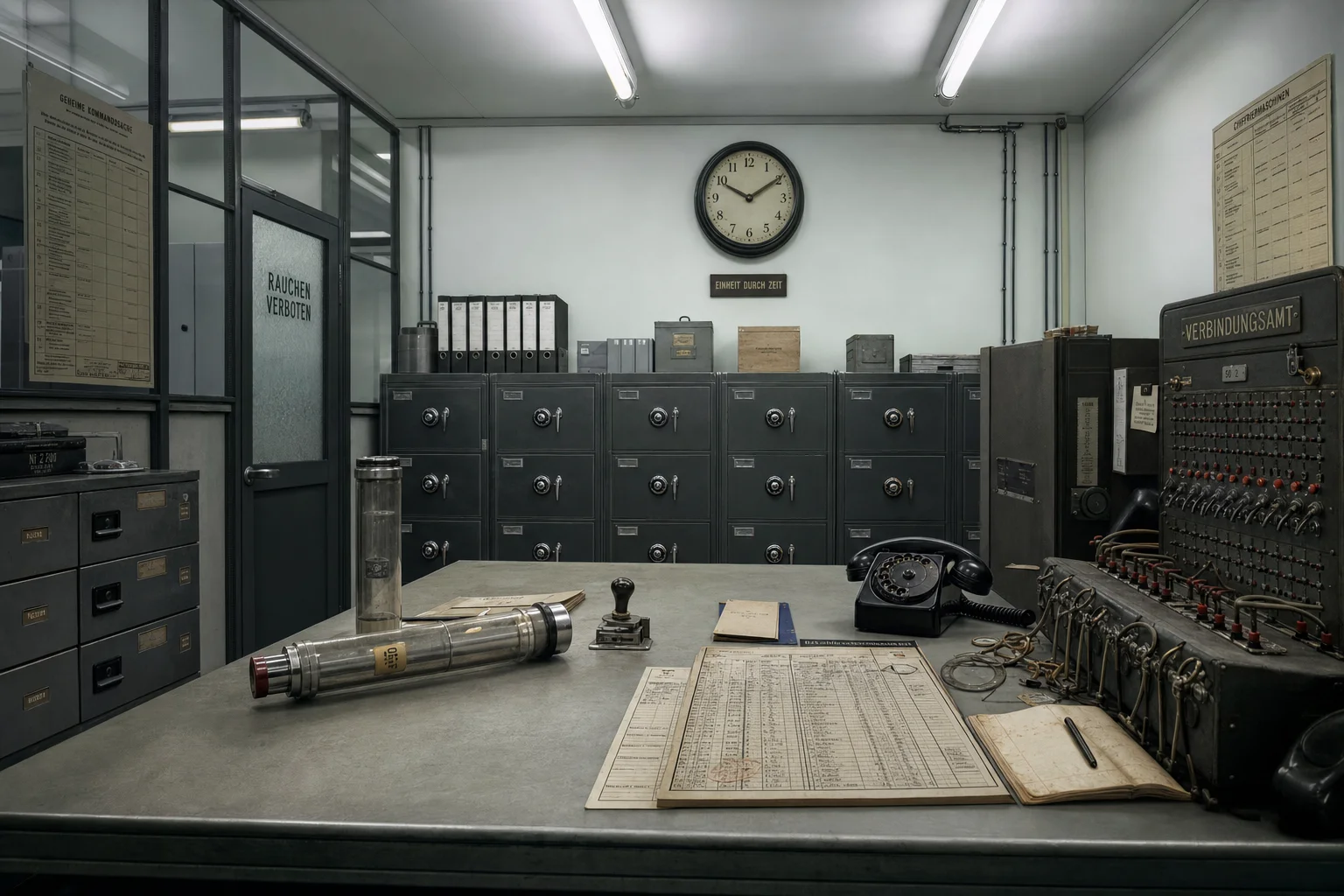
The sterile scent of carbon paper and machine oil hits first, a sharp, chemical tang in the cold air. A mechanical clock on the wall ticks with rigid, metronomic precision. The room is lined with metal filing cabinets, their combination locks glinting dully. Carbon-copy message flimsies in pneumatic tube capsules sit on the desk, next to ink-stained, time-stamped switchboard connection logs. The only sound beyond the clock is the faint, persistent hum of building ventilation.
 Crime Scene Environment
The lighting is artificial, a flat, shadowless glow from overhead fluorescent tubes. The air maintains a consistent, cool temperature with low humidity, contributing to a sterile, clinical atmosphere. Acoustic density is low; sounds are sharp and isolated—the click of a typewriter key, the hiss of a pneumatic tube, the faint crackle of a vacuum tube in the distance. The environment is characterized by rigid protocol and polished, impersonal surfaces.
 Investigation Constraints
Late 1940s analog espionage: mechanical cipher machines (Enigma variants), shortwave radio transmitters, chemical microdot photography, film-based surveillance cameras, manual telephone switchboards, pneumatic tube message systems, physical safe-deposit boxes, handwritten codebooks, carbon-copy paper logs.
✦ Related Cases ✦