The Proper Placement of Shadows
An independent investigator is summoned to Harrington Hall following the discovery of its patriarch, Lord Harrington, deceased in the library. The circumstances present a scene of profound disturbance: tarnished silver, scattered wax drippings, and carpet indentations tell a silent story of recent, frantic activity. The household staff and family members each present their own accounts of the evening, their demeanors marked by forced propriety and quiet desperation. The task is to untangle the physical evidence from the web of personal secrets and reputational fears that have hopelessly contaminated the scene.
 Initial Crime Scene
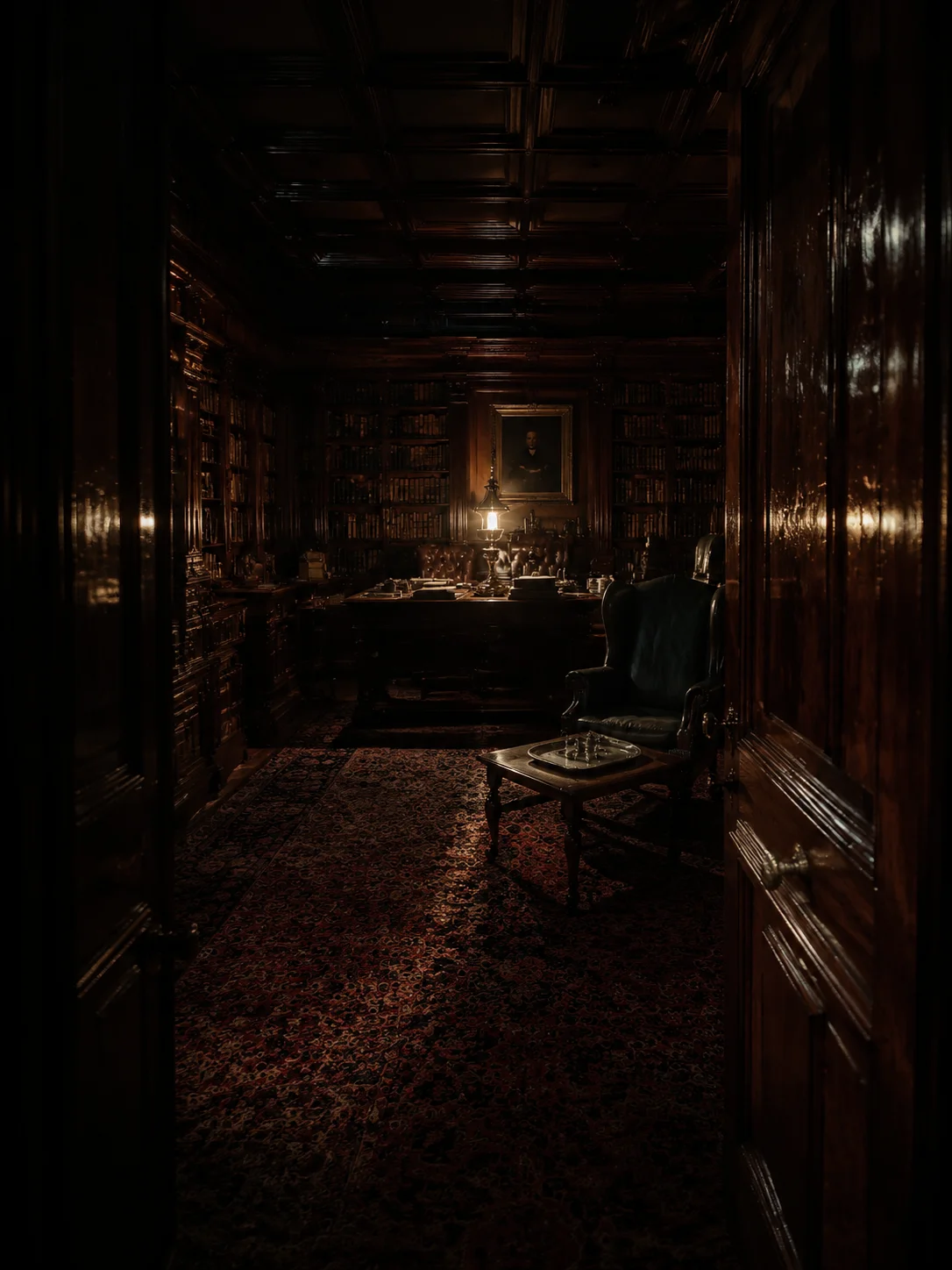
The heavy oak door swings open to the Harrington Library. A sharp, chemical scent of beeswax polish immediately stings the nostrils, undercut by the dry, papery aroma of ancient volumes. The only sound is the faint, persistent hiss of a single gas lamp. Your gaze is drawn first to the vast expanse of polished mahogany paneling, its surface reflecting distorted shadows. To your left, a deep-pile Persian rug shows a trail of crushed fibers leading to a large writing desk. Before a wingback chair, a ceremonial silver tray rests on a low table, its tarnished surface holding a distinct, cleaner square outline where an object recently sat.
 Crime Scene Environment
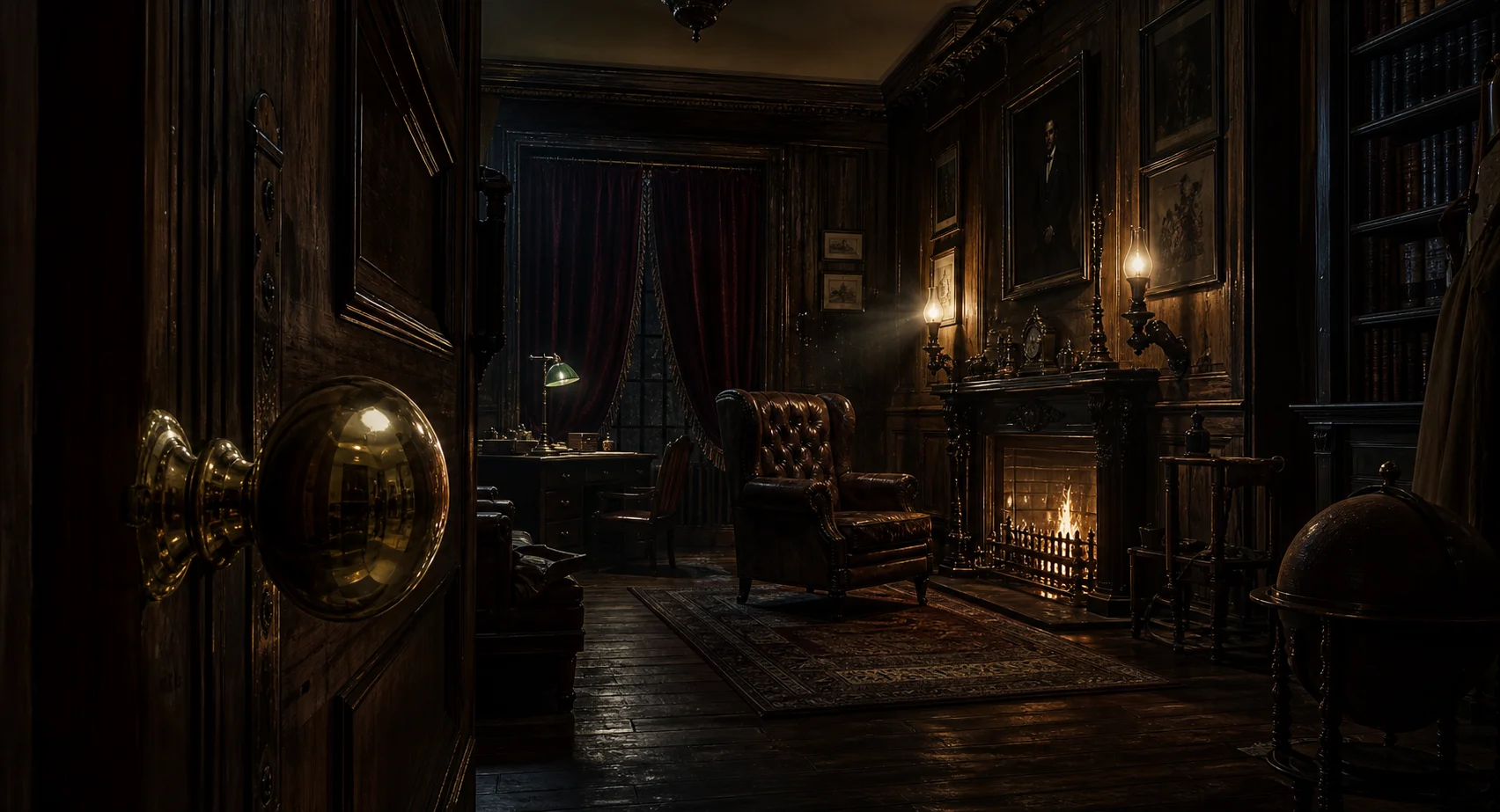
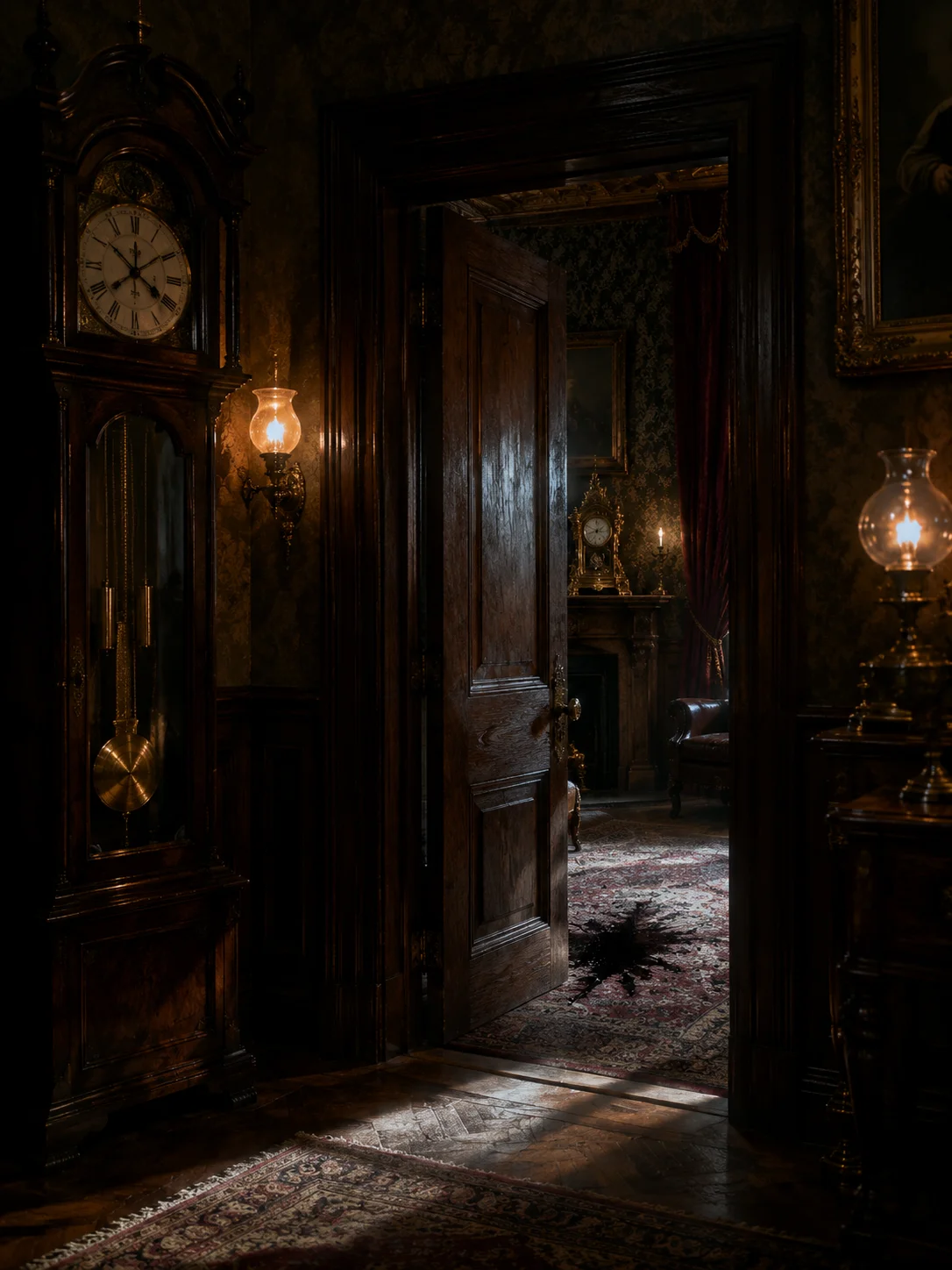
The sandbox is defined by a low, gas-lit illumination that pools in the center of rooms, leaving corners in deep shadow. The air carries a persistent, damp humidity from the coal fires and old stone, a chill that settles in the bones. Acoustic density is low; sounds are muffled by heavy curtains, deep carpets, and the sheer age of the structure, creating a sense of suffocating quietness where every small noise is amplified.
 Investigation Constraints
Handwritten letters, fountain pens, pocket watches, physical keys for locks, coal-fired heating, gas lamps, a single telephone in the hall for emergencies only, early photographic equipment, and manual filing systems. No digital or electronic systems exist.
✦ Related Cases ✦