The Quiet Stake
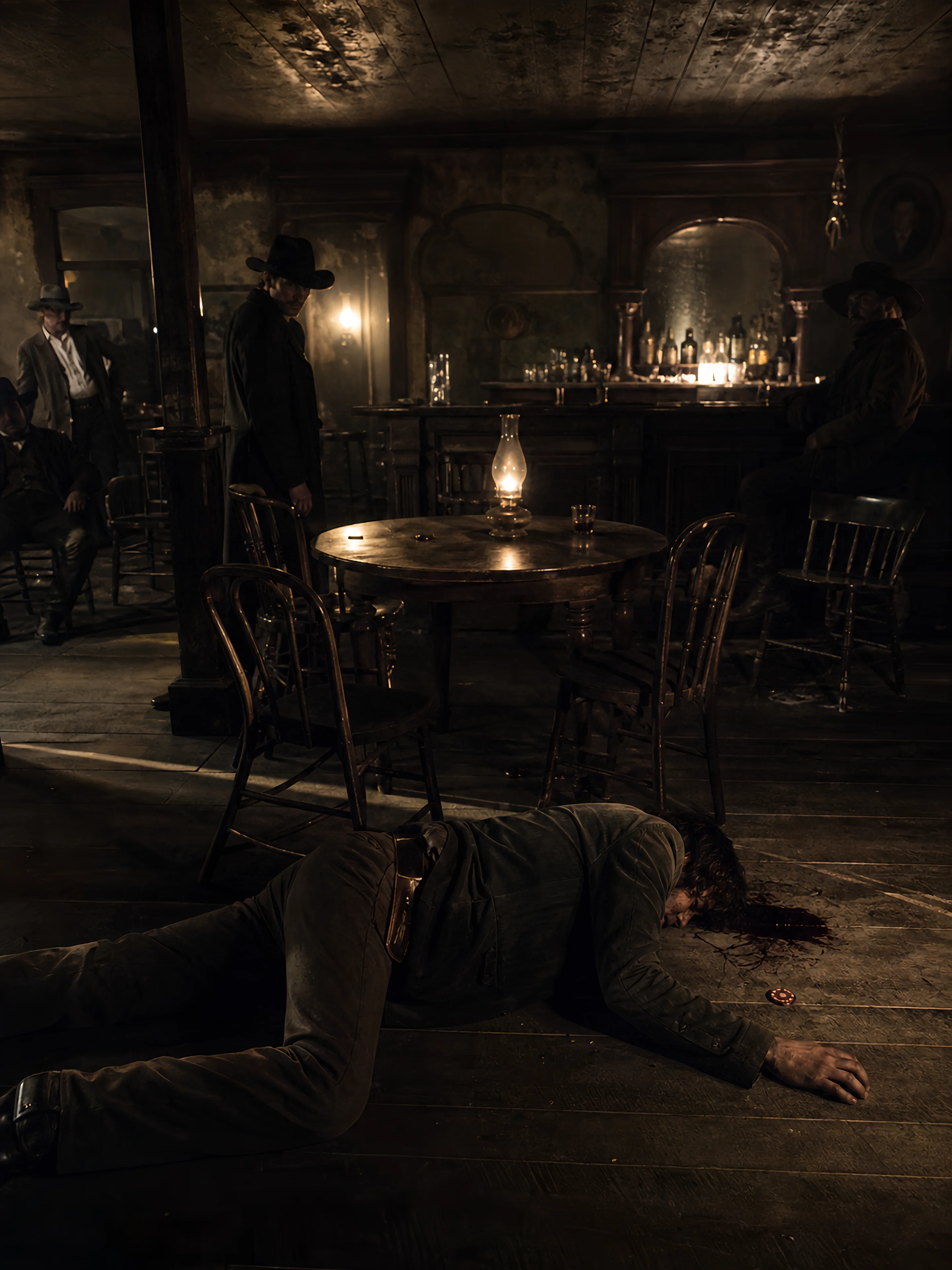
A high-stakes poker game in a frontier town ends with a body and a single chip near it. Several influential figures are present, each with private schedules and personal concerns that converge on the evening.
 Initial Crime Scene
The stale air hits first—a whiskey-sour tang layered over the ghost of cheap floral perfume and a faint, sharp chemical note. From the doorway, the saloon floorboards are a map of scuffed dust, ending in a hollow imprint near the central poker table. The light from a single oil lamp casts long shadows, making the brass fittings on the bar glint and the soot stains on the ceiling look like slow-moving clouds. A creak from the staircase banister and a distant, dry cough are the only sounds that break the tombstone-still quiet.
 Crime Scene Environment
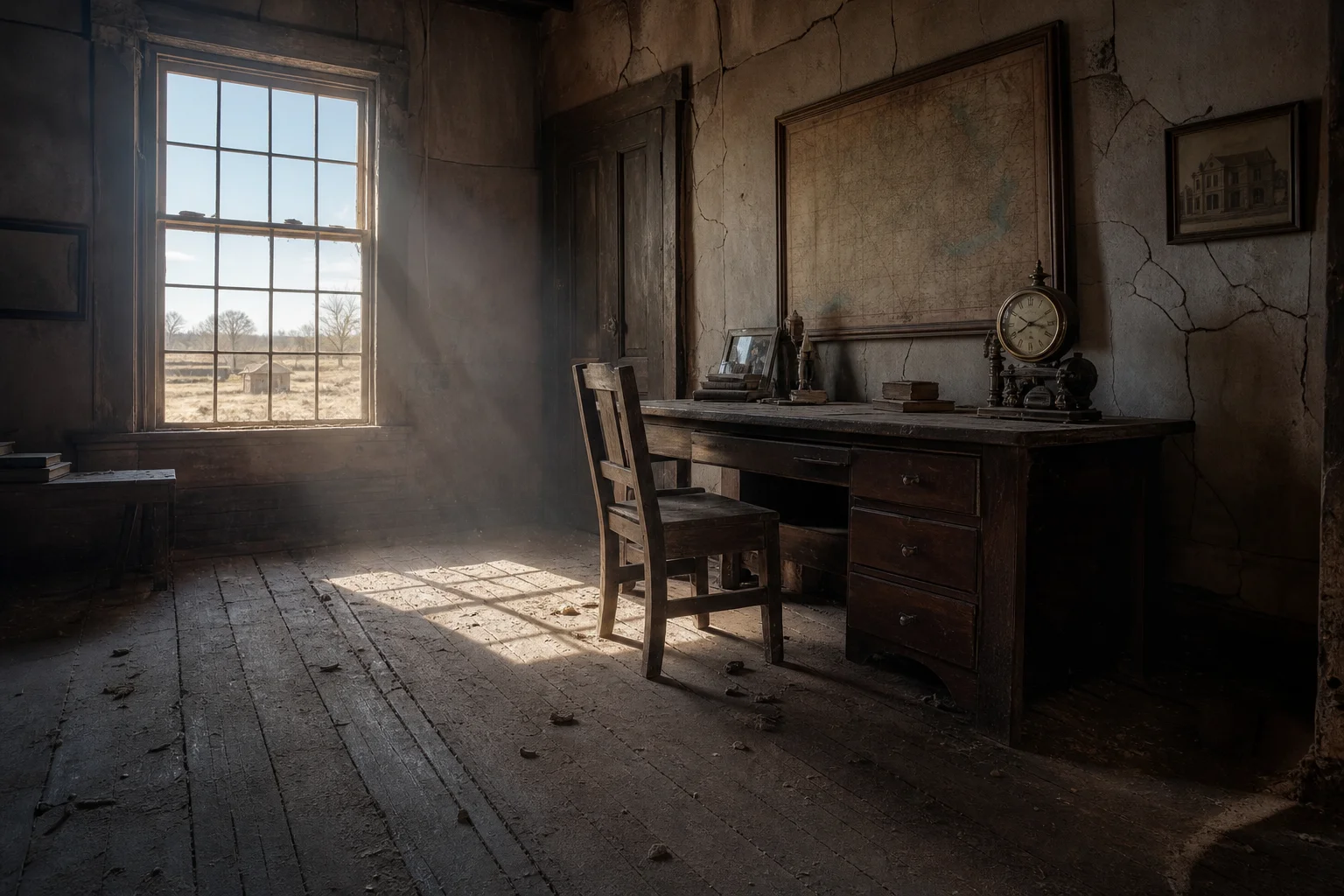
The sandbox is defined by a constant, low-level gloom, punctuated by the unsteady, soot-flickering glow of oil lamps. The air is dry and dusty, with a persistent coolness that clings to the skin, carrying the acoustic density of a place where every sound—a boot scuff, a whiskey glass set down—is swallowed by the heavy, haunted silence of wood and stone.
 Investigation Constraints
Mid-19th century frontier tools: percussion revolvers, oil lamps, telegraph machines (in the nearest large town), hand-cranked printing presses, leather-bound ledgers, hand-operated locks on strongboxes and doors, horse-drawn transport, herbal and chemical compounds from a doctor's bag or general store.
✦ Related Cases ✦