The Regent's Gilded Cage
An independent investigator is called to the Regent Theater after the lead actress is found backstage with a blade in her side. The incident occurs moments before the second act, with multiple company members present in the immediate vicinity. The backstage environment reveals a complex network of professional relationships, financial pressures, and artistic tensions that permeated the final hours of rehearsal.
 Initial Crime Scene
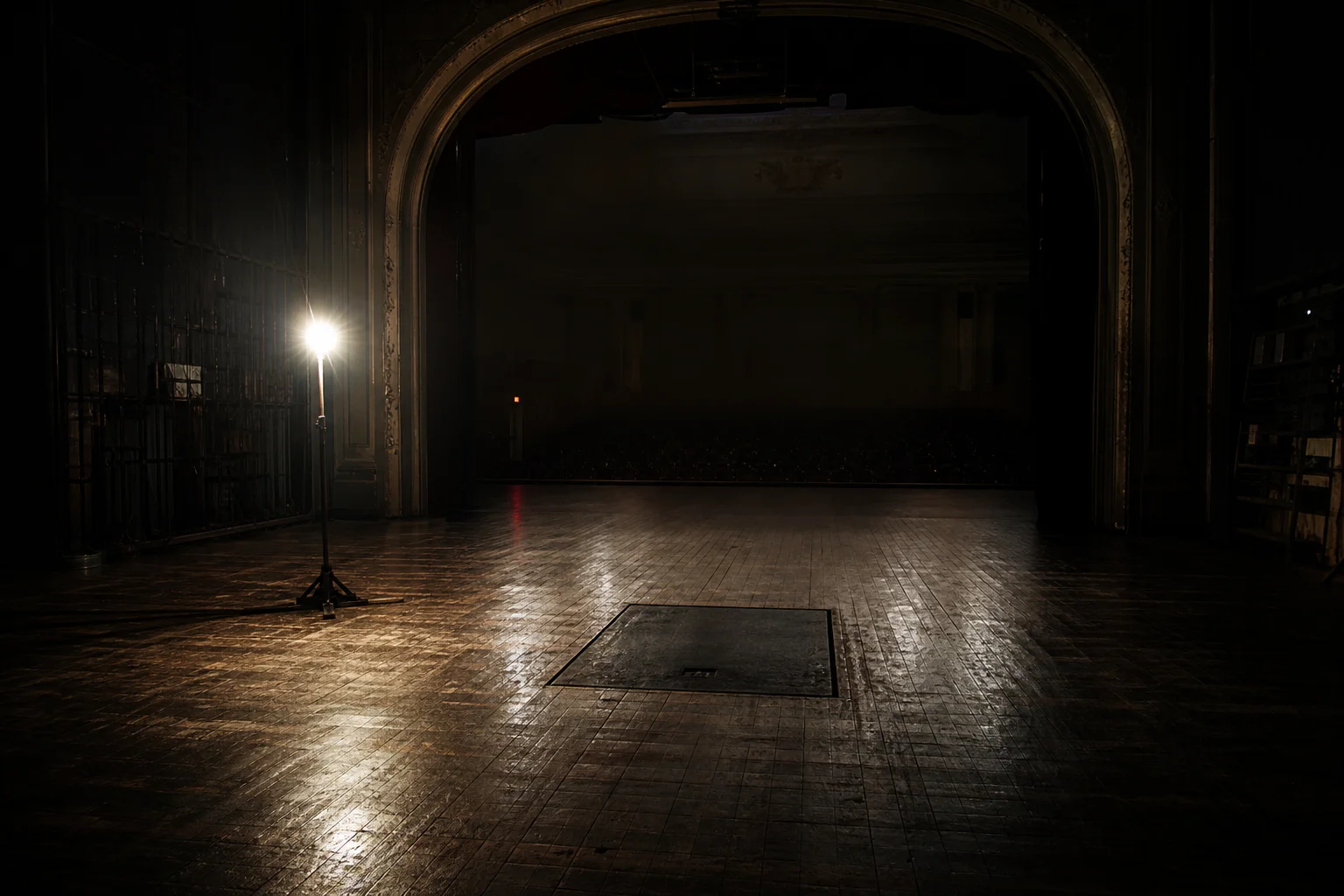
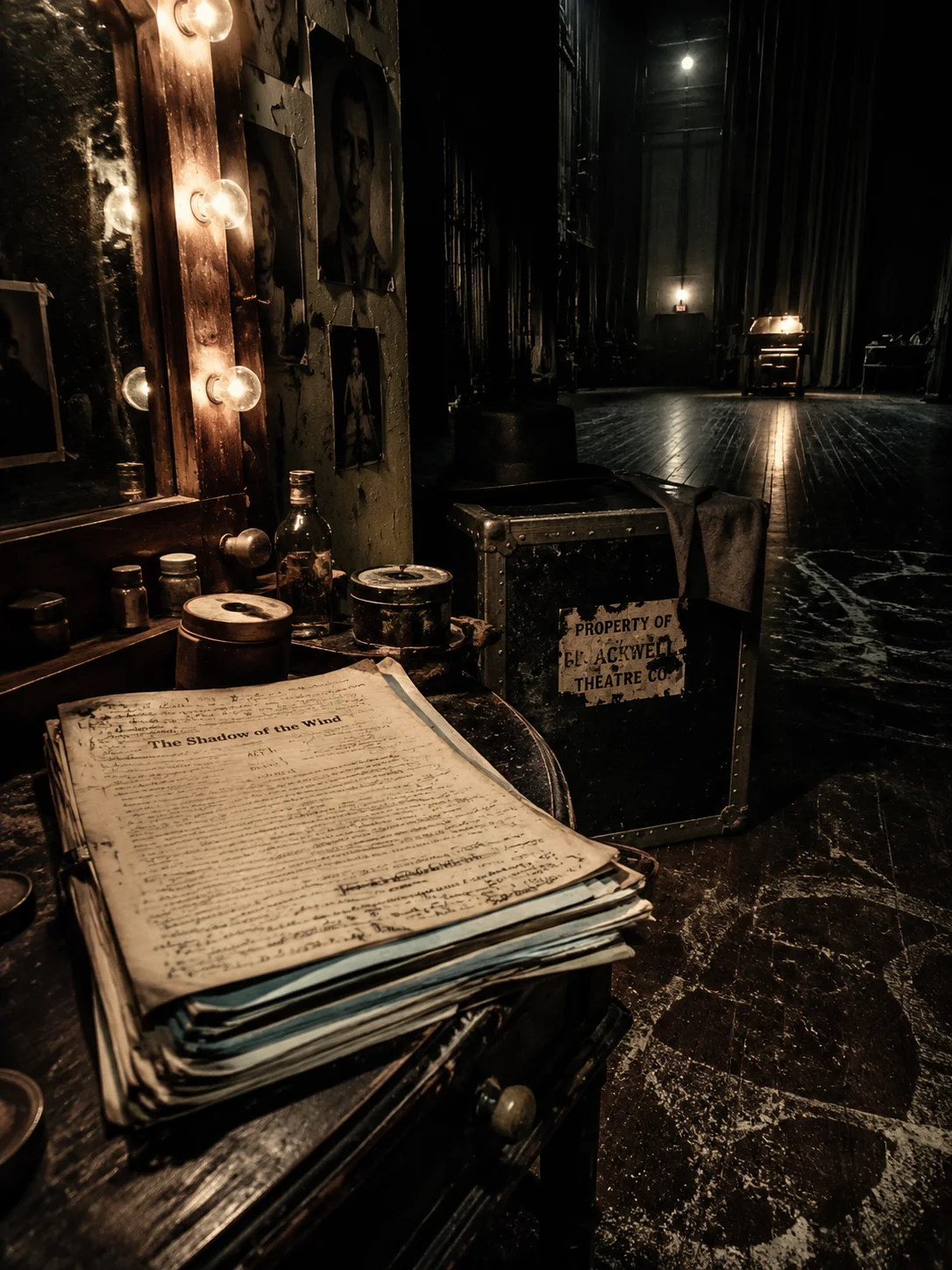
The heavy velvet curtain parts, and the scent of stale greasepaint and cheap adhesive hits first—a sweet, synthetic smell layered over the must of old wood. From the catwalks above, the faint, rhythmic click of a fly system counterweight echoes in the gloom. Your eye catches on three things: a stack of carbon-copy scripts piled on a vanity table, their handwritten notes overlapping into a gray blur; the sticky, peeled edge of an adhesive label on a nearby prop trunk; and the scuffed dust patterns on the stage floor, radiating from the heavy legs of a set piece.
 Crime Scene Environment
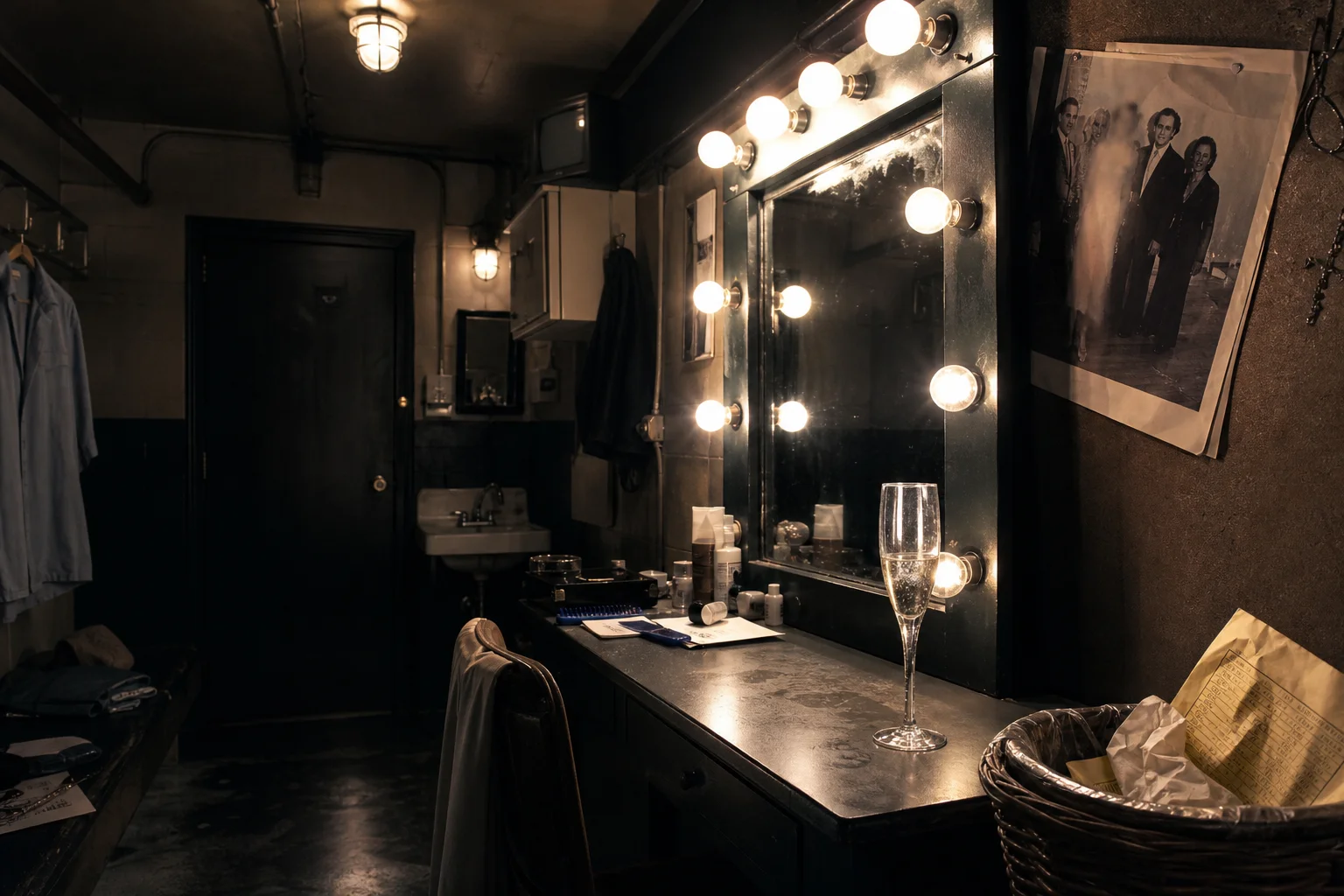
The sandbox is lit by the harsh, flat glare of single work bulbs and the dim, inconsistent glow of ghost lights, casting long, deep shadows that swallow detail. The air is thick with humidity, carrying the heat of stage lamps and the chill of unheated corridors, creating a damp, clinging atmosphere. Acoustic density is high, filled with the low hum of electrical systems, the distant, muffled sounds of the city, and the constant, subtle creak of old rigging and settling wood.
 Investigation Constraints
Period-accurate 1950s theatrical technology: pneumatic tube message systems for inter-departmental notes, carbon-copy scripts with handwritten annotations, manual spotlight and rigging systems controlled by levers, analog reel-to-reel tape recorders for director's notes, theatrical telegraphs for cue signals, physical sign-in sheets at the stage door, and rotary-dial telephone switchboards. No digital or advanced electronic systems exist.
✦ Related Cases ✦