The Reliquary and the Unnoticed Discrepancy
A forensic specialist is summoned to the Haverford University Museum following the discovery of a mislabeled medieval reliquary. The investigation requires navigating the university's scholarly archives, its polite but anxious staff, and a collection of artifacts with complex provenance histories to establish a factual timeline.
 Initial Crime Scene
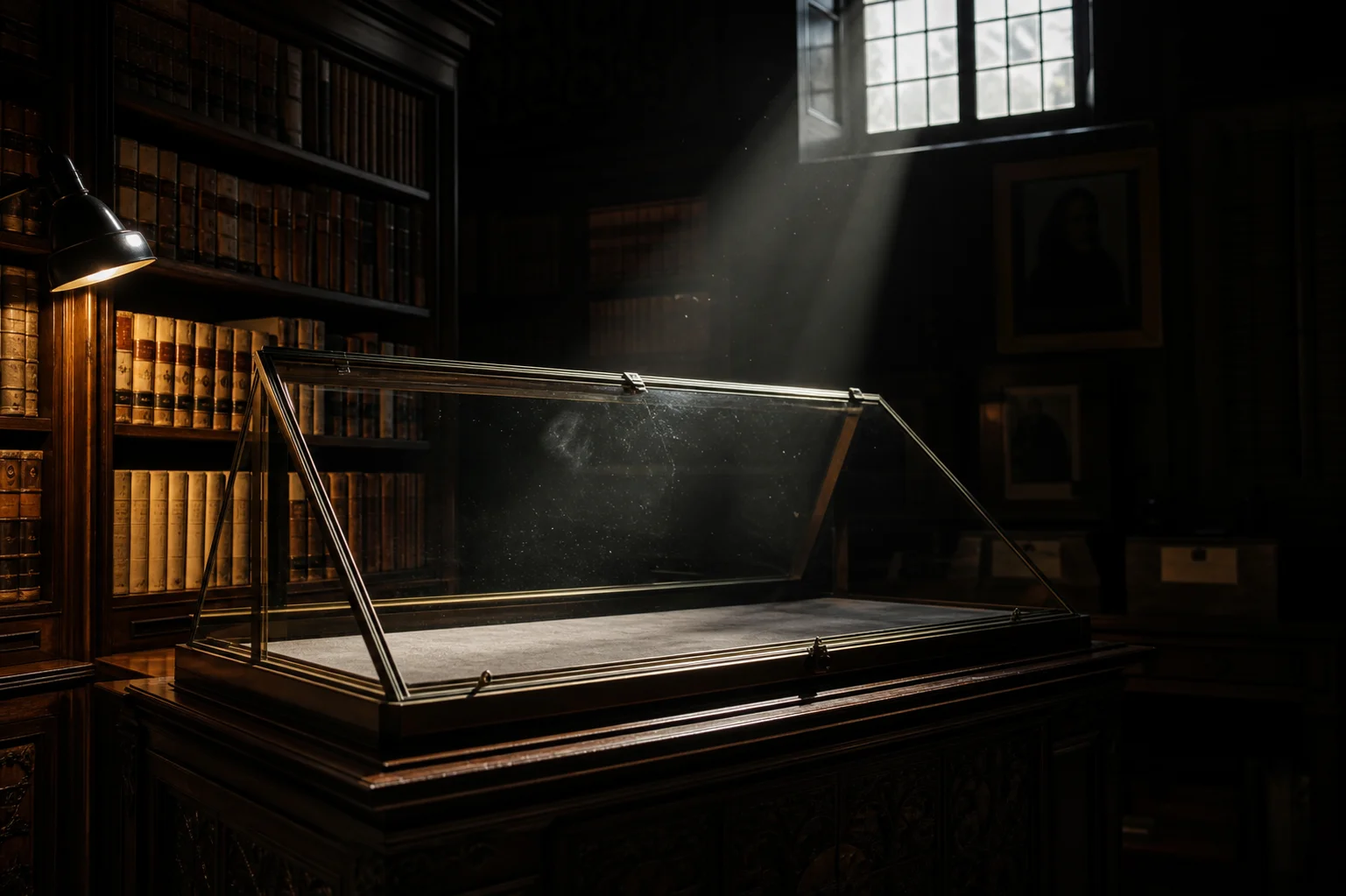
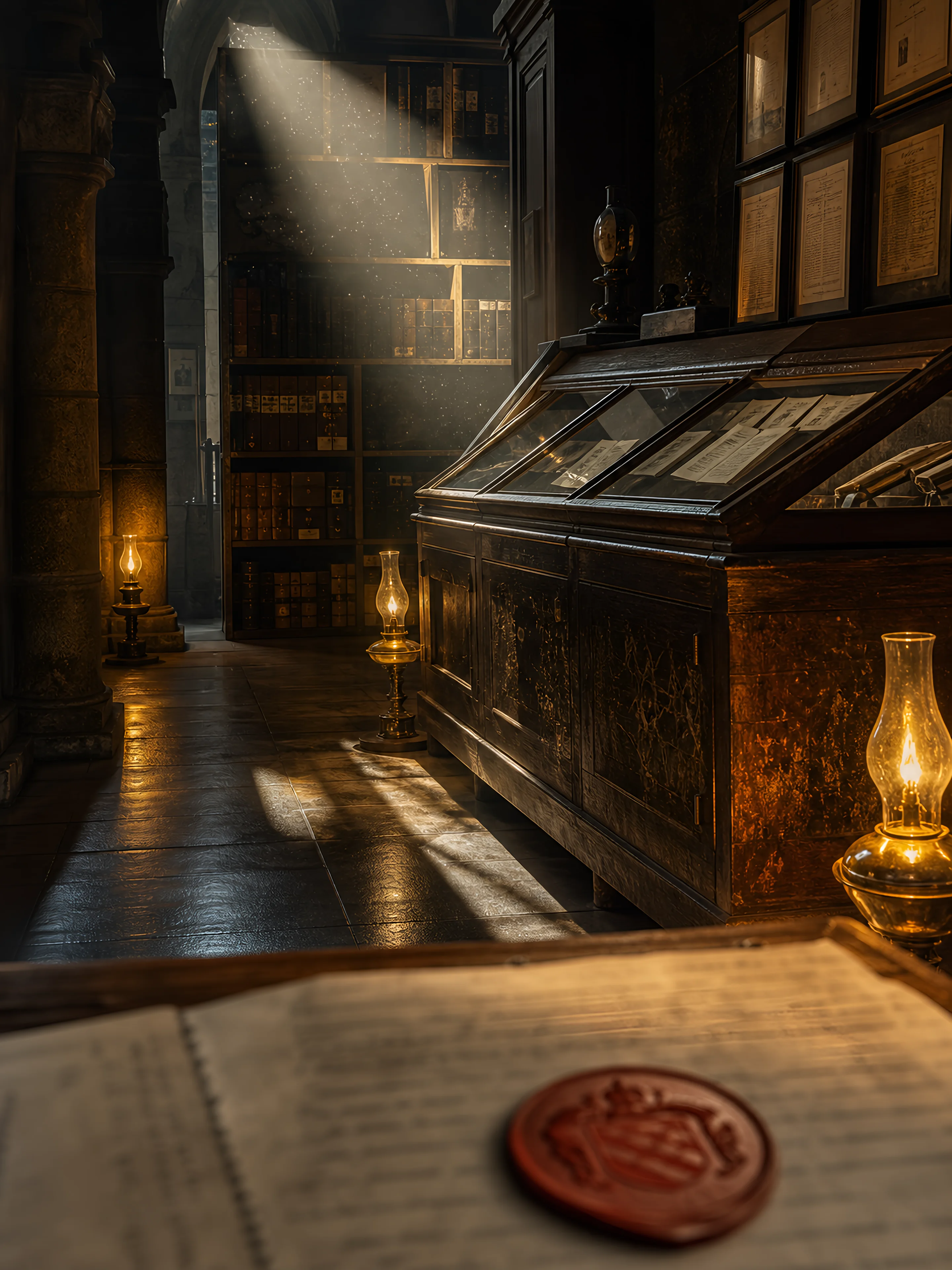
The scent of linseed oil and aging paper hangs heavy in the air. A distant, rhythmic ticking from a pneumatic tube message system provides the only consistent sound. Your first visual impression is of long shadows cast by an oil lamp, pooling between the polished stone floor and the dark, scarred wood of a display case. A dust pattern on a rarely-touched archive shelf catches the light, and a wax seal impression on a nearby document shows a blurred crest.
 Crime Scene Environment
The lighting is primarily from localized oil lamps, creating focused pools of warm, golden light against deep shadows. The air is cool and dry, with a faint, residual humidity from stone walls. Acoustic density is low; sound is muffled by thick walls, leather, and paper, with occasional sharp, isolated noises like a quill scratch or a distant clock chime.
 Investigation Constraints
Quill pens, handwritten ledgers, wax seals, oil lamps, manual document presses, carbon paper, magnifying glasses, pneumatic tube message systems within the university campus, early photographic plates, and manual cataloging cabinets.
✦ Related Cases ✦