The Reserved Spot
An investigation into an unoccupied parking space at a prestigious university uncovers a series of administrative inconsistencies, missing documents, and contradictory schedules among faculty and staff. The inquiry focuses on reconciling official records with observed physical states.
 Initial Crime Scene
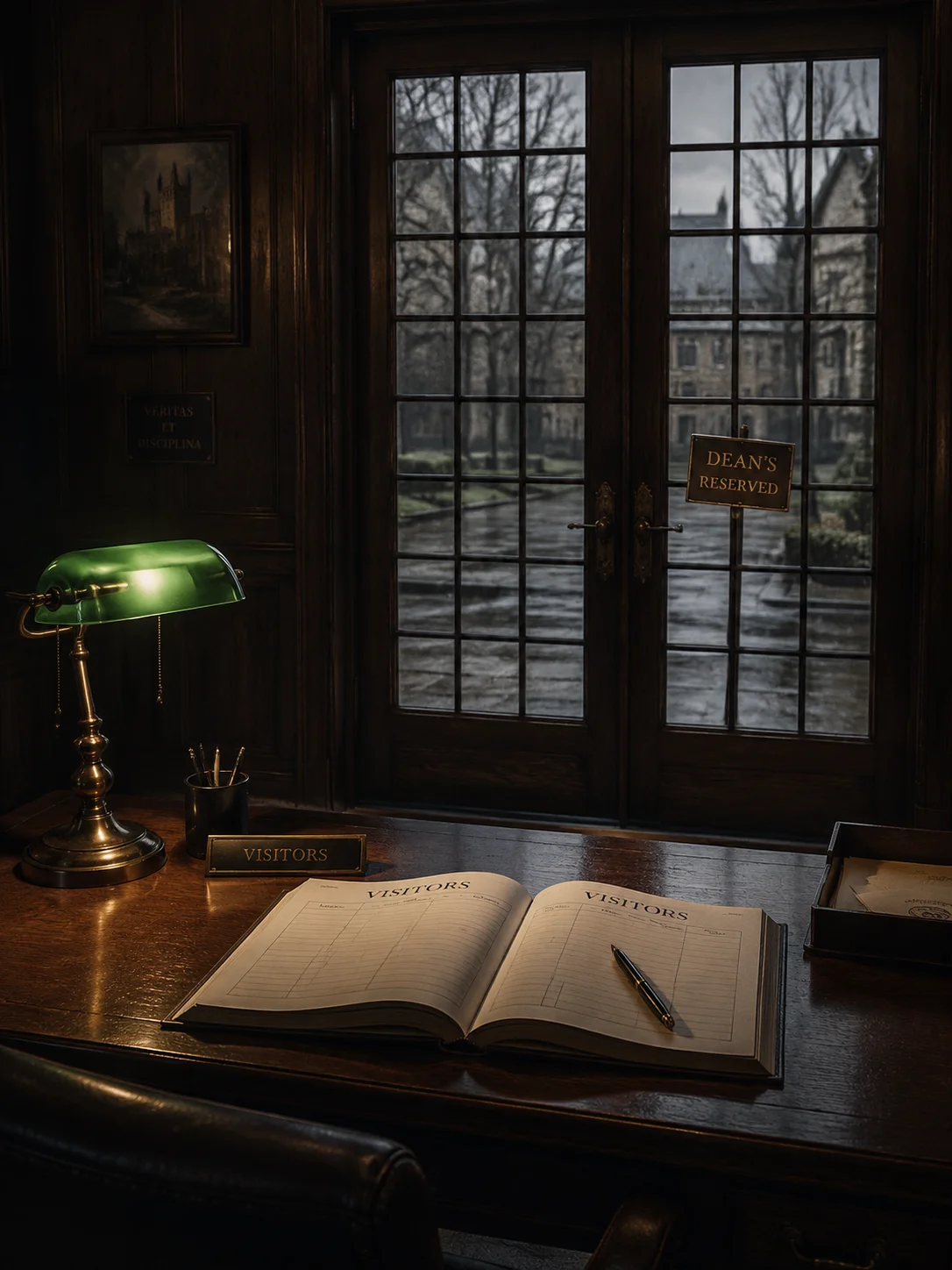
The sharp scent of ammonia and floor wax stings your nostrils as you step into the hushed, wood-paneled hall. Your gaze is drawn first to the leather-bound Visitor & Faculty Sign-In Log lying open on the empty receptionist's desk, its pages a registry of names and times. Through the leaded glass doors, the polished brass plaque of the Dean's Reserved parking sign is visible, mounted slightly askew on its post. The deep tick of a grandfather clock in the corner measures the silence.
 Crime Scene Environment
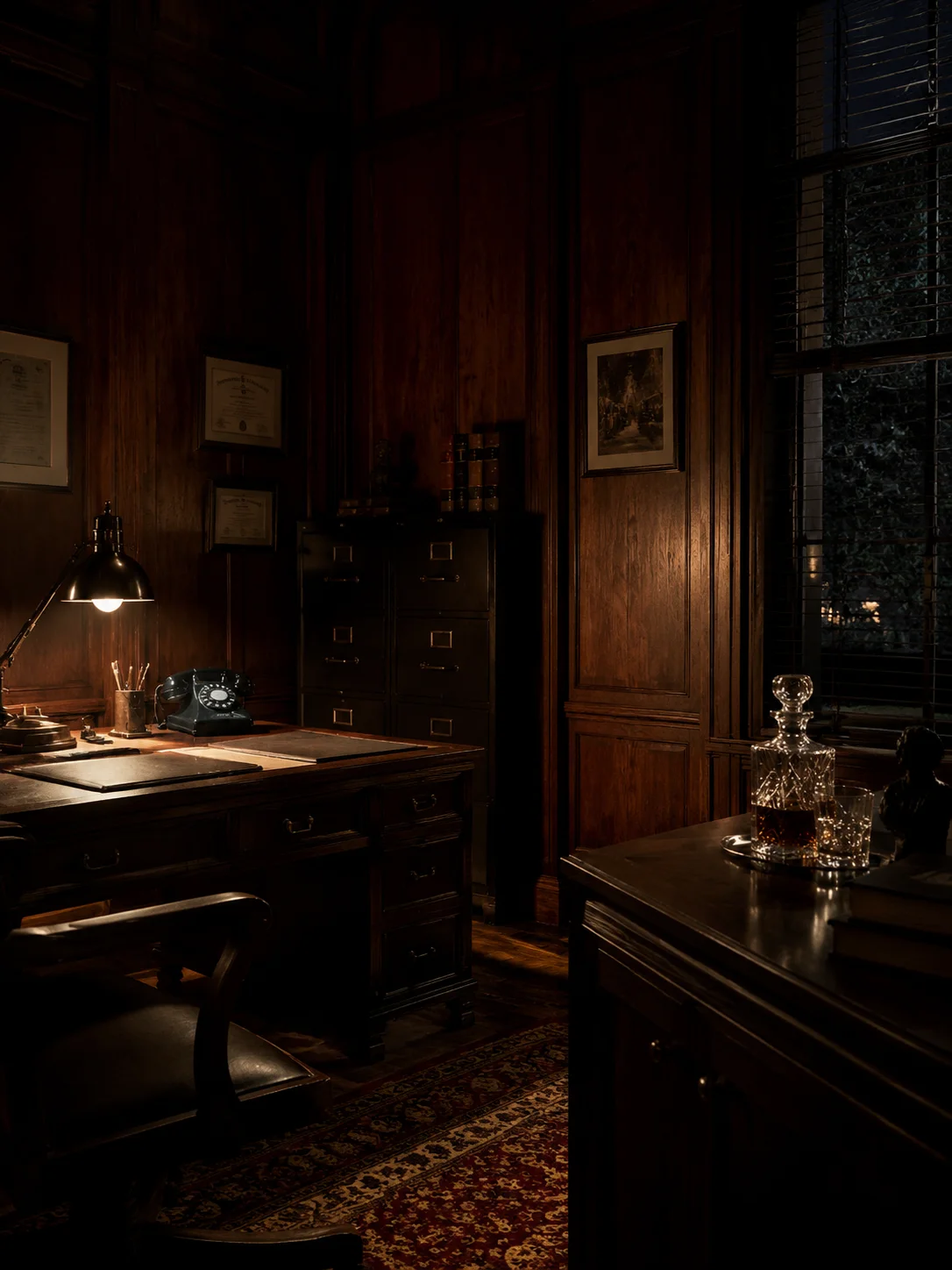
The lighting is dim and diffuse, filtered through leaded glass and green-shaded desk lamps, creating pools of shadow in the corners. The air is cool and dry, carrying the scent of lemon polish and old paper. Acoustic density is low, characterized by profound quiet punctuated by the occasional distant cough or rustle of paper, each sound isolated and clear.
 Investigation Constraints
Mid-20th century analogue academic setting. Communication via typed inter-office memos, rotary telephones, handwritten notes, and formal typed letters. Record-keeping in physical logbooks, carbon-copy receipts, and card catalogues. Security limited to a human receptionist at a front desk, mechanical key locks, and personal sign-in sheets for building access.
✦ Related Cases ✦