The Resonance of Silence
The catastrophic failure of a university's experimental apparatus results in a professor's death and the ruin of a prestigious department. An independent investigator is called to the cloistered Department of Physics. Your task is to separate the physical evidence of the accident from the varied, contaminating statements of the faculty, each of whom appears to be shielding personal professional or financial vulnerabilities.
 Initial Crime Scene
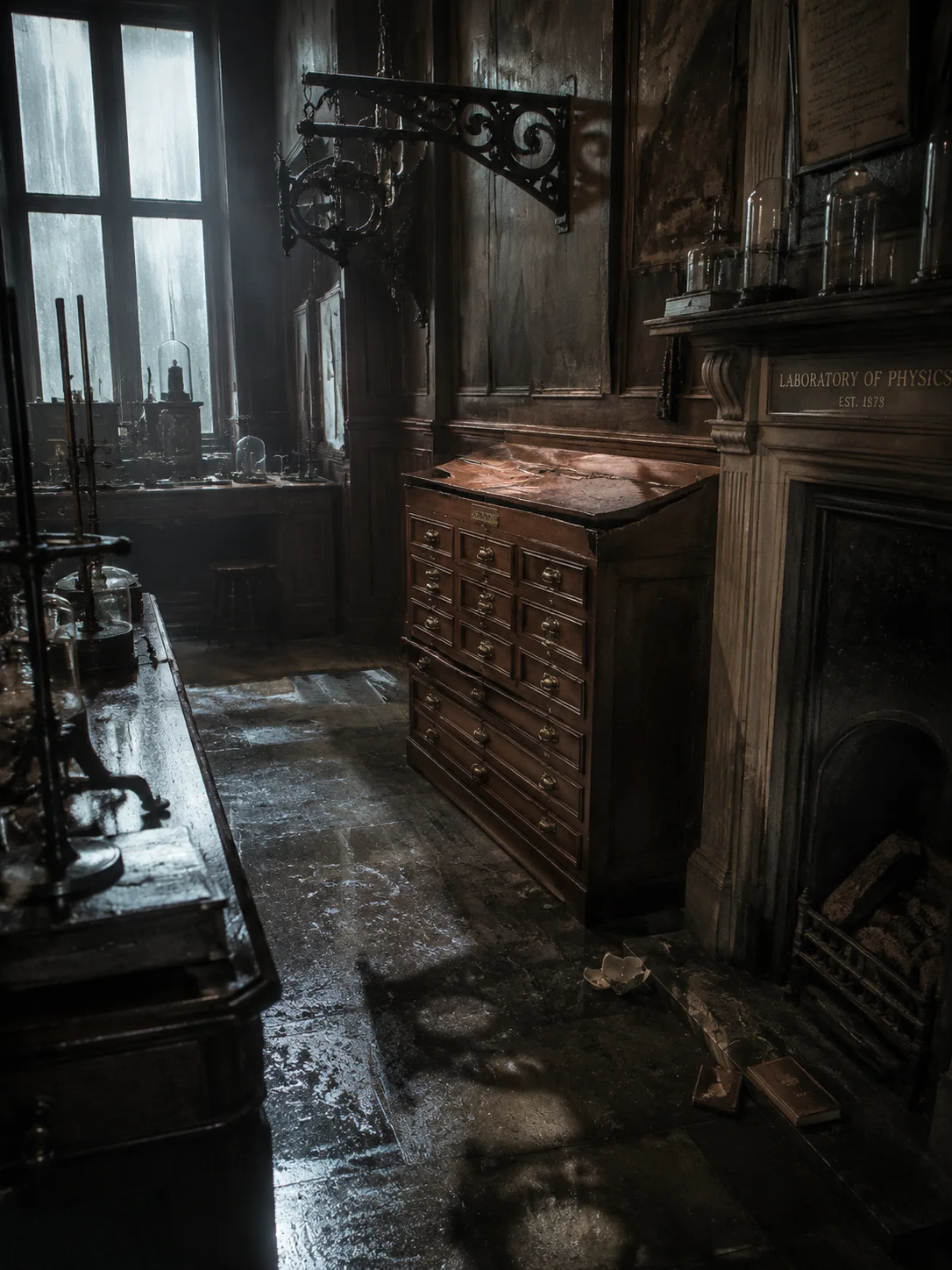
The scent of ozone and scorched varnish, sharp and chemical, stings your nostrils as you cross the threshold. The first sound is the profound, absolute silence, broken only by the faint, rhythmic drip of water from a cracked beaker. Your eyes adjust to the perpetual mid-morning twilight filtering through high windows, registering three points: the warped, sprung lid of a heavy mahogany specimen cabinet slightly ajar; a single, faintly smudged fingerprint on the leather cover of a logbook lying near a shattered teacup on the hearth; and the dark, sprawling shadow of twisted wrought-iron from a mounting bracket on the floor.
 Crime Scene Environment
The laboratory exists in a state of perpetual mid-morning twilight, cast by tall, frosted windows. The air is cool and carries a high humidity, clinging to surfaces and making paper feel slightly damp. Acoustic density is near-absorptive; sounds are deadened by the wood-paneled walls, creating a pocket of oppressive, tangible quiet.
 Investigation Constraints
Handwritten ledger entries, rotary telephones, pneumatic tube message systems, mechanical typewriters, physical key locks on offices and cabinets, carbon-copy paperwork, formal departmental memoranda, handwritten lab notebooks, analog pressure gauges, glass beakers and apparatus.
✦ Related Cases ✦