The Saloon's Whisper
A railroad magnate is discovered deceased in a saloon, a single poker chip held in his hand. The town's leading citizens are drawn into a confluence of conflicting accounts and undisclosed events that challenge their public narratives.
 Initial Crime Scene
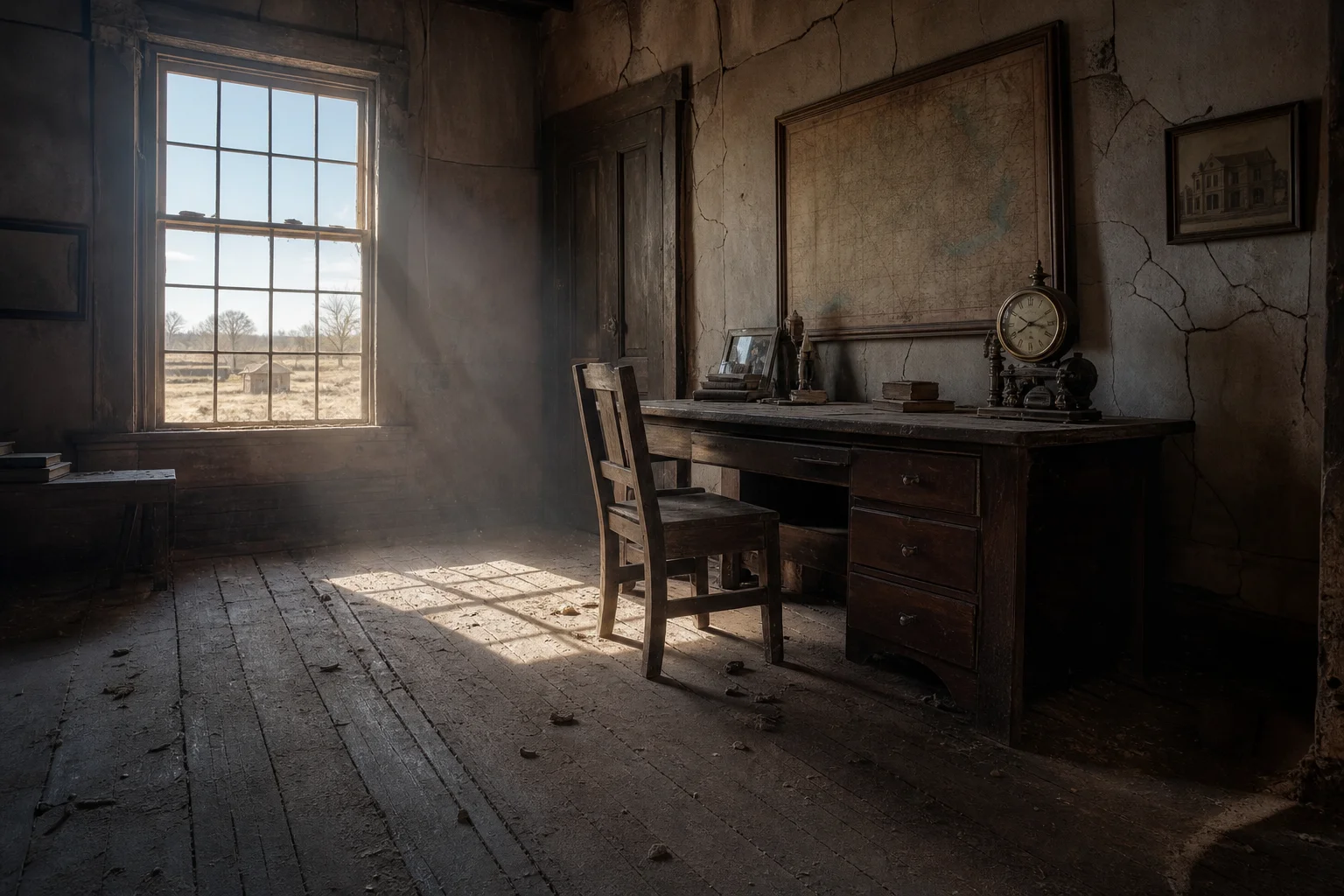
The scent of specific saddle leather and gun oil hits first, a stale, oily ghost clinging to the air. Beyond the bar's sticky surface, a wind-up saloon player piano emits a halting, discordant sequence of notes. Dust motes drift in the slats of afternoon light, settling on the precise alignment of barometer needles in the hotel lobby, on the sun-bleached, cracked wood of the bar top, and on the gilt-edged ledger lying open on a nearby table.
 Crime Scene Environment
The environment is defined by the low, uneven glow of coal oil lamps, casting long, dancing shadows. The air carries a low, constant acoustic density—the creaking of floorboards, the distant tick of a clockwork mechanism, the hushed, whispered conversations. The humidity is low, leaving a fine, gritty dust on all surfaces, and the temperature is cool, carrying a persistent, dry chill.
 Investigation Constraints
Mid-19th century American West. Tools: Hand-cranked telegraph, wind-up pocket watches, mechanical cash registers, hand-operated printing presses, black powder revolvers, coal oil lamps, wooden clockwork music boxes. Communication: Pony Express, handwritten ledgers, telegraph dispatches. Locks: Tumbler pin locks, simple padlocks, mechanical vault mechanisms.
✦ Related Cases ✦