The Scorched Consciences of Little Marchmont
In Little Marchmont, a fire at 'The Golden Crust' bakery is initially classified as an accident. The subsequent discovery of a local solicitor's body in the flour store elevates the incident. The investigation must untangle a series of inconsistent accounts, financial discrepancies, and alibis rooted in the village's private affairs.
 Initial Crime Scene
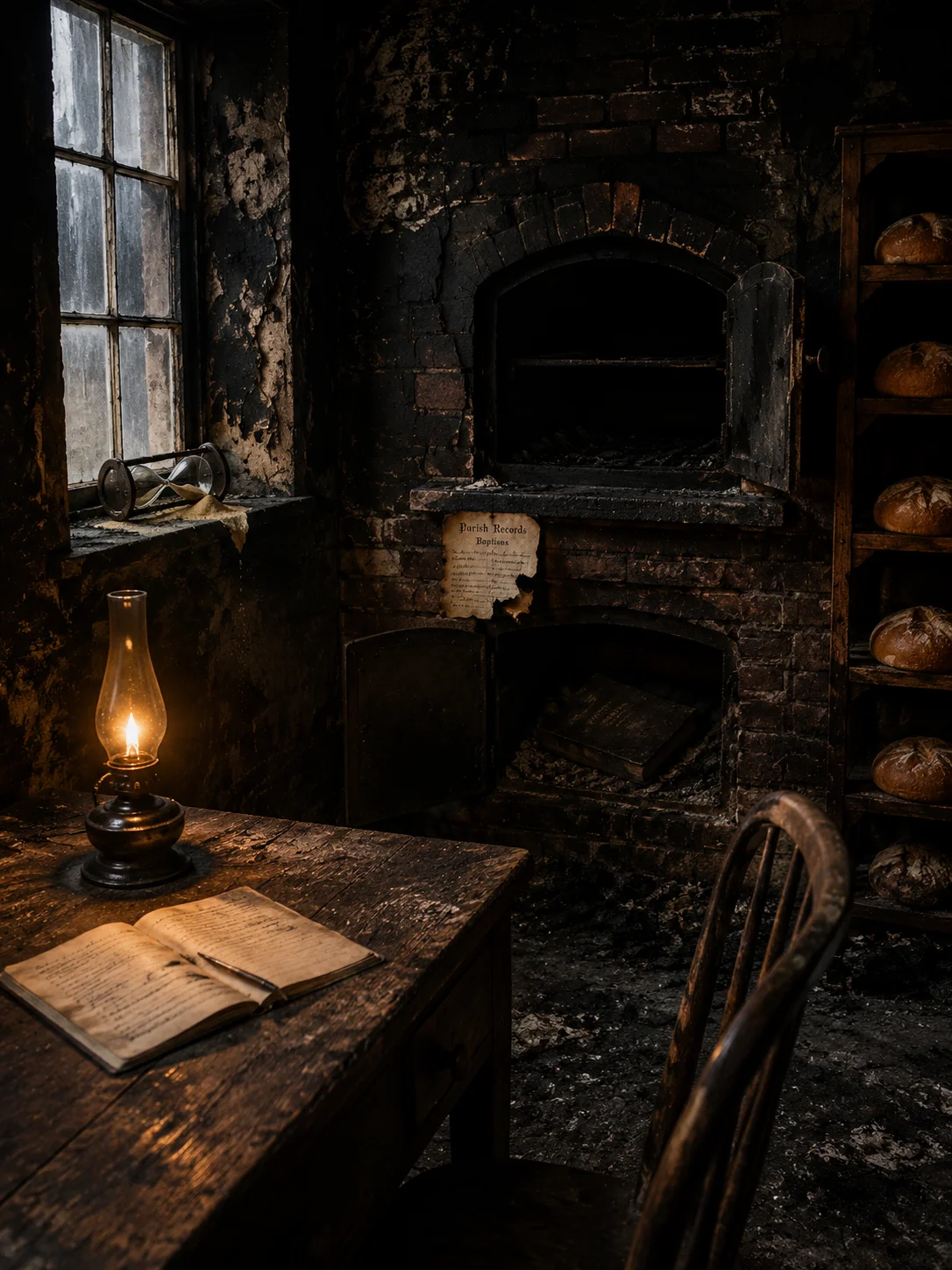
The scent of burnt sugar, faint and sweet, hangs in the air despite the cold coal-fired ovens. A single oil lamp casts long shadows across a scarred wooden desk. An overturned hourglass spills its sand eastward across a polished sill, a torn page from a parish record book lies curled at the edge of a stone hearth, and a heavy ledger lies blackened atop cooling ash in an iron compartment.
 Crime Scene Environment
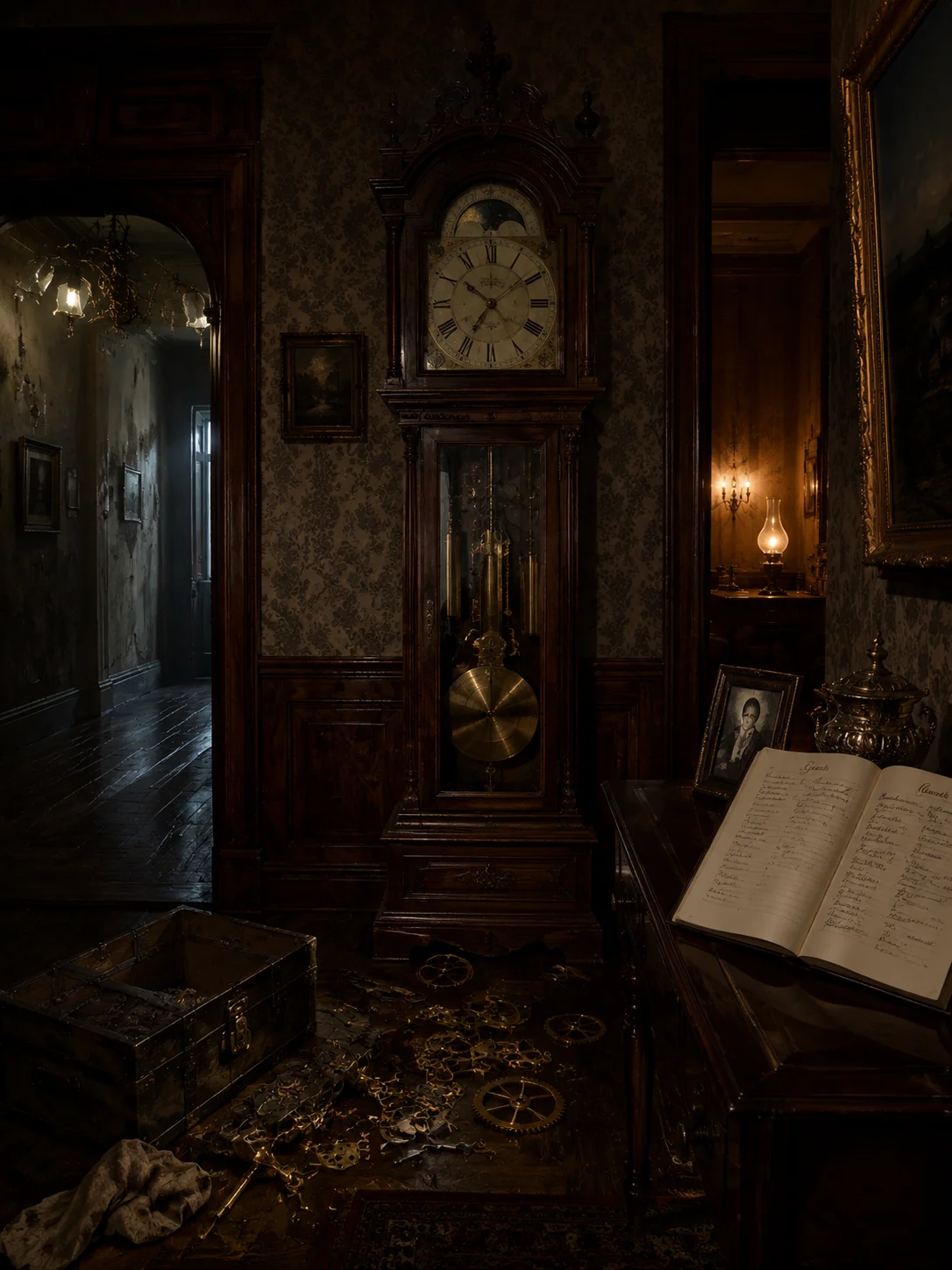
The environment is characterized by low, uneven oil lamp lighting and the persistent warmth radiating from thick brick oven walls. Humidity is low, with a dry, dusty air density. Acoustic density is minimal, marked only by the distant tick of a grand clock and the occasional creak of old wood settling.
 Investigation Constraints
Handwritten ledgers, carbon-copy receipt books, rotary telephones, local post office delivery schedules, mechanical egg timers, handwritten recipe cards, physical appointment diaries, skeleton keys, coal-fired ovens, and analog kitchen scales. No digital or electronic systems exist.
✦ Related Cases ✦