The Shadow Marks on the Wall
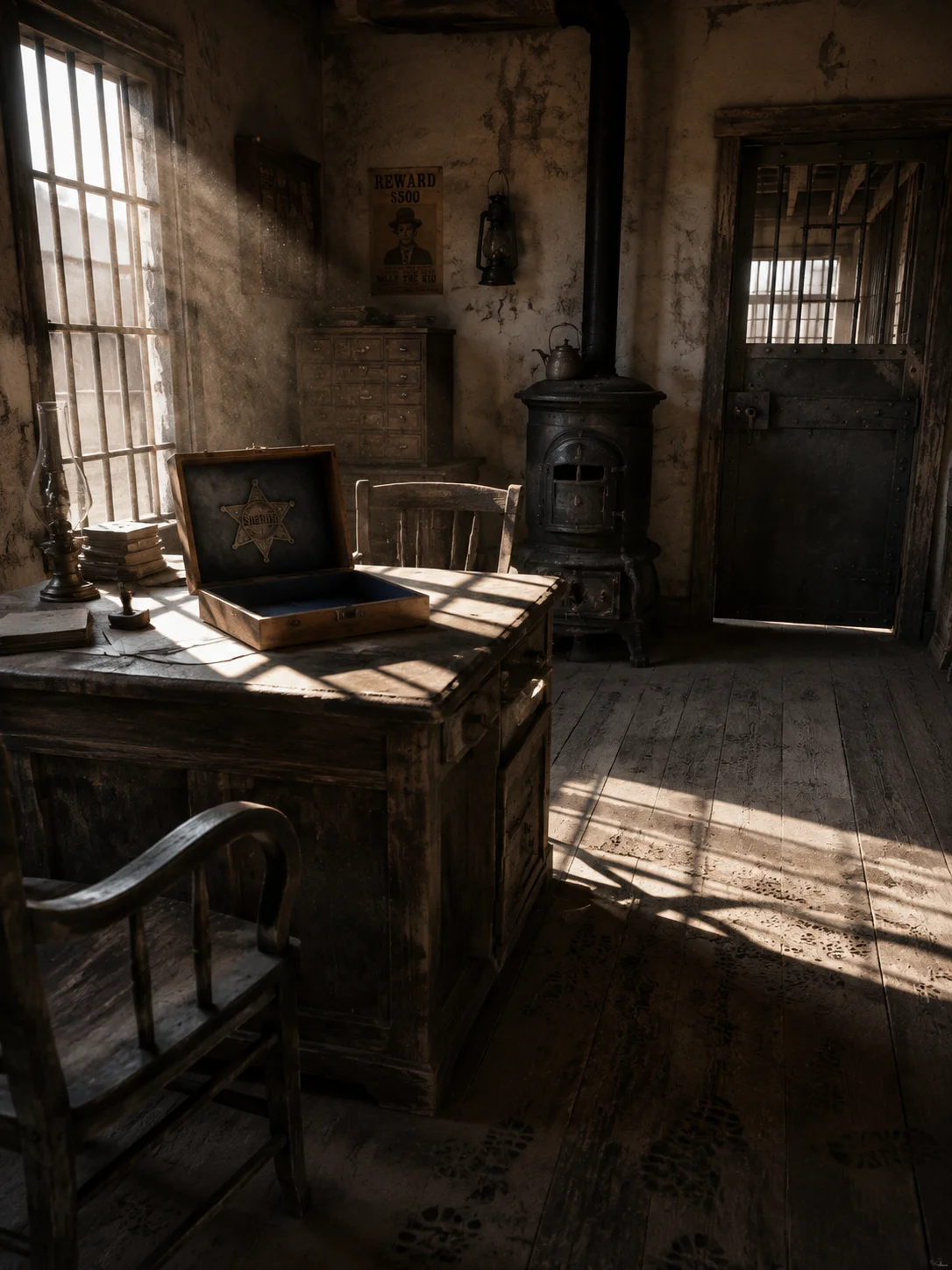
A U.S. Marshal arrives in a sun-baked frontier town to investigate the death of its sheriff, found in the jail office with an empty star case on his desk. The investigation begins in a single room, tracing overlapping boot prints, shadow angles, and metallic wear on mechanisms to reconstruct a timeline of separate, panicked entries.
 Initial Crime Scene
The smell of alkali dust and the faint, metallic tang of cold iron hang in the still air. A single, high-pitched creak echoes from the building's sun-baked wooden bones as you step over the threshold. Your eyes adjust to the slanting light from a barred window, which casts long, sharp-edged shadows across a heavy wooden desk, a pot-bellied stove, and the iron door to the cell block.
 Crime Scene Environment
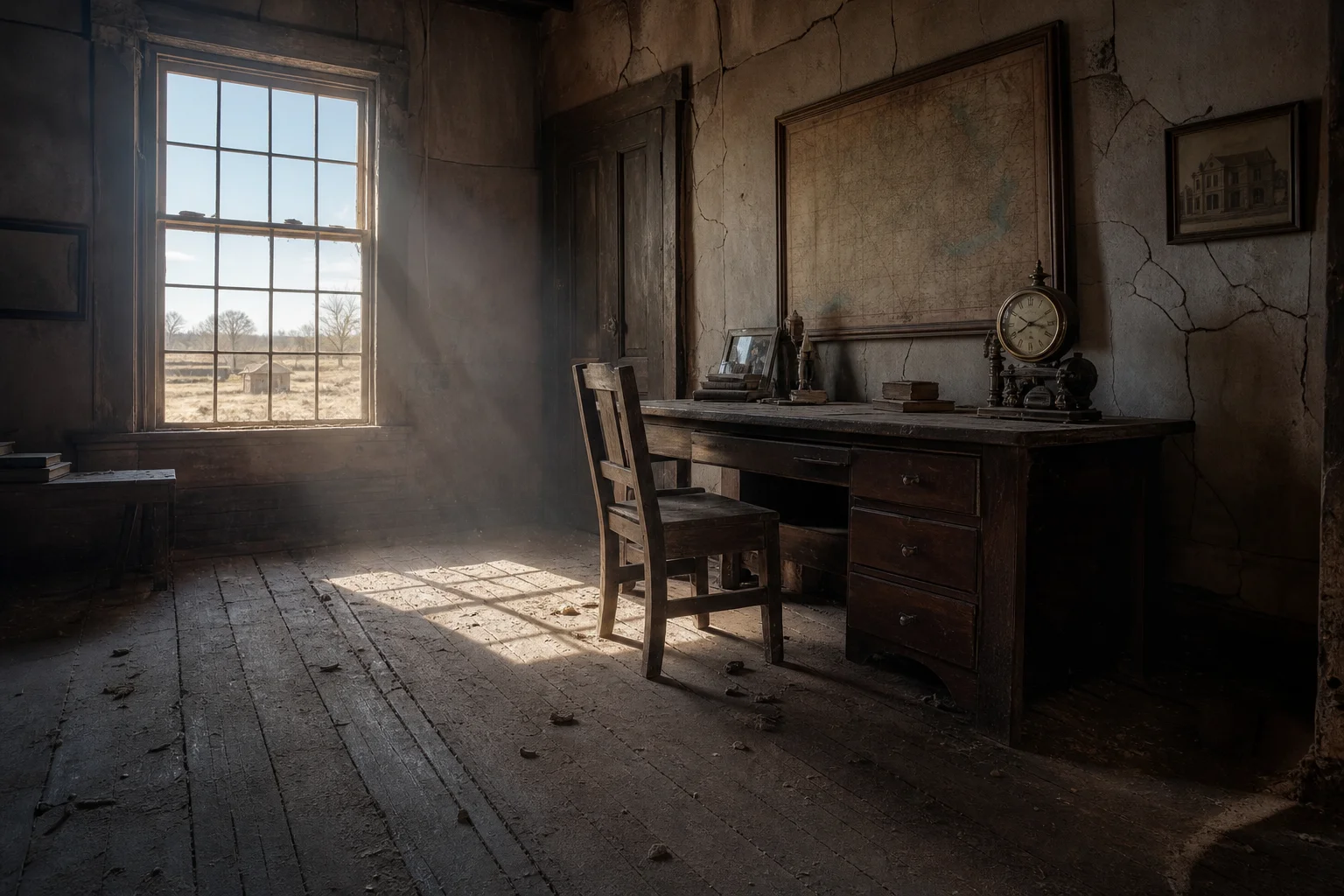
A single, sun-baked room lit by the sharp, angular light of a western sun through a barred window, creating high-contrast shadows. The air is dry and carries a fine, pale film of alkali dust. Acoustic density is low; sounds are sharp and isolated—a creak, a distant wind, the heavy silence of thick wood and iron.
 Investigation Constraints
Single-action revolvers, lever-action rifles, dynamite, hand-cranked printing press, telegraph office, mechanical pocket watches, whale oil lanterns, manual combination safe, saddlebag locks, jail cell lever mechanisms, wooden door bolts and bar latches.
✦ Related Cases ✦