The Shifted Mark
An independent investigator, commissioned by an insurance syndicate, enters a renowned theatre following a catastrophic performance failure. The objective is to untangle a web of conflicting testimonies and obscured financial records to determine the precise nature and origin of the incident.
 Initial Crime Scene
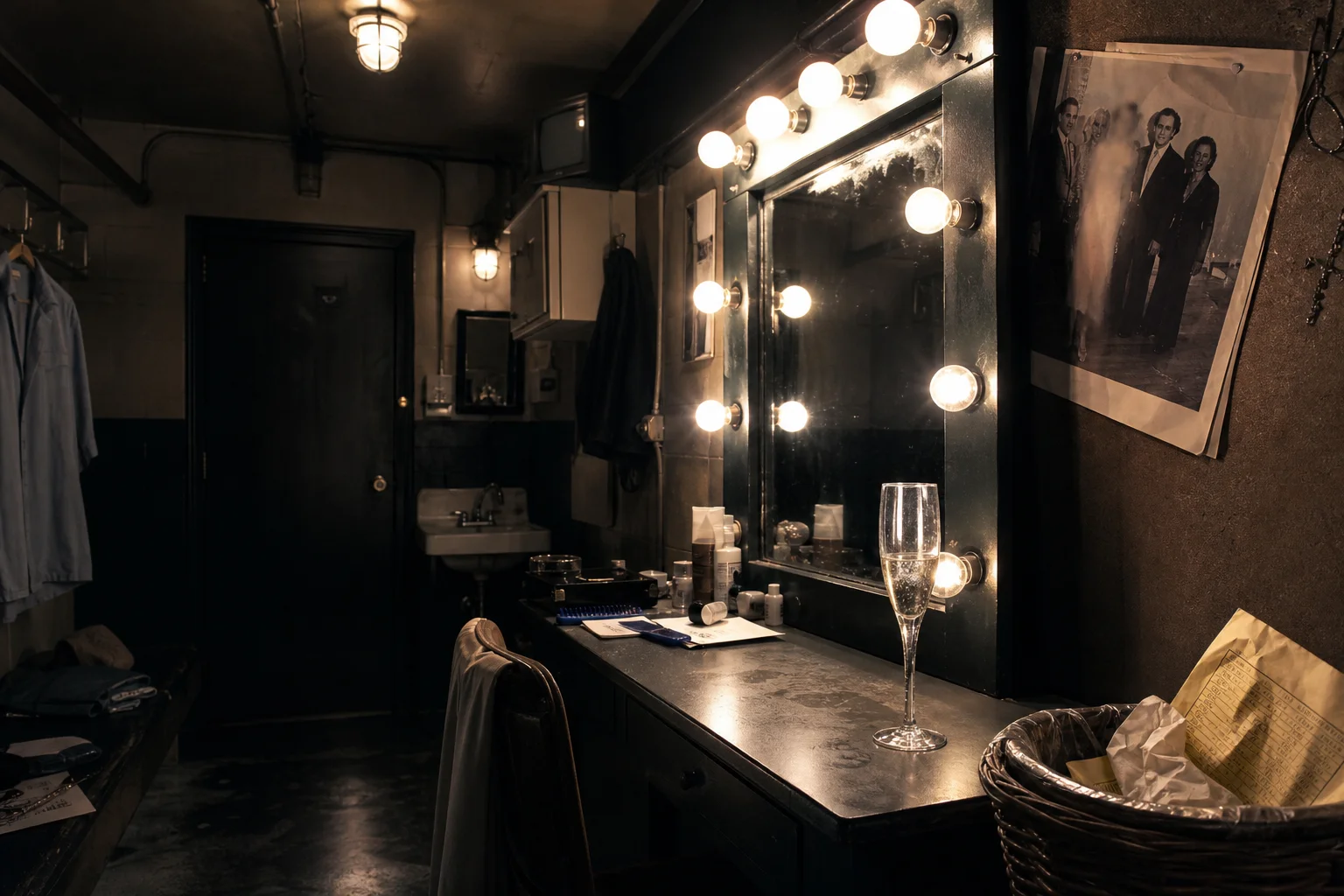
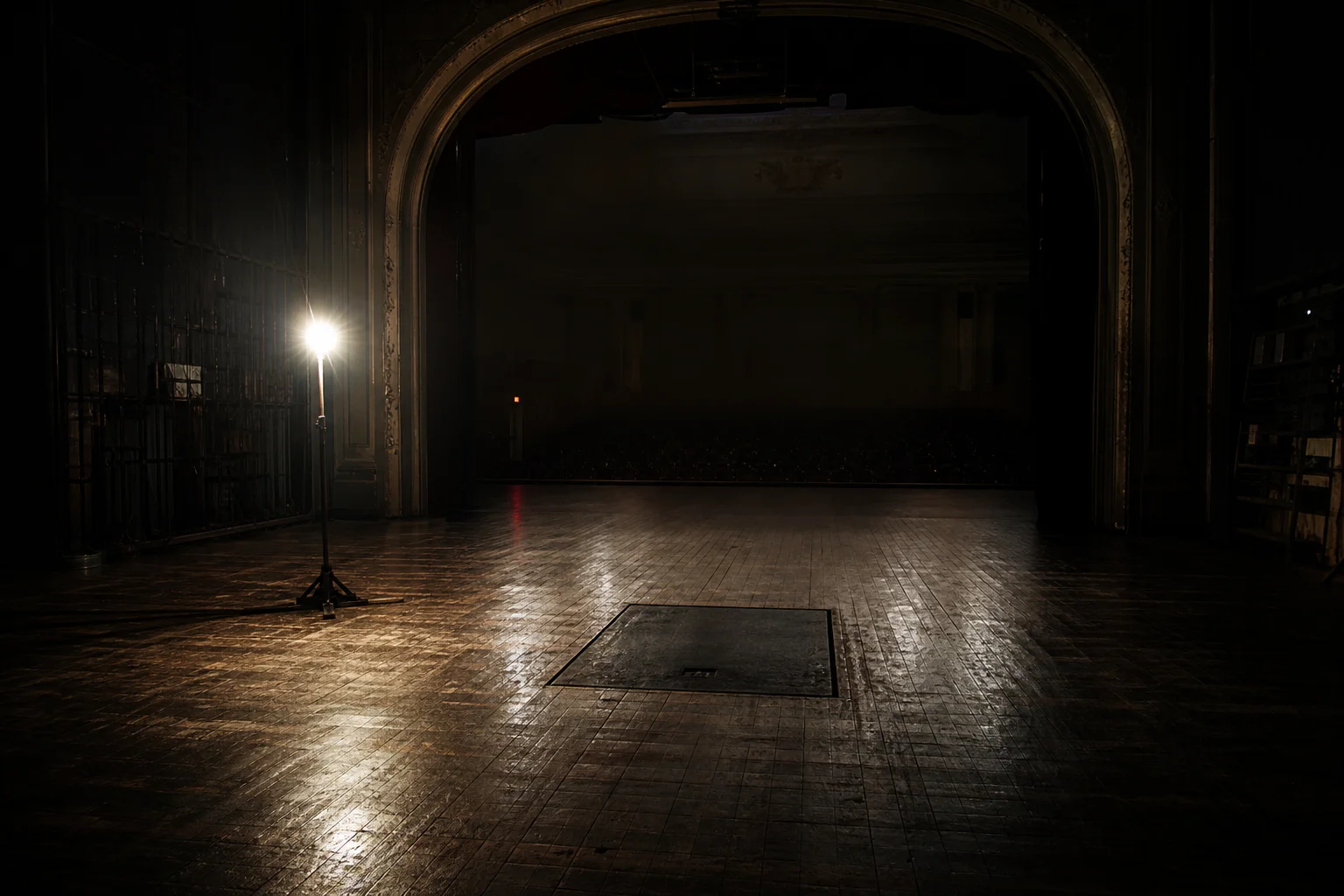
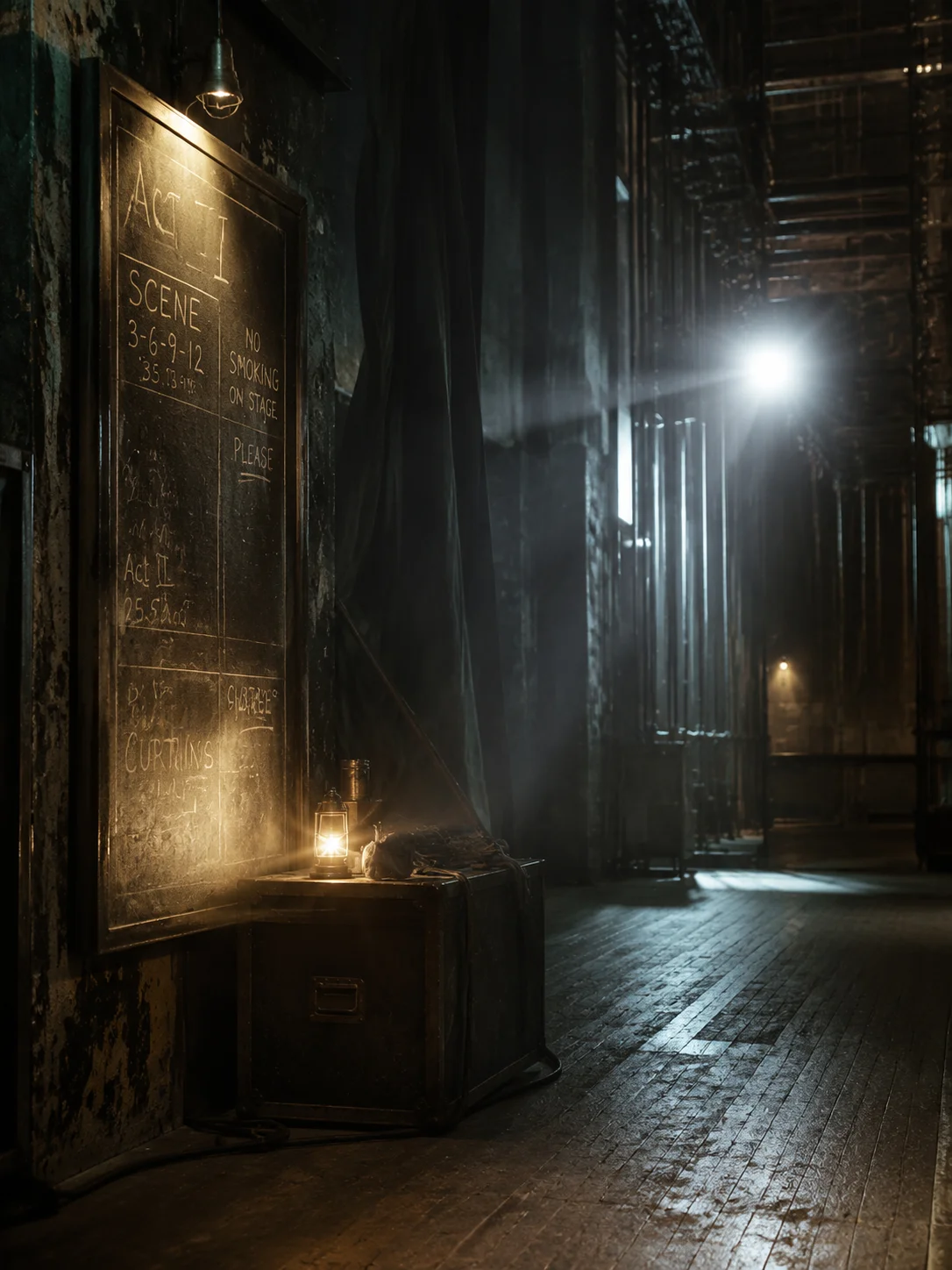
The scent of old rosin and the sharp, acrid tang of costume dye chemicals hangs in the air, cutting through the smell of dust. From the orchestra pit comes the low, discordant hum of a single violin being tuned, its note wavering. Grease pencil markings blur on the call-board under a flickering footlight. The layered dust on the wooden floorboards captures every scuff and scratch. A monogrammed pocket watch ticks somewhere, its rhythm lost in the theatre's vast, shadowed silence.
 Crime Scene Environment
The lighting profile is a stark contrast of intense, focused stage lights creating deep, sharp shadows in the wings and offstage areas. The environment is a high-humidity micro-climate, particularly near the costume dye vats, with a persistent chemical dampness. The acoustic density is layered: the intimate, close sound of whispered conversation backstage, the broader acoustic bleed from the main stage, and the omnipresent, subtle hiss of the pneumatic tube system.
 Investigation Constraints
High-gloss, early-20th-century theatrical technology. Communication via handwritten notes, pneumatic tube messages within the theatre, and rotary telephones in private offices. Security consists of physical wax-sealed score cases, locked prop rooms, and a single, manually-checked stage-door logbook. Personal effects include fountain pens, monogrammed pocket watches, and manual typewriters.
✦ Related Cases ✦