The Silent Deviation
An aviation insurance investigator arrives at a private terminal to examine the circumstances surrounding a corporate jet's deviation from its filed flight plan and subsequent loss of contact over the Rockies. The inquiry involves digital flight data, terminal access logs, witness testimony, and maintenance records.
 Initial Crime Scene
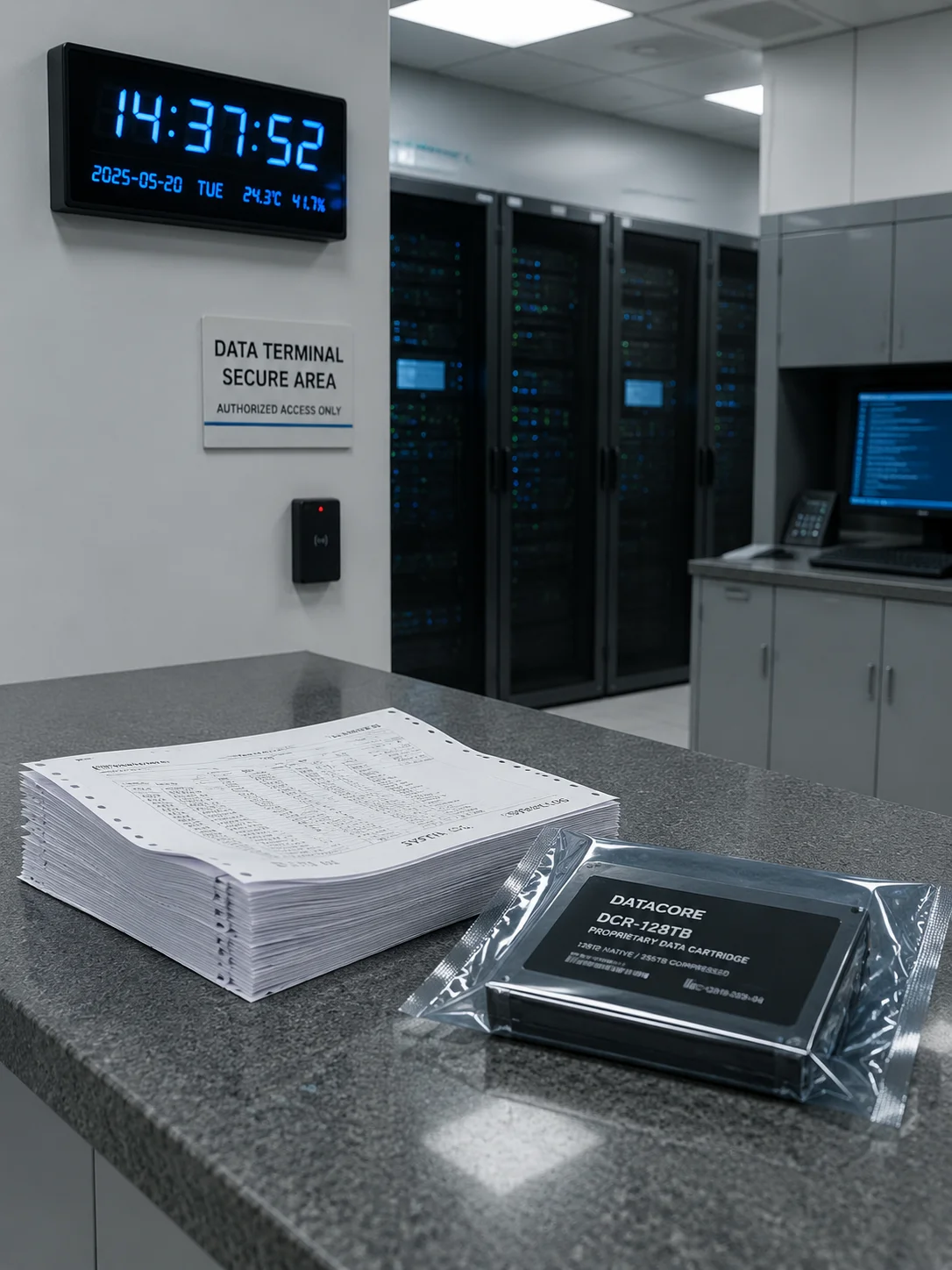
The polished composite countertop is cool and sterile to the touch. A low-frequency hum from server racks beneath the floor vibrates through the soles of your shoes. To your left, a large digital wall clock displays the time in crisp blue numerals. Ahead, a stack of thermal-printed log sheets rests beside a sealed, proprietary data cartridge. The air carries the sharp scent of industrial-grade cleaner.
 Crime Scene Environment
The space is defined by a sterile corporate lighting profile, casting flat, shadowless illumination. The air is conditioned to a cool, dry temperature with low humidity. The acoustic density is dominated by the constant, low-frequency hum of climate control systems and distant, muffled server fans, creating a baseline of controlled white noise.
 Investigation Constraints
Early 2000s corporate aviation tech: proprietary Flight Data Recorders (FDRs) with basic GPS and telemetry, analog cockpit voice recorders (CVRs) with magnetic tape, satellite phones with limited text/voice capability, closed-circuit security networks at private terminals, encrypted corporate intranets, physical logbooks with digital timestamp supplements, biometric keypad locks on secure hangars and server rooms.
✦ Related Cases ✦