The Static Between Transmissions
A test flight concludes with a catastrophic airframe failure. The subsequent forensic audit of the prototype, its recorded data, and the personnel present during its final operational cycle uncovers a series of systemic inconsistencies, procedural anomalies, and conflicting personal timelines.
 Initial Crime Scene
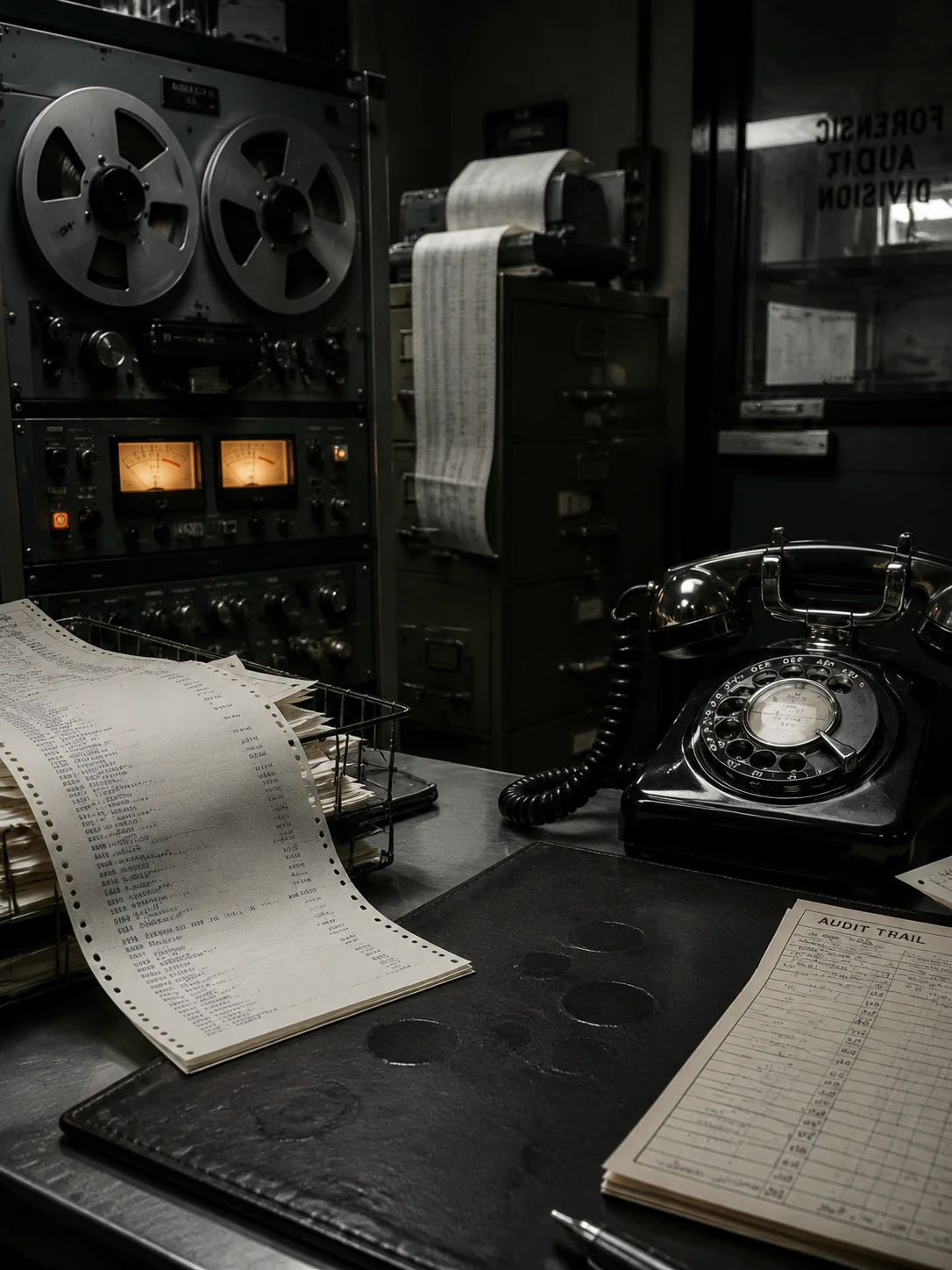
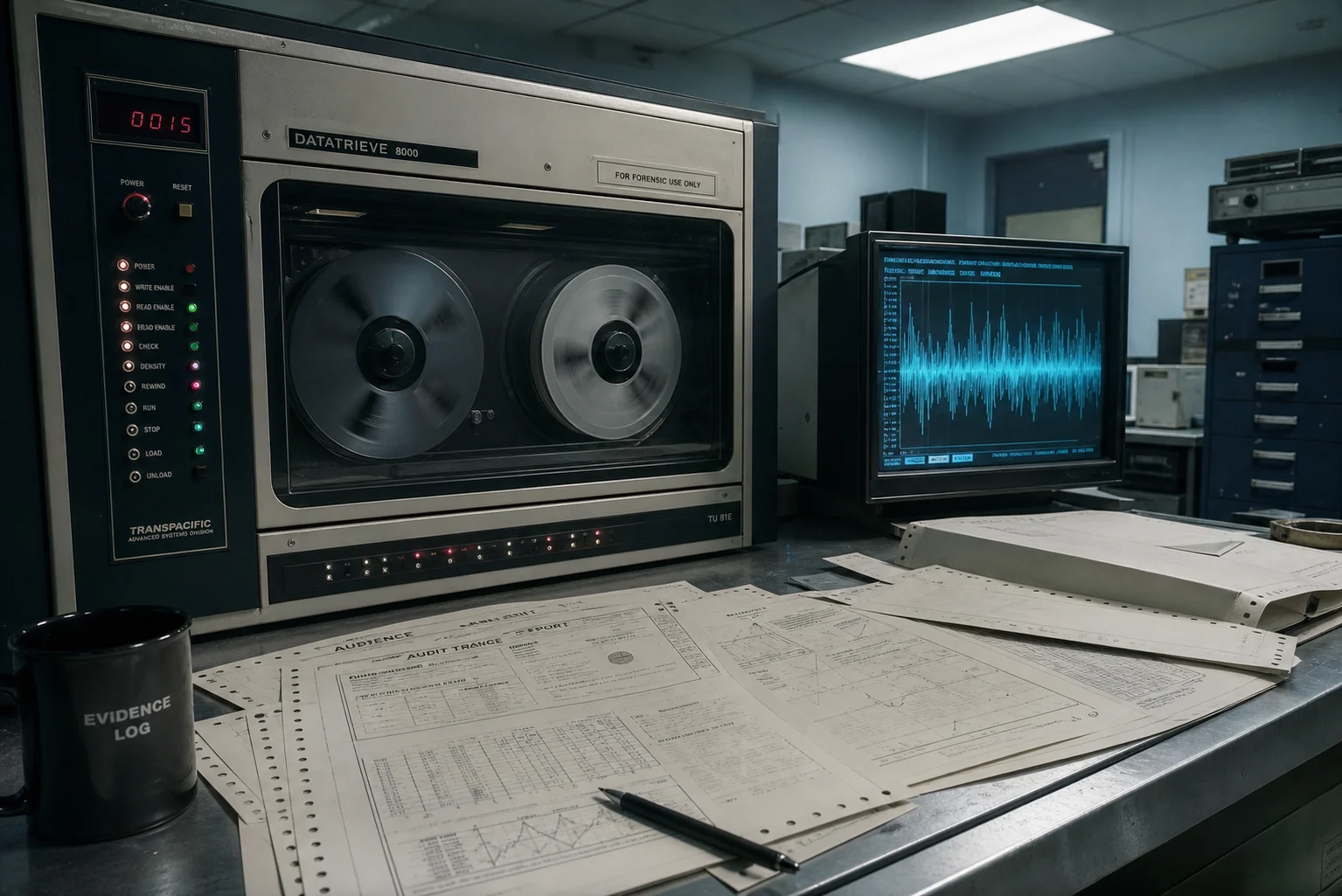
The static hiss from an intercom system underscores the silence. A faint, rhythmic hum and click emanates from a mainframe data tape reel-to-reel unit, its spools turning with metronomic precision. The chemical smell of ammonia from drafting paper hangs sharp and clean in the air.
 Crime Scene Environment
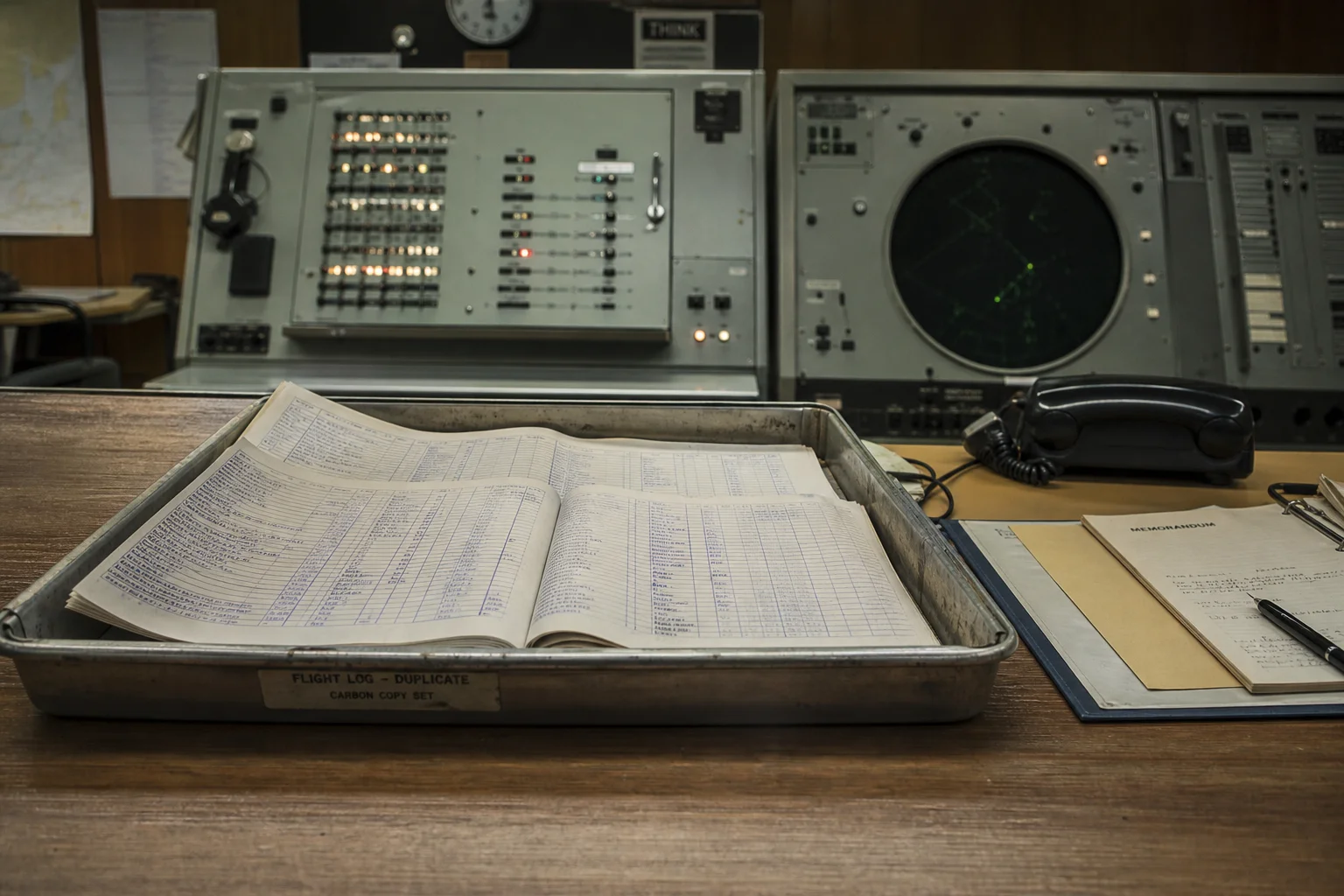
The environment is defined by the clinical hum of cooling systems and the sterile click of data processing. The lighting is a flat, institutional fluorescent wash, casting no strong shadows. The air is cool and dry, with a persistent, low-level acoustic density composed of electronic hums, tape mechanism clicks, and the occasional distant, muffled intercom broadcast.
 Investigation Constraints
Late 1980s/Early 1990s corporate aerospace technology. Includes: mainframe computer flight data recorders (FDRs) with magnetic tape, proprietary diagnostic terminals, pneumatic tube message systems, landline telephones, physical blueprint vaults with combination locks, microfilm archives, early networked computer systems for engineering data (no internet), and tamper-evident security seals on physical evidence containers and data tapes.
✦ Related Cases ✦