The Studio Residue
The investigation enters the cold, acoustically sealed environment of a professional recording studio following the death of its host. The final episode's master recording has been erased. The remaining personnel are present, each with access to the studio's interconnected digital and physical systems. The task is to reconstruct a timeline from the interplay of corrupted data logs, environmental anomalies, and the contradictory accounts of those present.
 Initial Crime Scene
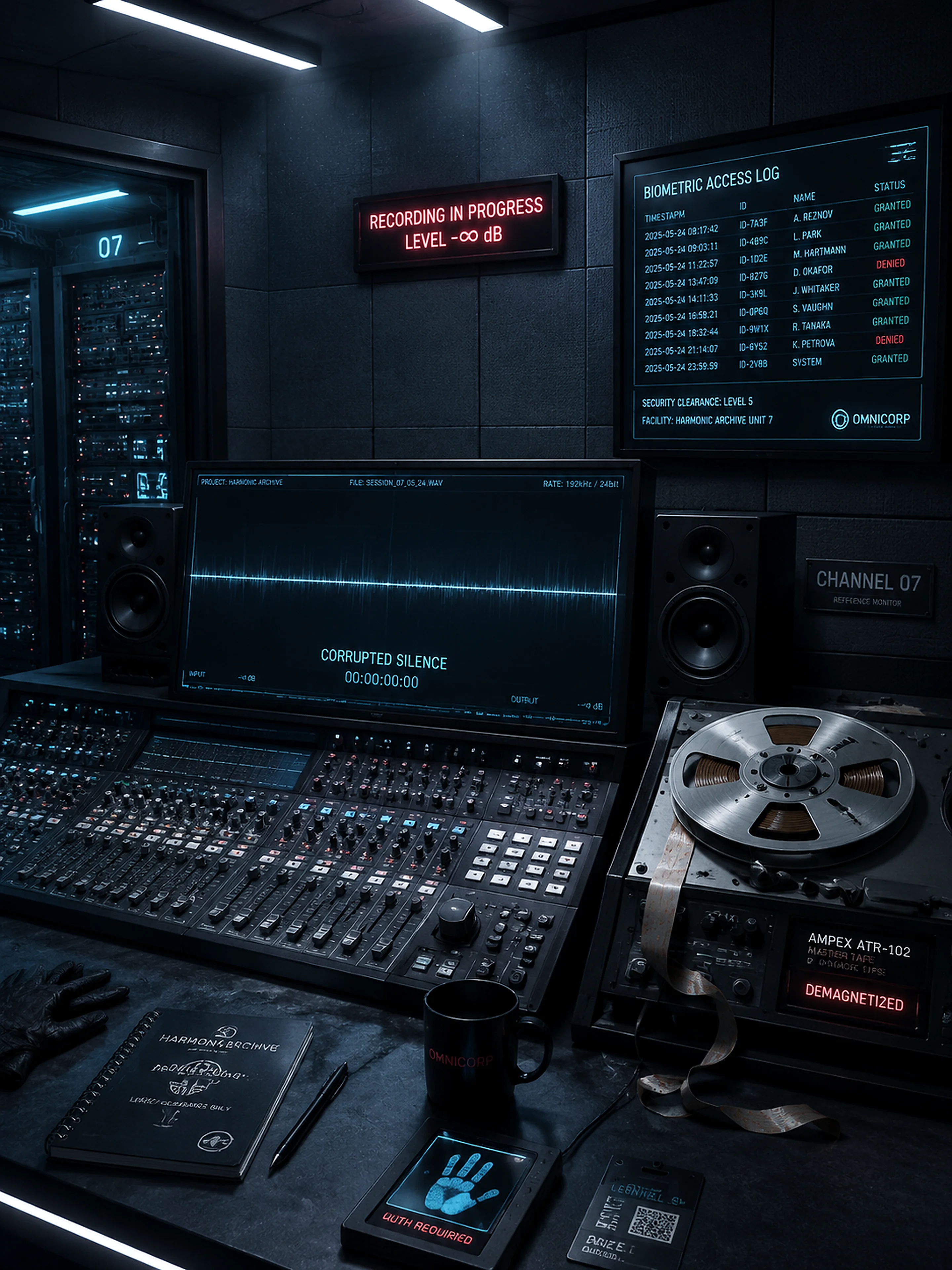
The door seal breaks with a faint, pressurized hiss. A sterile, clinical air, heavy with the scent of warm electronics and dust, meets you. The constant, low-frequency drone from the server racks is the only ambient sound, punctuated by the precise, irregular hum of cooling fans. Your gaze falls immediately to the central mixing console, its surface dominated by a digital waveform display showing a precise, corrupted silence. Nearby, a master tape reel lies exposed, its magnetic coating showing strips of localized, aggressive demagnetization. A biometric access log is open on a wall panel, a sterile list of timestamps and credentials.
 Crime Scene Environment
The lighting is a harsh, overhead fluorescent wash, creating sharp shadows with no warm diffusion. The air is cold and dry, maintained by industrial climate control, carrying a low-grade static charge from the electronics. The acoustic density is high; sound is deadened by wall treatments, leaving the electronic hums and the analog hiss of ambient monitoring systems as the dominant audio presence. The tonal atmosphere is one of sterile, clinical surveillance, defined by digital silence, system latency, and the data residue of recent activity.
 Investigation Constraints
Digital audio workstations (DAWs) with local/server storage, encrypted cloud backups, professional studio recording equipment (microphones, mixing boards), biometric keycard access logs, landline and mobile phones with text/messaging records, forensic toxicology reports, network traffic logs for the studio's local area network (LAN), timestamped security camera footage (with potential gaps), paper documents (contracts, notes). No advanced AI or hacking tools; complexity arises from overlapping human-controlled systems.
✦ Related Cases ✦