The Studio's Last Session
The lead singer of 'Velvet Famine' is found deceased in the studio after recording the final vocal track. The investigation focuses on the physical environment and the statements of those present, including band members, management, and associates, to reconstruct the sequence of events within the 1970s recording studio.
 Initial Crime Scene
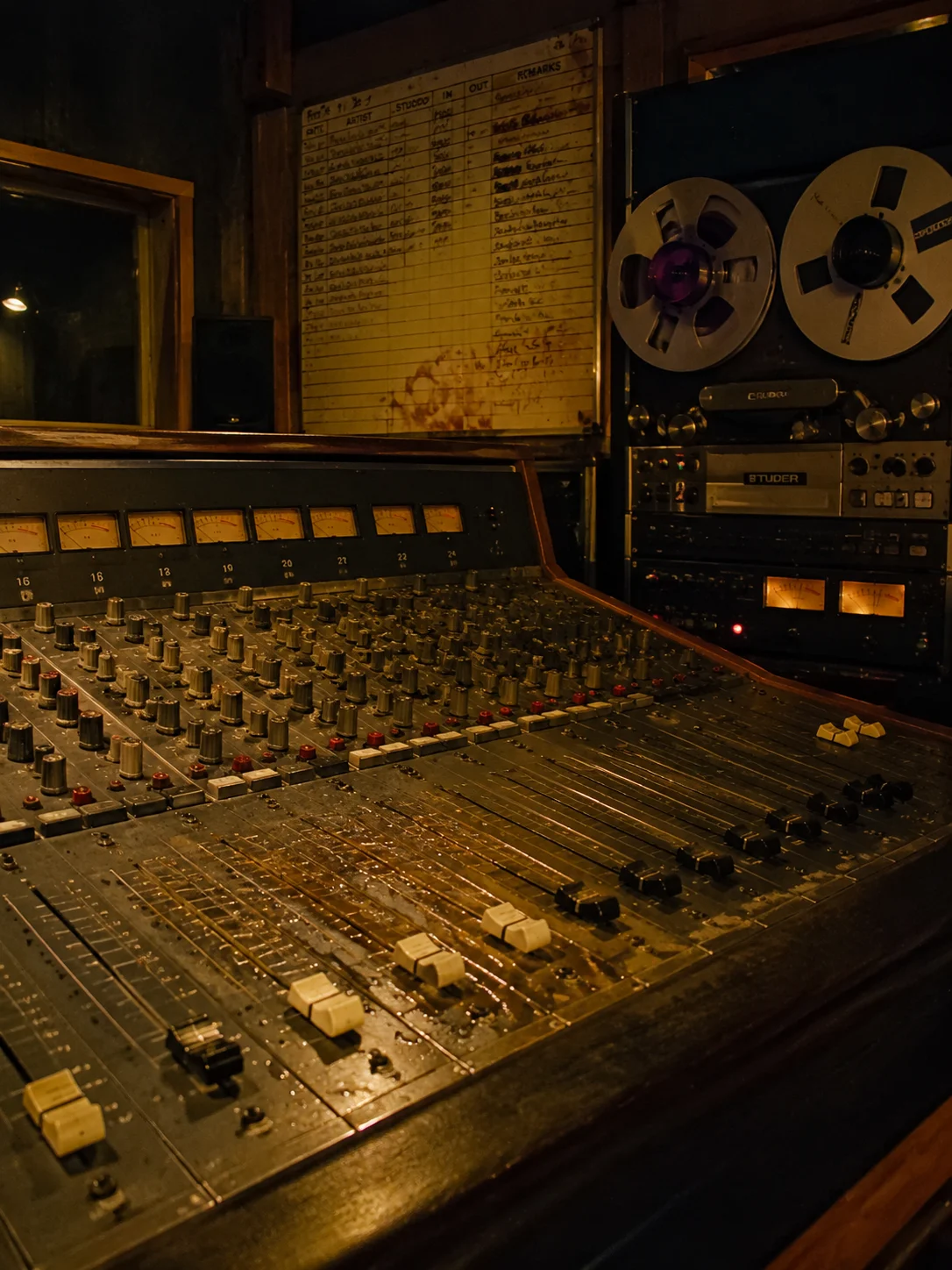
The control room is dim, lit only by the warm glow of vacuum tubes and the standby lights on the mixing console. A sharp, metallic tang of ozone cuts through the air, underlaid by the faint, electric hum of powered-down machinery. Your first visual marker is the massive Studer tape machine, its reels frozen mid-thread. Next, the yellowed, coffee-ring stained scheduling board dominates one wall, its entries obscured by pencil scribbles. Finally, a sticky, amber residue glistens across several faders of the main mixing console, catching the low light.
 Crime Scene Environment
Lighting is low and warm, sourced primarily from analog equipment indicators and spillover from the control room. The air carries a persistent, faint humidity mixed with the scent of old cigarette smoke, paper, and the sharp note of ozone. Acoustic density is high; sound is muffled by acoustic paneling, creating a close, intimate pressure broken only by the low, resonant hum of transformer coils.
 Investigation Constraints
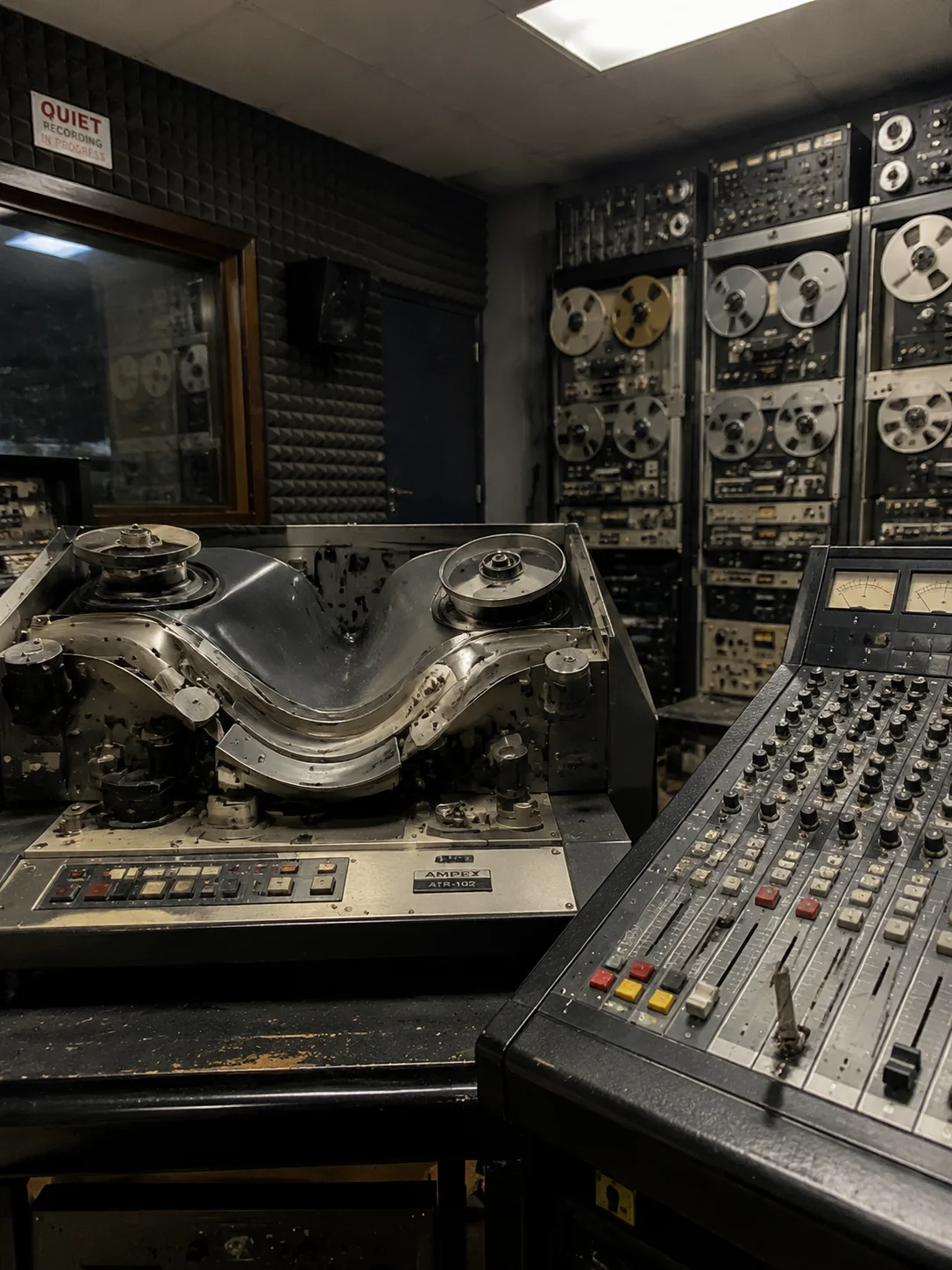
A 1970s high-end recording studio environment. Key technologies include: analog tape machines (Studer, Ampex) with manual punch-in/out, mixing consoles with faders and patch bays, landline telephones with message pads, Polaroid cameras, physical royalty ledgers, mechanical door locks with sign-in sheets, a single shared studio intercom, and paper-based scheduling boards for tape machine and studio time booking.
✦ Related Cases ✦