The Switchboard's Silence
An independent investigator is summoned to the Beaumont Society Club following a cryptic tip concerning an incident involving a deceased financial advisor. The inquiry focuses on the club's operational records, its members' alibis, and the intricate social dynamics of a closed, elite institution on the evening in question.
 Initial Crime Scene
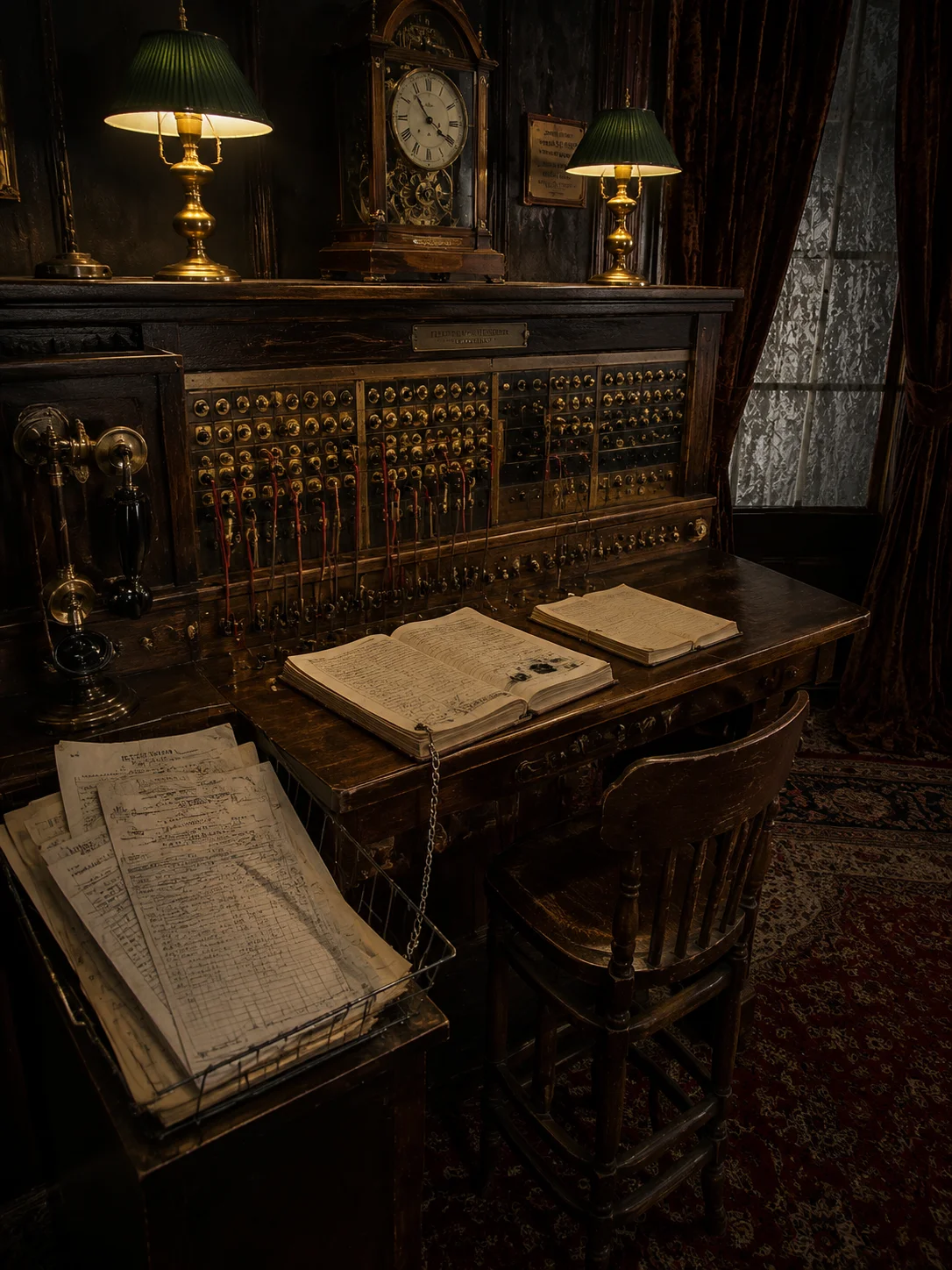
The scent of lemon oil polish and old paper hangs in the air as you cross the threshold into the switchboard station. A high stool faces a panel of brass sockets, and the faint, rhythmic click of a wound-clock mantel timepiece breaks the hush. Your gaze lands on a handwritten connection log with smeared ink, a guest ledger with a pen chained to the desk, and carbon copies of catering invoices bearing legible pressure impressions.
 Crime Scene Environment
The sandbox is lit by the warm, indirect glow of shaded lamps and polished brass fixtures. The humidity is low, the air dry and cool, carrying the faint mustiness of aged velvet and dust. Acoustic density is high; sounds are absorbed by heavy drapes and thick carpets, creating a muted, oppressive quiet where even a stifled gasp seems amplified.
 Investigation Constraints
Rotary dial and push-button telephones with answering machines using cassette tapes. Physical guest ledgers with pen and ink. Manual switchboard operators. Carbon copy receipts. Wound-clock mantel timepieces. No digital records, electronic surveillance, or automated logging systems exist.
✦ Related Cases ✦