The Systemic Anomaly
An independent forensic specialist is contracted by an insurance underwriter to investigate the death of a patient at St. Jude's Memorial Hospital. The inquiry focuses on the chain of care surrounding a fatal prescription order, examining the physical evidence and procedural logs within the hospital's late 20th-century technological and bureaucratic framework.
 Initial Crime Scene
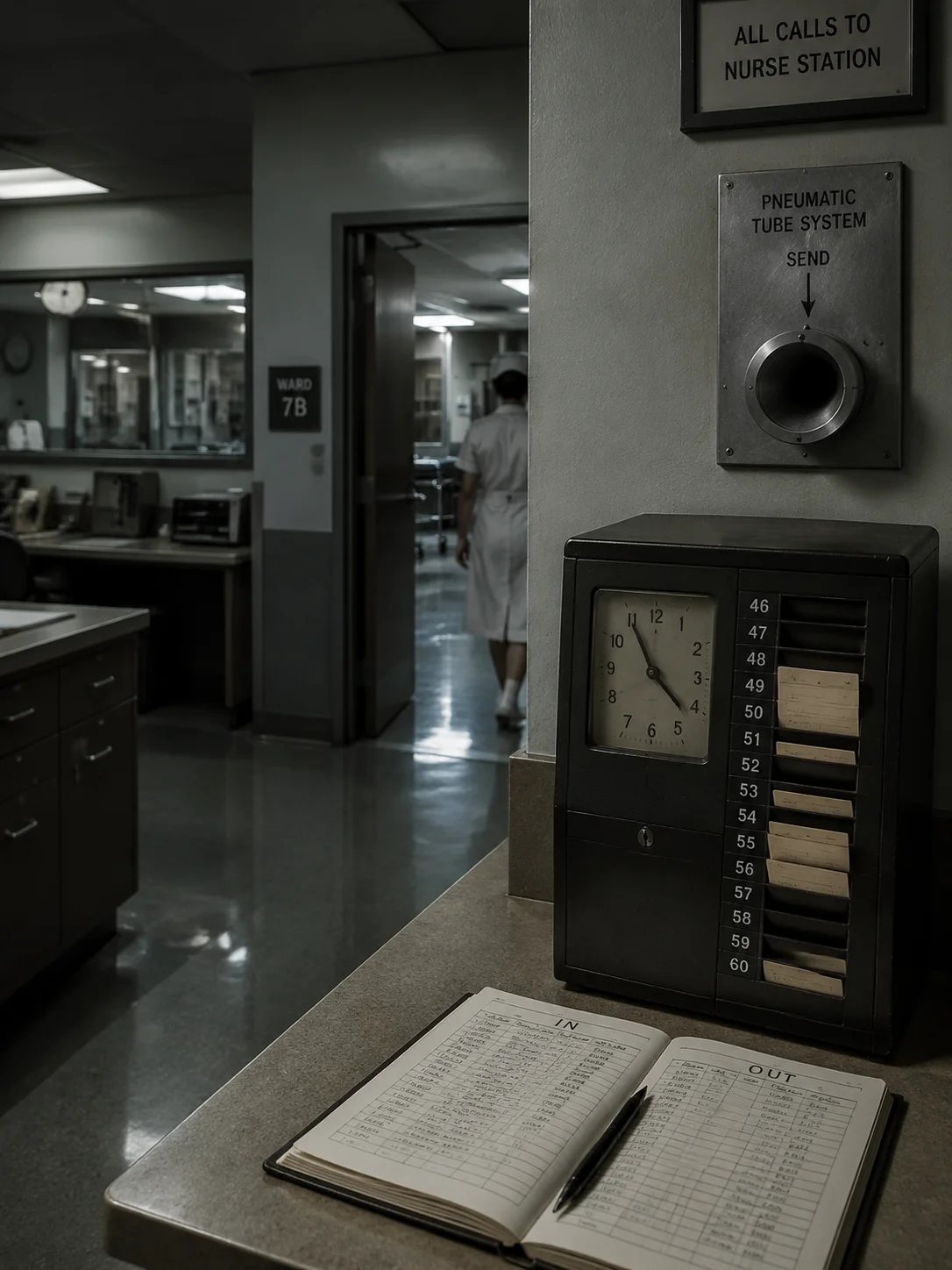
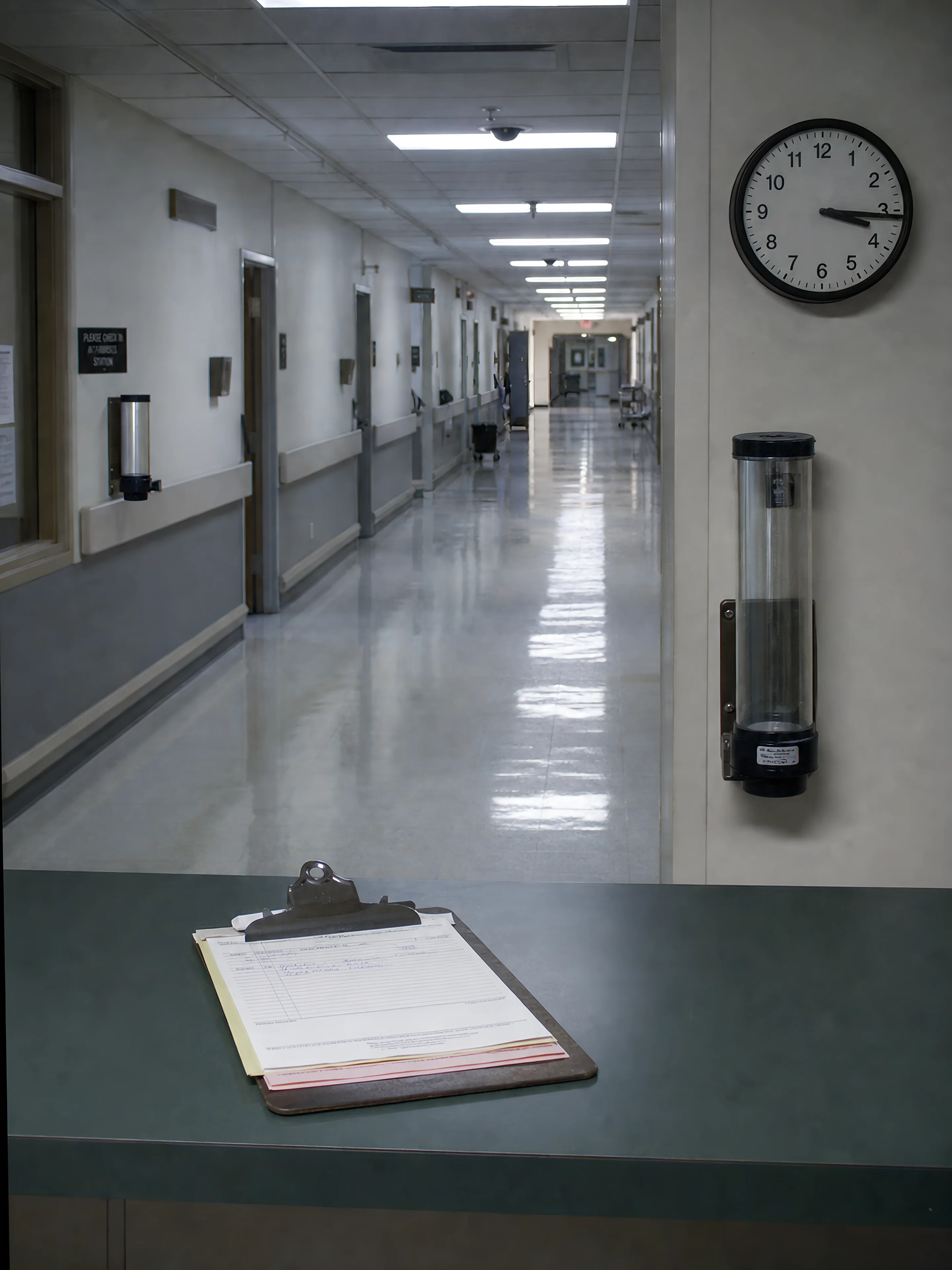
The smell of antiseptic and floor wax hangs in the chilled air. A wall-mounted clock ticks with audible, mechanical precision. Fluorescent light reflects off a polished linoleum floor, revealing a long, empty corridor. Pneumatic tube stations are set into the walls at intervals, and a single clipboard rests on an intake counter, its NCR paper layers slightly misaligned.
 Crime Scene Environment
A clinical, fluorescent-lit environment characterized by low humidity and a constant, low acoustic hum from ventilation and lighting. The air is maintained at a cool temperature. Sound is muted by linoleum and acoustic ceiling tiles, creating a bureaucratic quiet punctuated by the click of clocks, the hiss of pneumatic tubes, and the rustle of paper.
 Investigation Constraints
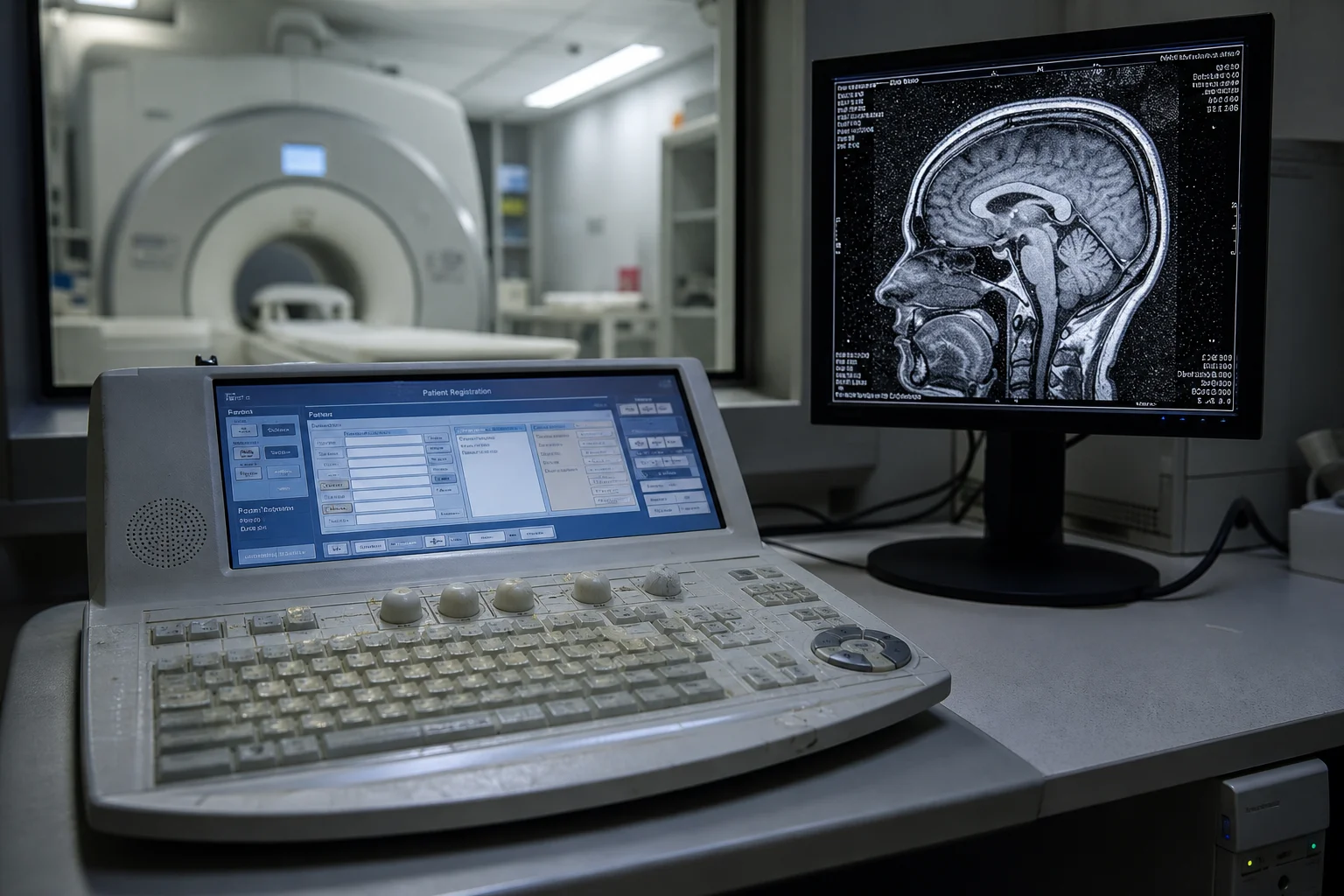
Late 20th-century hospital setting. Technologies include: analog phone systems, pneumatic tube message delivery, handwritten charting on NCR (No Carbon Required) paper, basic electronic patient monitors with printed readout tape, early-generation computer terminals for pharmacy inventory and billing (monochrome, command-line interface), security camera systems with VHS tape recording (low-resolution, time-stamped), fax machines, and paper-based audit trails for medication dispensing.
✦ Related Cases ✦