The Systemic Ledger
An independent forensic auditor is dispatched to a privatized, maximum-security penitentiary following the discovery of the facility's warden in his office. The auditor must analyze the institution's operational logs, personnel movements, and financial records to reconstruct the sequence of events.
 Initial Crime Scene
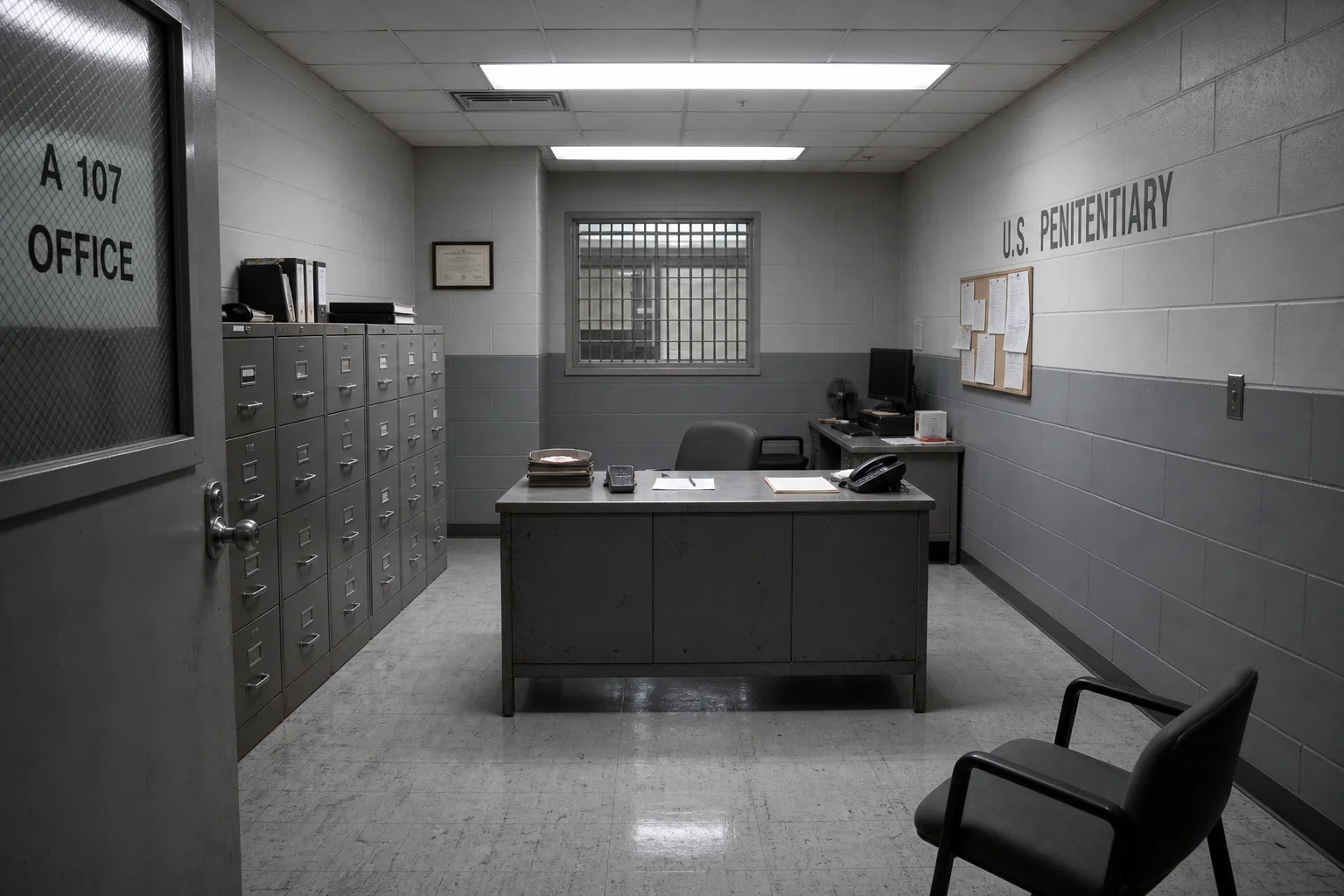
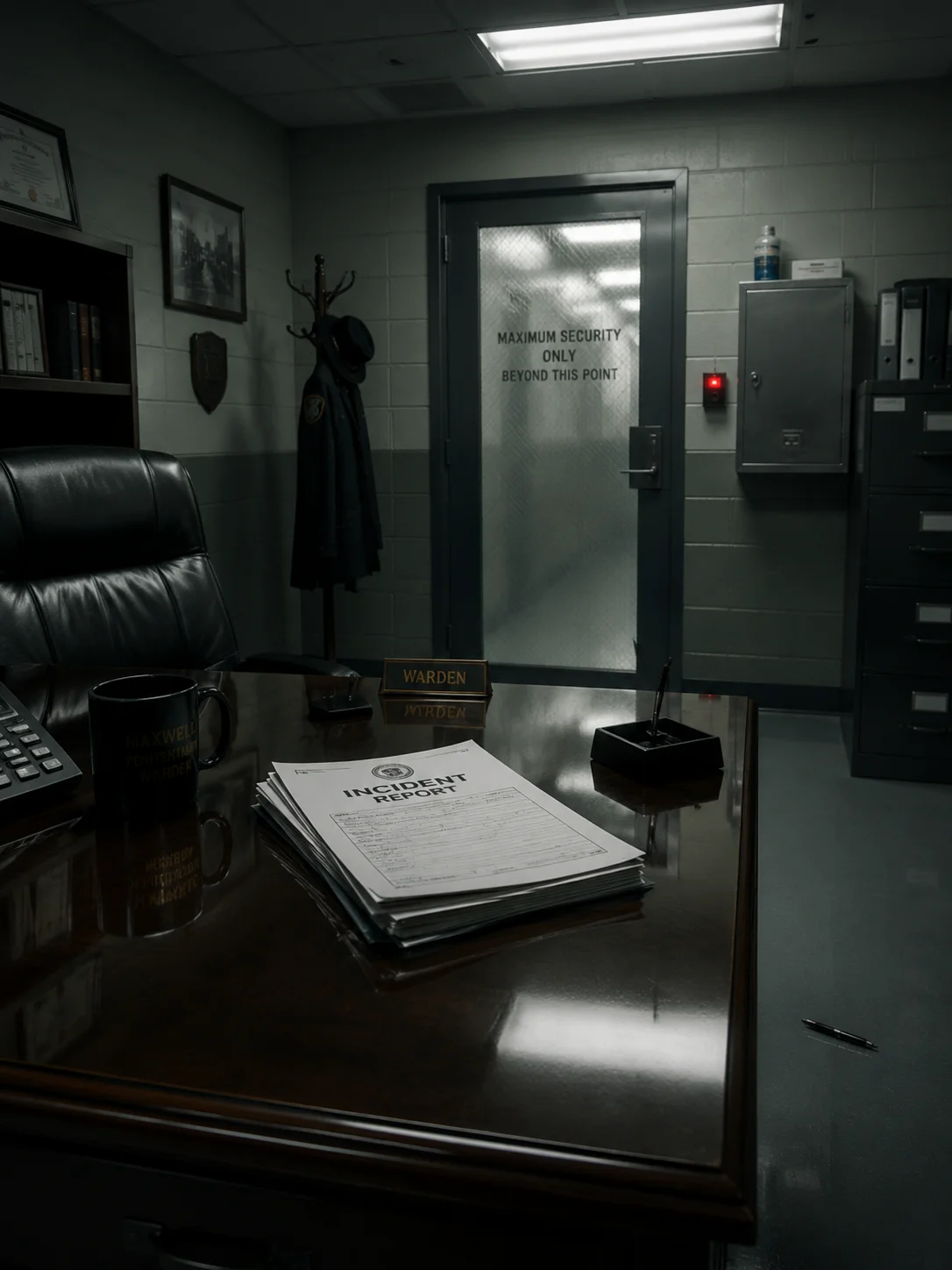
The overhead fluorescent lights hum with a low, institutional buzz. A sharp scent of antiseptic cleaning solution cuts through the sterile air. Before you, the polished surface of the warden's desk reflects a stack of paper incident reports, a broken pen resting on the floor near the chair. A locked medicine cabinet glows with a steady red key-card reader light on the far wall. The frosted glass of the office door diffuses the corridor light into a cold, gray plane.
 Crime Scene Environment
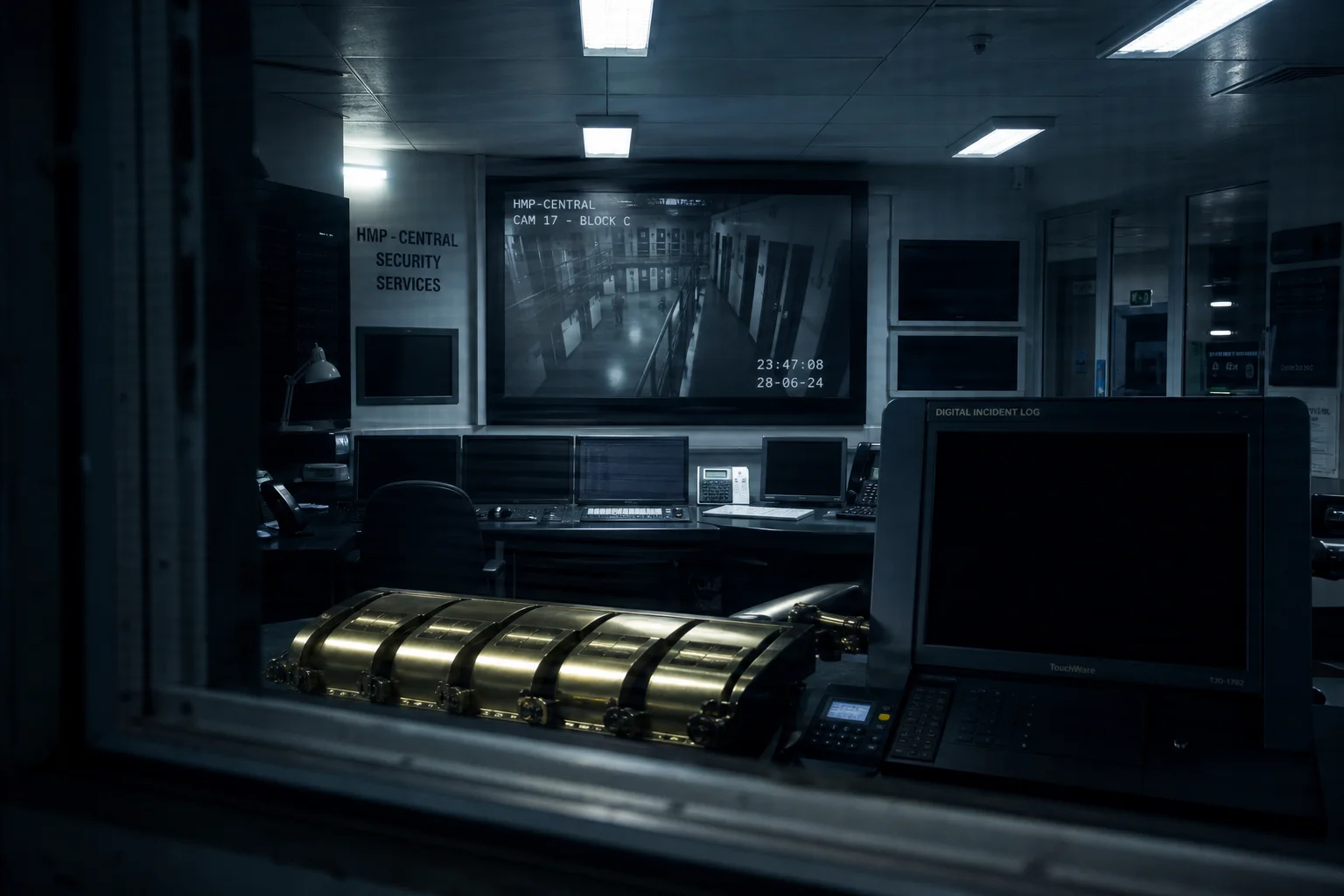
The environment is defined by a cold, systematic lighting profile from fixed overhead fluorescents. The air is chilled and carries a faint, antiseptic odor mixed with the ozone of electronics. Acoustic density is low, dominated by the hum of server racks and networked terminals, with sounds muffled by institutional walls and concrete floors.
 Investigation Constraints
Networked inventory terminals with basic encryption, digital key-card access logs, electronic surveillance cameras (limited to fixed viewpoints), networked commissary transaction databases, landline telephones, paper-based incident reports, biometric door scanners (fingerprint), digital time-stamps, encrypted radio channels for internal security, pneumatic tube systems for internal mail.
✦ Related Cases ✦