The Thornfield Midnight
At a weekend gathering for the reading of a new will, the family solicitor is discovered deceased in the locked library after delivering a midnight toast. The isolated manor's antiquated systems and the guests' varying accounts of the evening create a labyrinth of secrecy where each statement presents a carefully constructed version of events.
 Initial Crime Scene
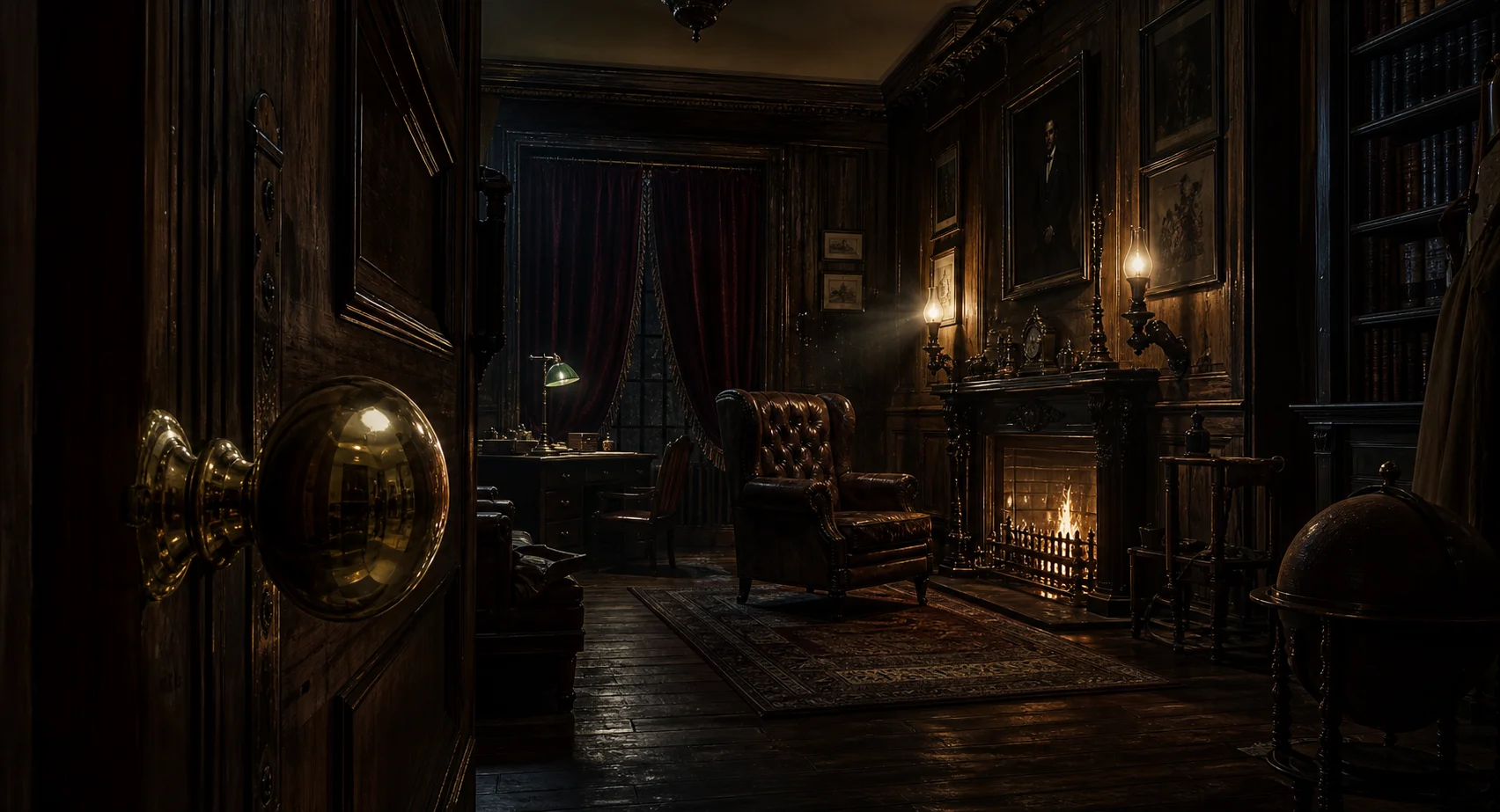
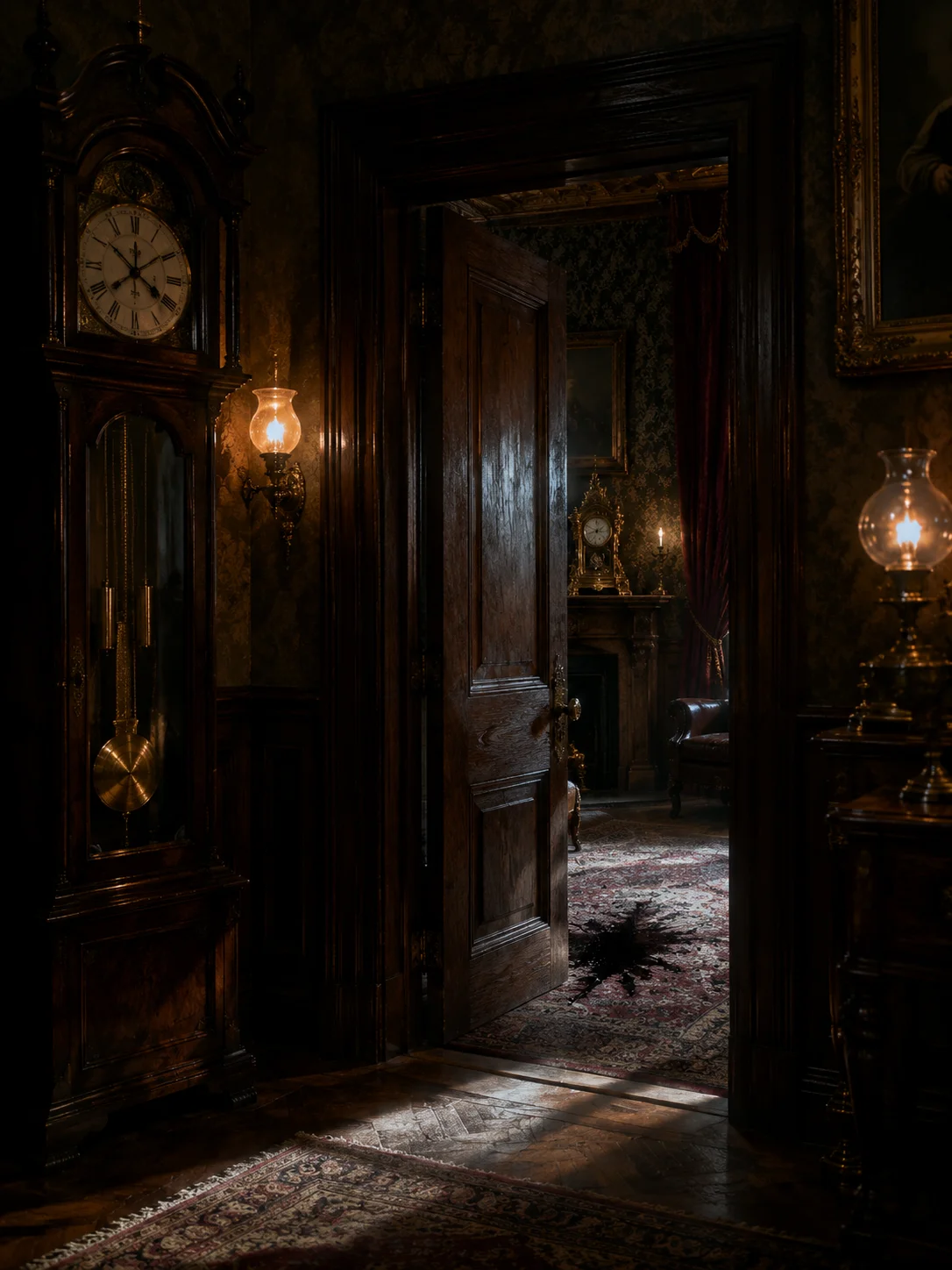
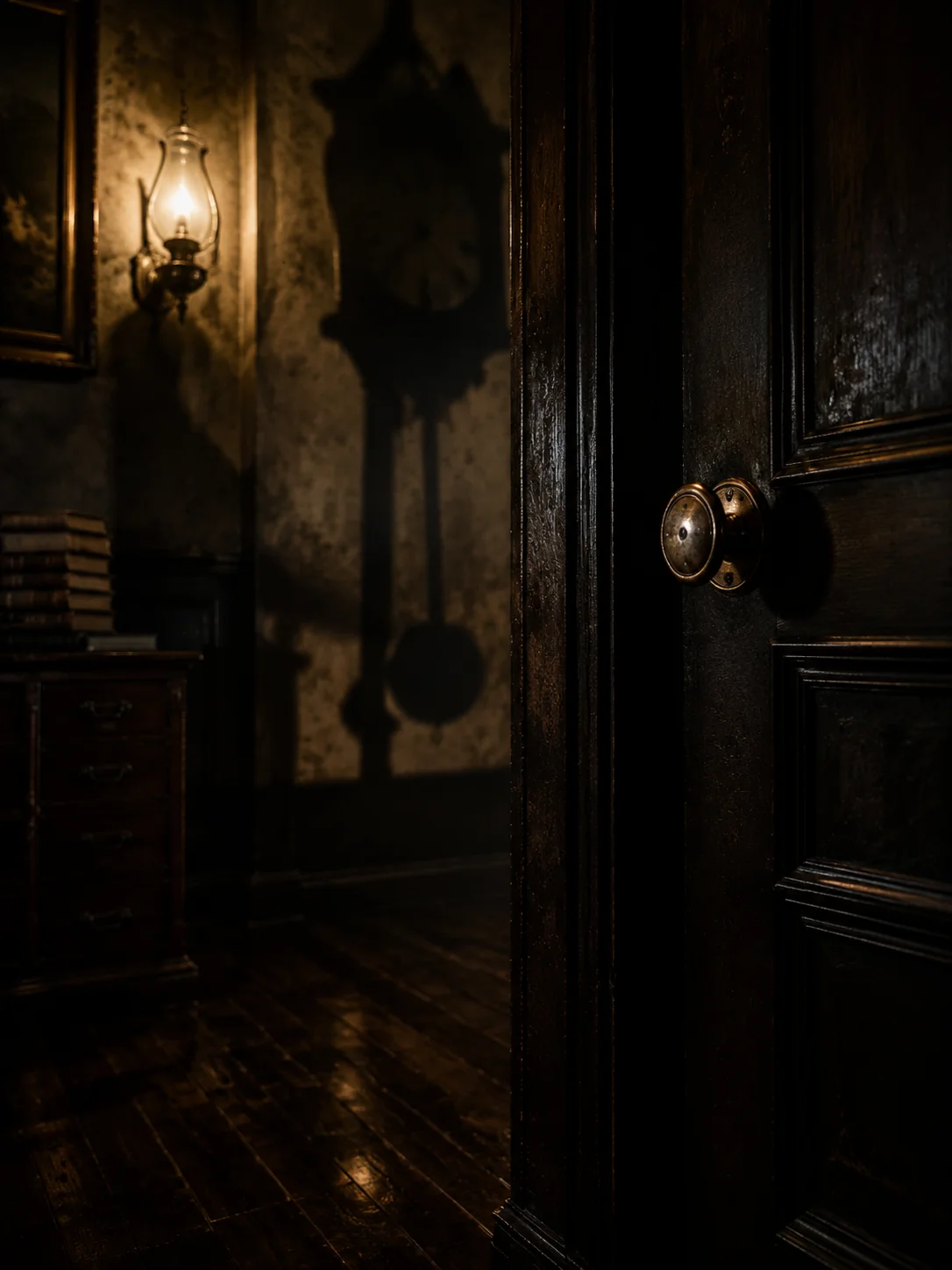
The scent of musty paper and a faint, acrid overlay of almonds hangs in the cold, still air. Through the heavy oak door, the erratic, off-rhythm tick of a grandfather clock marks the silence. Gaslight from a sconce casts long, wavering shadows across a polished wood floor, illuminating dust motes suspended in the beam. Your gaze fixes on the library door's brass knob, its polished surface marred by a single, smudged condensation ring.
 Crime Scene Environment
Lighting is provided by individual gas fixtures with brass valves, casting a dim, flickering illumination that creates deep, shifting shadows. The air is cold and dry, with a persistent chill that seeps from the stone floors and heavy curtains. Acoustic density is low, dominated by the mechanical sounds of the manor: the irregular tick and tock of clockwork, the distant hiss of gas lines, and the occasional, muffled creak of old wood under thermal stress.
 Investigation Constraints
Edwardian-era technology: Hand-cranked telephone switchboard (requires operator connection), central coal-fired boiler for heating and hot water (with manual valve controls in the basement), gas lighting with individual room valves and pilot lights, mechanical door locks with unique brass keys, handwritten ledgers, telegraph machines for urgent messages, and early pneumatic tube systems for internal mail between floors.
✦ Related Cases ✦