The Unaligned Observatory
An independent investigator is called to Ashworth University's Department of Astrophysics after the central telescope is found in a different orientation than its last logged position. The inquiry must navigate a closed environment of established reputations, academic pressures, and personal discretion to determine the sequence of events.
 Initial Crime Scene
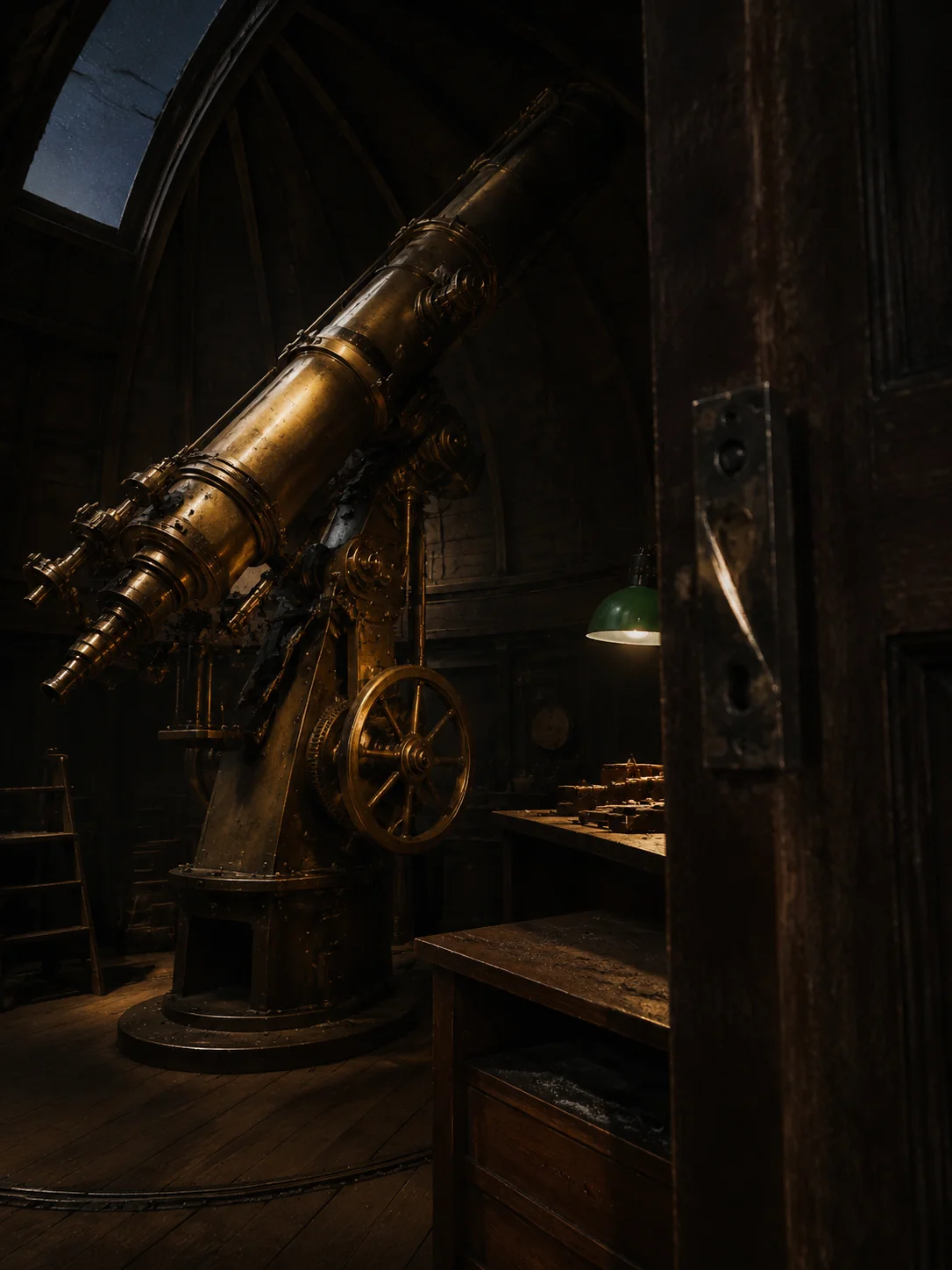
The heavy oak hatch swings inward, releasing a breath of cold, still air. Your first sound is the faint, high-pitched hum of contracting metal from the dome's copper skin. Three visual markers anchor your view: the massive, inert brass telescope at the room's center, the sharp, bright gouge on the interior hatch locking plate, and the faint, linear dust disturbance patterns on the seldom-used shelf beside the main wheel crank.
 Crime Scene Environment
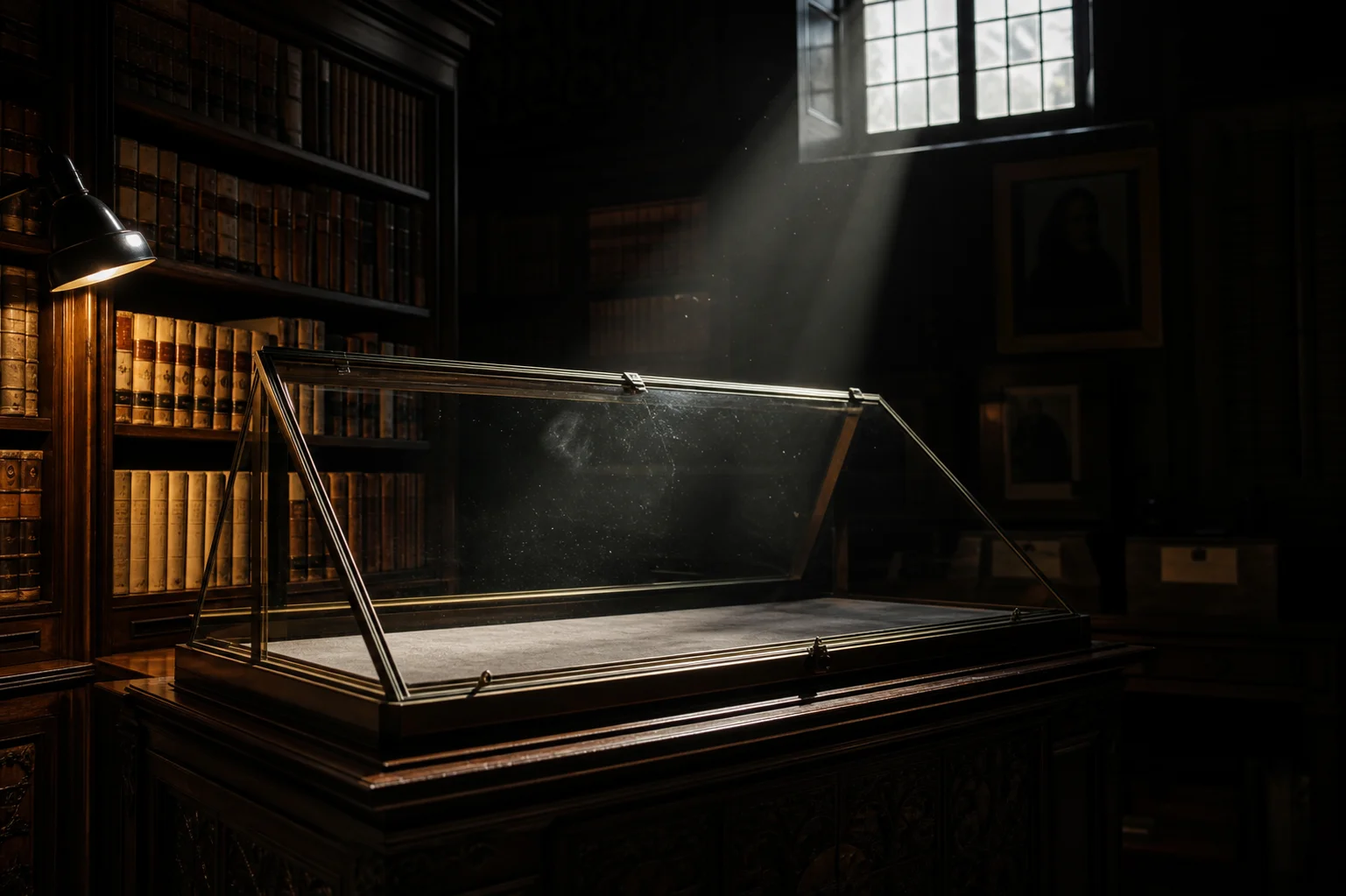
The sandbox operates under a single, green-shaded desk lamp light profile, creating pools of deep shadow. The humidity profile is cold and dry, the air static and chilled. The acoustic density is low, with each sound—footsteps on stone, the creak of a leather blotter, the rustle of paper—carrying with unnatural clarity in the hushed, proprietary stillness.
 Investigation Constraints
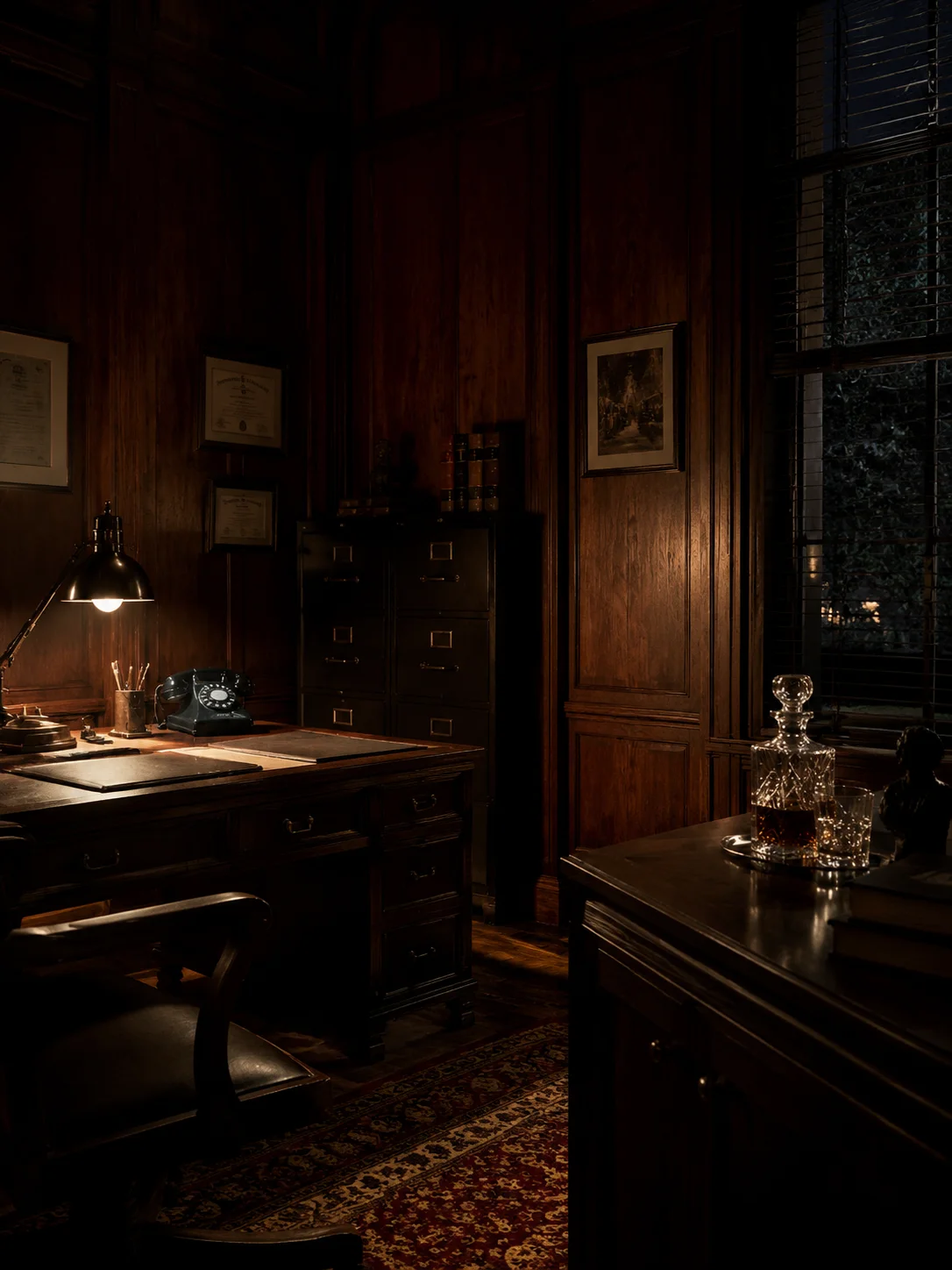
Mid-20th century analogue technology: rotary telephones, pneumatic message tubes, hand-cranked mechanical file cabinets, wax-sealed documents, brass key locks, carbon-copy paper, manual observatory dome mechanisms, analog telemetry dials, handwritten ledgers, and early photographic darkroom processes. No digital or computerized systems.
✦ Related Cases ✦