The Understudy's Shadow
An independent investigator enters the Meridian Theatre on the morning of a lead actor's death. The company is bound by contracts, rivalries, and secrets. While performing the show, the investigator must untangle a web of panicked statements and physical evidence.
 Initial Crime Scene
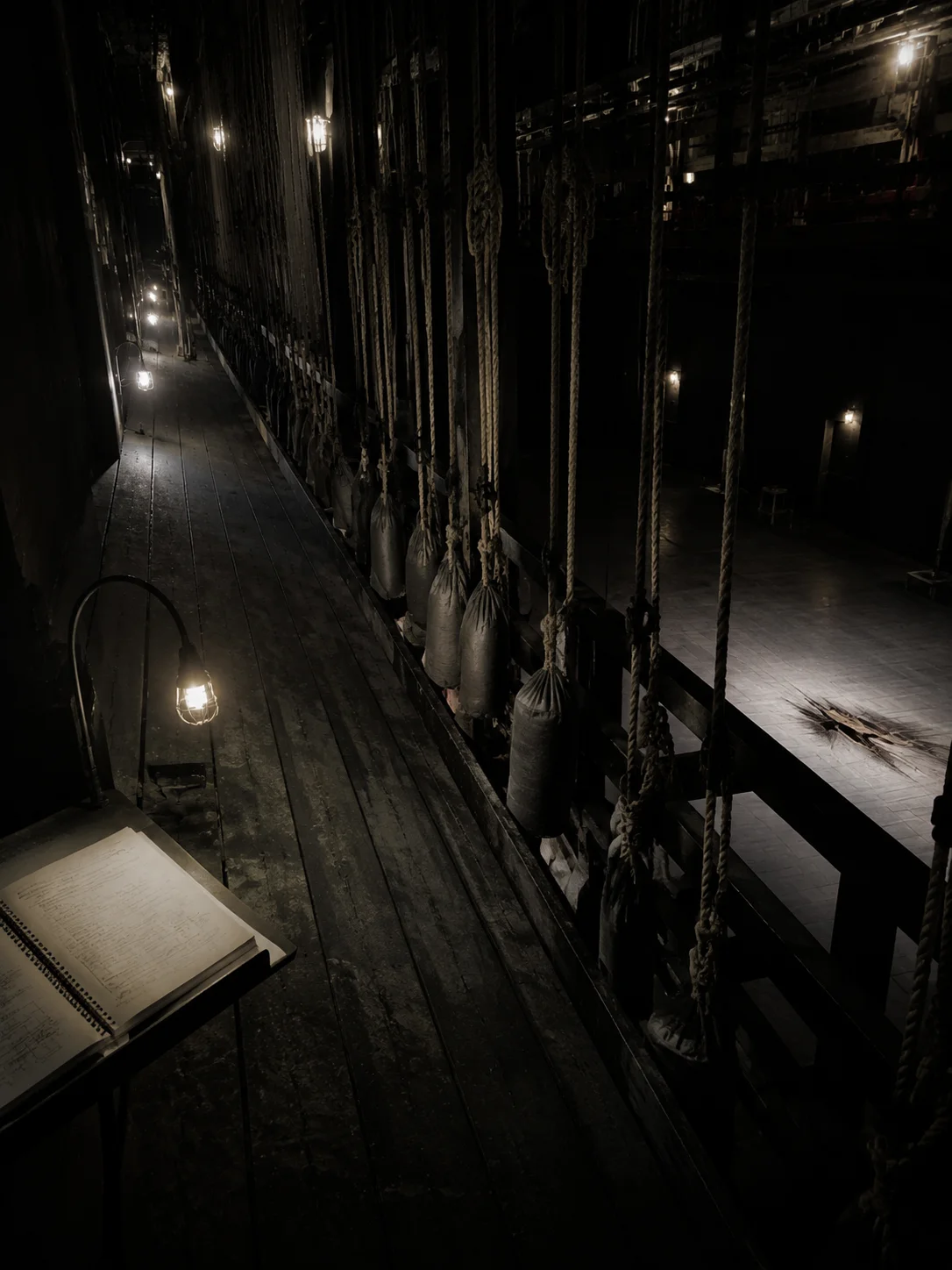
The cold, thin air of the catwalk hits first, smelling of old grease and dust. A faint, metallic clink echoes from a distant counterweight system. Below, the orchestra pit's painted floorboards show a deep, splintered gouge starting near the violin section. Above, the tell-tale pattern of sandbags and counterweight ropes hangs in the shadows. The director's blocking notebook lies open on a music stand, its layered, cryptic annotations just visible in the gloom.
 Crime Scene Environment
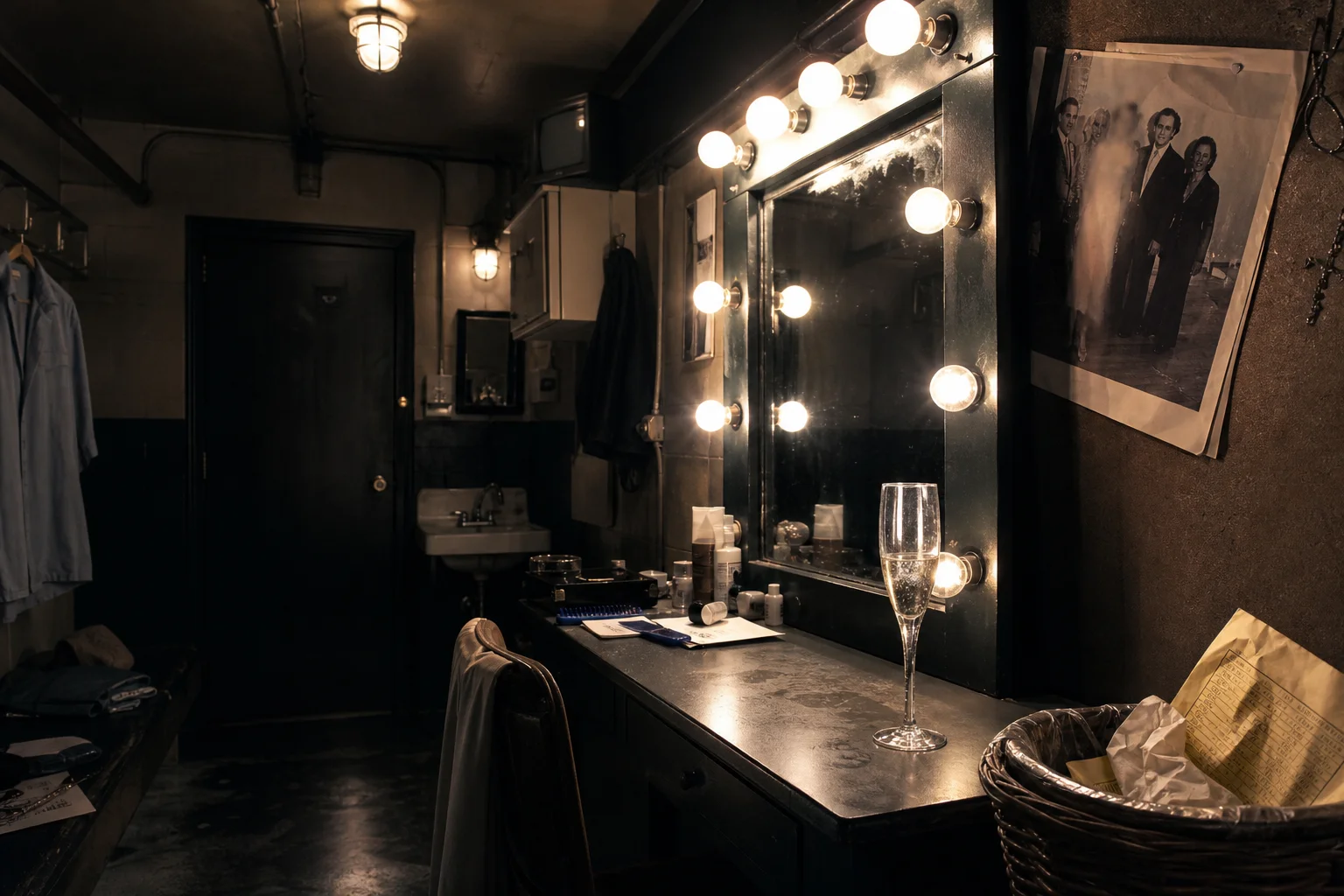
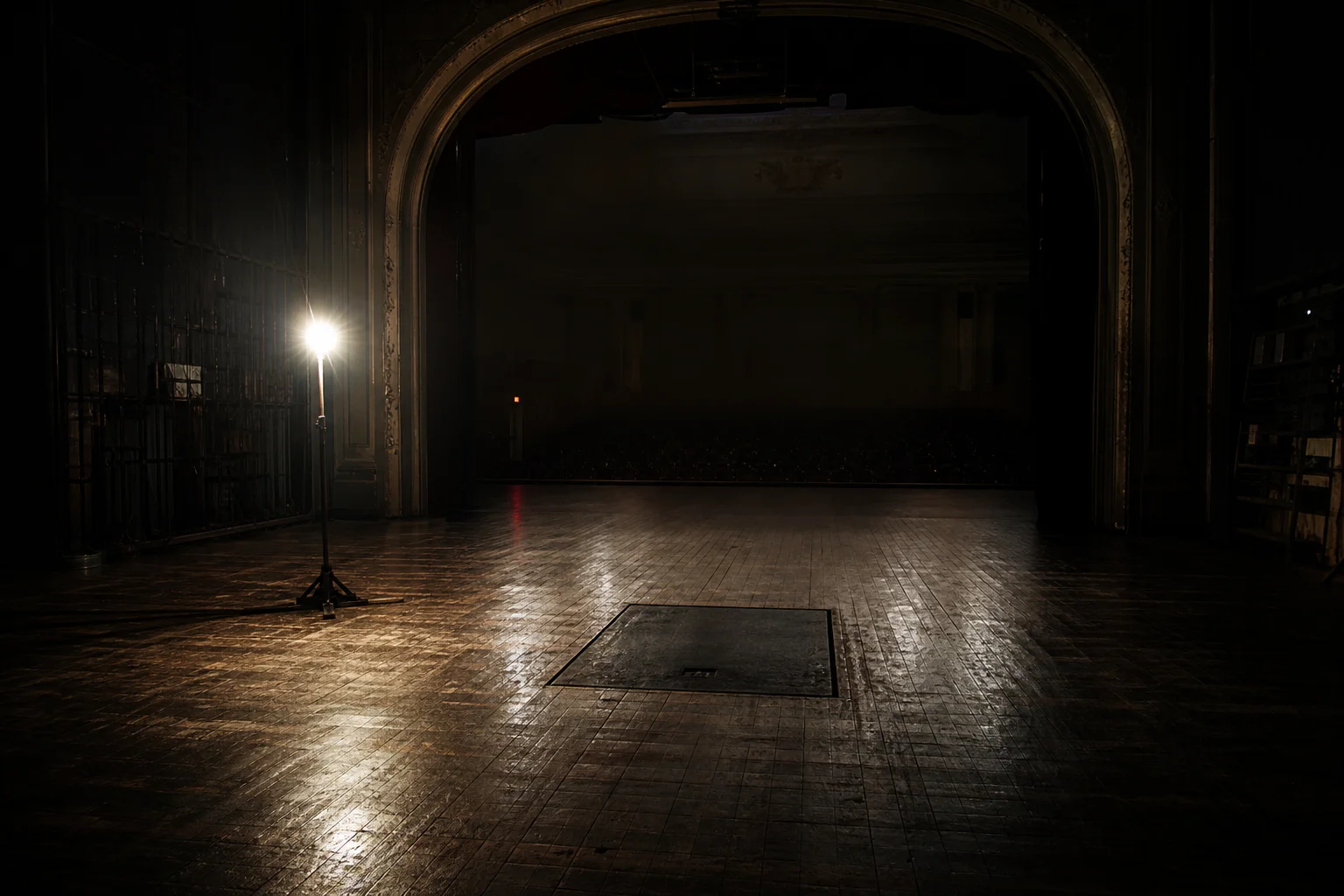
The Meridian Theatre presents a lighting profile of dim, scattered pools from gooseneck lamps and bare bulbs, creating deep shadows in the wings and gallery. The humidity/temperature profile is dry and cool, carrying the faint chill of a large, unheated space. The acoustic density is low, with every footstep on the deep, dusty grooves of the floorboards and every rustle of fabric amplifying in the silence.
 Investigation Constraints
Pre-digital era theatrical world. Communication is via handwritten notes, telephone landlines in offices, and telegrams. Evidence includes props, scripts with marginalia, costume measurements, receipt books, personal diaries, and physical ticket stubs. Security is physical locks and keys, with stage managers holding master access.
✦ Related Cases ✦